Che is Vietnam's answer to dessert: sweet soups and puddings built from beans, jellies, coconut milk, and crushed ice, served in tall glasses that look like stained glass. From the three color classic to durian loaded modern versions, the dessert shops of Saigon run deep. Here is what to order and where to find it.
AI illustration
Che covers an enormous family of sweets, unified by one idea: something sweet in liquid, eaten with a spoon. The base might be coconut milk, ginger syrup, or a light bean broth. Into it go the building blocks: mung beans, black beans, red beans, tapioca pearls, grass jelly, palm seeds, lotus seeds, corn, and taro.
It is served hot or cold, and the iced versions are the Saigon signature. Crushed ice goes in first, then the layers, then a pour of coconut milk, so each spoonful is cold, creamy, and different. The sweetness runs moderate by design, refreshing rather than cloying in the tropical heat.
The shops are part of the culture. A che shop is a bright, casual place with a glass cabinet of colorful ingredients, and regulars have their usual glass the way coffee drinkers have their usual cup.
The ice is crushed, not cubed, and that matters. Crushed ice melts into the layers, chilling without drowning, and each spoonful carries a little melt that loosens the coconut milk. Shops with an old fashioned ice shaver get a finer crush and a better texture. You can hear the difference.
The Vietnamese sweet tooth runs different from the Western one. Che is sweet but rarely rich, built on beans and fruit rather than butter and cream. It refreshes instead of weighing down, which makes sense in a tropical climate. Visitors expecting heavy desserts are surprised, and visitors who embrace the lightness become converts by the second glass.
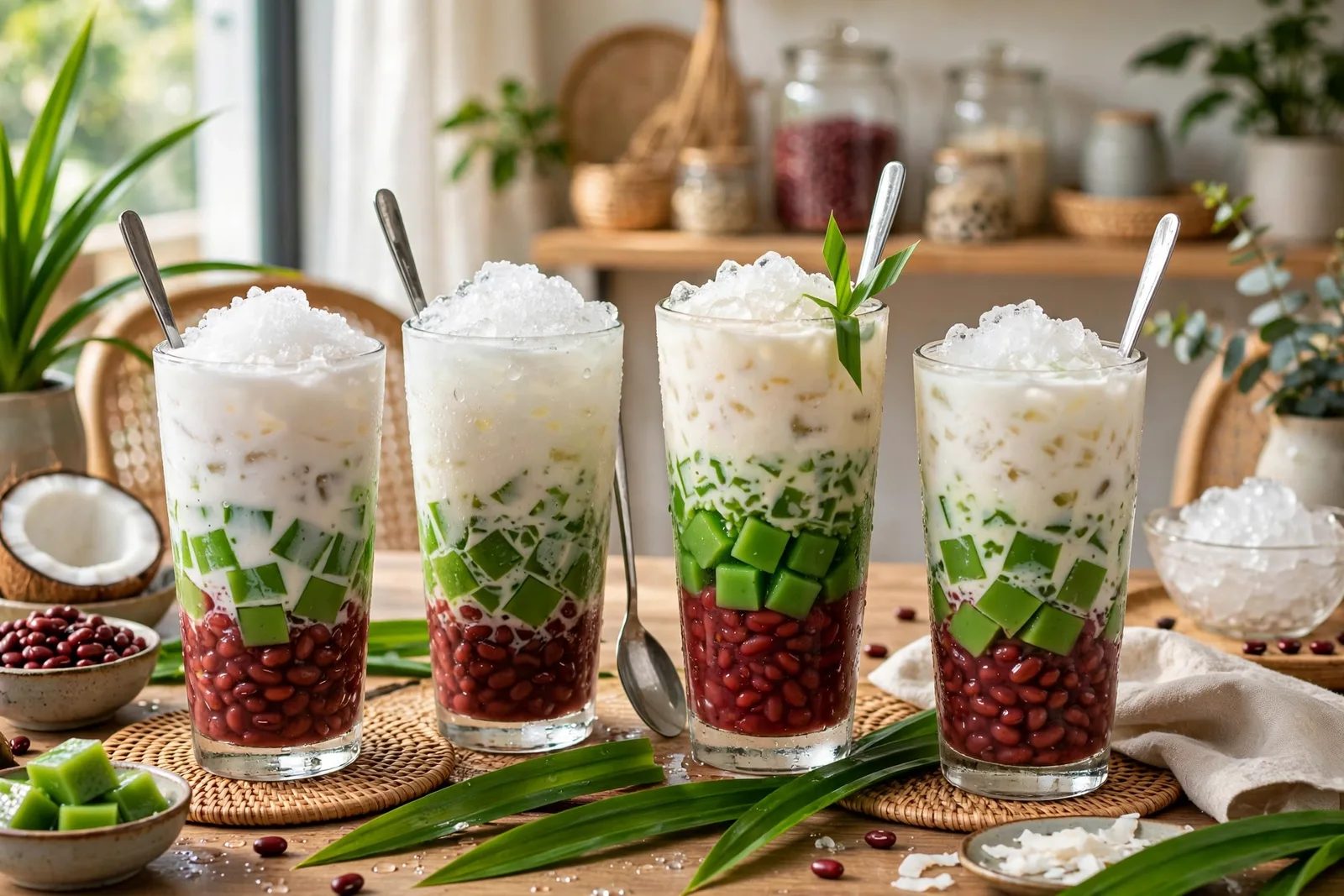
Che ba mau, the three color dessert, is the gateway: layers of red beans, mung bean paste, and green pandan jelly under coconut milk and ice. Che thai is the maximalist, with durian, jackfruit, lychee, and jellies in sweet milk. Che buoi stars pomelo rind, candied until translucent and chewy, a southern specialty.
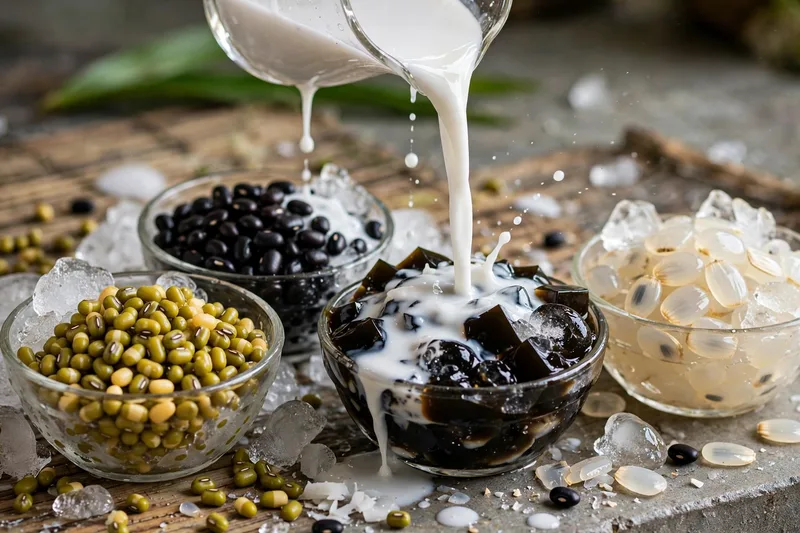
For comfort, che troi nuoc: glutinous rice balls filled with mung bean, floating in warm ginger syrup with coconut milk. Che hat sen is lotus seeds simmered until creamy, elegant and lightly sweet. Che dau den, black bean sweet soup, is the humble classic, and che bap, sweet corn pudding, tastes like summer.
Modern shops riff endlessly: taro, matcha, and cheese foam versions appear every year. The classics endure because their balance is perfect, but trying one new invention per visit is half the fun.
Durian divides the room in che thai. The shops usually ask before adding it, and the durian free version is just as good, bright with jackfruit and lychee. If you are durian curious, che thai is the gentlest introduction. The cold milk tames the funk considerably.
Che shops cluster around markets, schools, and busy street corners, and they wake up in the afternoon. The old names in District 1 and District 3 have glass cabinets that have not changed in decades, while Cholon in District 5 runs Chinese influenced dessert shops with herbal sweet soups.
A glass costs 15,000 to 35,000 VND (about $0.60 to $1.50), which makes a che crawl the cheapest tasting tour in the city. Order one glass per shop and walk to the next; three shops is a proper afternoon.
Evening is prime time, when the shops glow and the crowds come after dinner. It is the natural sweet finish to a night that started with banh trang nuong at the markets.
Cholon dessert shops lean Chinese, with herbal sweet soups, red date teas, and silky tofu puddings alongside the Vietnamese classics. A dessert crawl through District 5 tastes like a different country, and the prices are even gentler.
Many shops offer student discounts near universities, and late afternoon often brings quiet deals for regulars. Watch the rhythms of your favorite shop and you will learn when the best glasses appear.
Point at the cabinet or ask for the shop's signature. If the menu overwhelms, che ba mau is the safe first order and che thai is the fun one. Ask for less ice or less sweet if you want control; the vendors adjust happily.
Stir before you eat. The layers are for the eyes, but the flavor comes from mixing the coconut milk through everything. Hot che needs no stirring, just a spoon and a slow pace.
For a deeper dive into Saigon's sweet drinks, egg coffee takes the dessert idea into the coffee cup. The city treats sweetness as a spectrum, and che sits right in the middle of it.
Takeaway che comes in sealed cups with the ice bagged separately, a thoughtful touch that keeps it from diluting on the ride home. It travels well for twenty minutes, which makes it the ideal dessert to bring back to the hotel.
Moderately. It is designed to refresh in tropical heat, so it is lighter than Western desserts.
The three color dessert: red beans, mung bean paste, and pandan jelly layered with coconut milk and ice.
Both. Iced versions dominate in Saigon; hot versions like ginger syrup che suit rainy days.
It is beans, fruit, and coconut milk, so it beats most desserts, but the sugar is real. Enjoy in moderation.
 Keep exploring
From street carts to a UNESCO heritage nomination, Saigon banh mi is the street food you cannot skip. Crispy crust, rich
 Keep exploring
Tiny golden pancakes from a sizzling cast iron mold, topped with whole shrimp and wrapped in herbs. A plate of 10 to 15
 Keep exploring
Bitter robusta coffee brewed through a cloth filter, sweetened with condensed milk, poured over ice. The drink that defi
