In the cool highlands of Da Lat, dessert took a local turn: ripe avocado blended thick, crowned with coconut ice cream, and finished with roasted peanuts. Kem bo is Vietnam's most photogenic dessert and genuinely delicious. Here is the story, plus the other highland sweets worth hunting down.
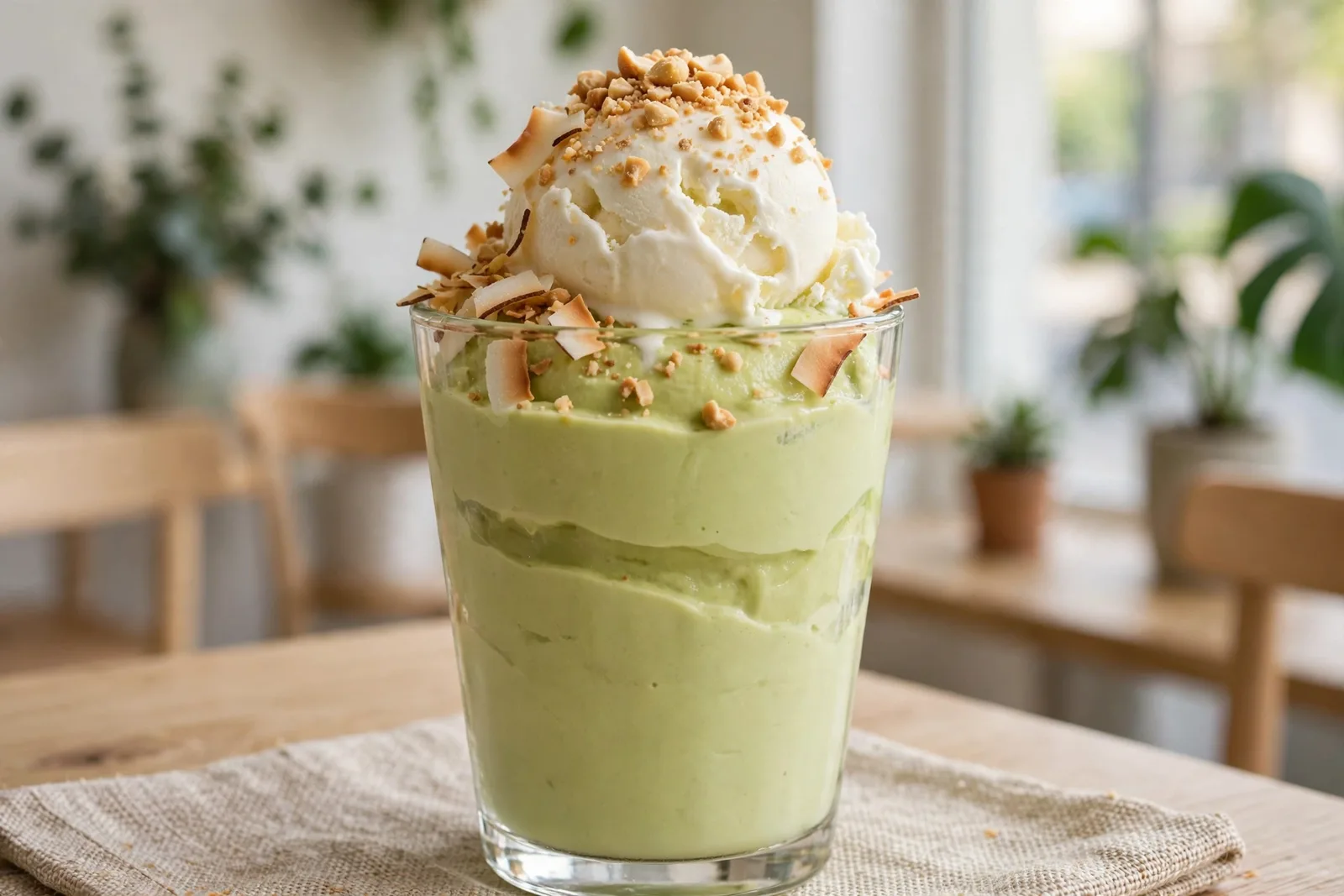
AI illustration
Forget everything avocado toast taught you. Kem bo is dessert through and through: buttery avocado whipped with condensed milk into a thick, pale green cream, then layered in a tall glass and crowned with a scoop of coconut ice cream. Crushed roasted peanuts and toasted coconut shavings finish it with crunch.
The taste is creamy and gently sweet, closer to a rich mousse than to anything savory. The avocado provides body and a subtle nuttiness, the condensed milk brings the sweetness, and the cold coconut ice cream on top creates a temperature contrast that keeps every spoonful interesting. Skeptics convert on the first bite, almost without exception.
It is also substantial. One glass is a proper dessert, not a palate cleanser, and the richness means it pairs best with an empty stomach or a light meal before. Order one to share if you are cautious, then order a second when caution fails.
Nutritionists would approve, relatively speaking. Avocado brings healthy fats and fiber, and a kem bo has more substance than most desserts twice its price. It will not pass as health food with the condensed milk involved, but as indulgences go, it is one of the more defensible ones.
Kem bo belongs to Da Lat the way deep dish belongs to Chicago. The highland city's cool climate grows excellent avocados, and its cafe culture turned the surplus into a signature. The classic shops cluster near the Da Lat night market, where the evening chill makes a cold dessert oddly perfect.
Eating kem bo in Da Lat is about context. You have spent the day among pine forests and flower gardens, the evening air is sweater weather, and you are sitting at a plastic stool with a tall green glass sweating in your hands. Our Da Lat transport guide covers the sleeper bus up from Saigon.
Go for the full highland dessert evening. Start with sua dau nanh, hot sweet soybean milk from a street cart, as the night cools. Then move to kem bo for the main event. The contrast of hot and cold, savory street and sweet glass, is the Da Lat night market experience in miniature.
The night market around the kem bo shops is worth the trip alone. Da Lat's market after dark is a carnival of grilled corn, hot soy milk, strawberry vendors, and woolly souvenir stalls, all in air cool enough for a jacket. The kem bo is the sweet center of a much larger evening.
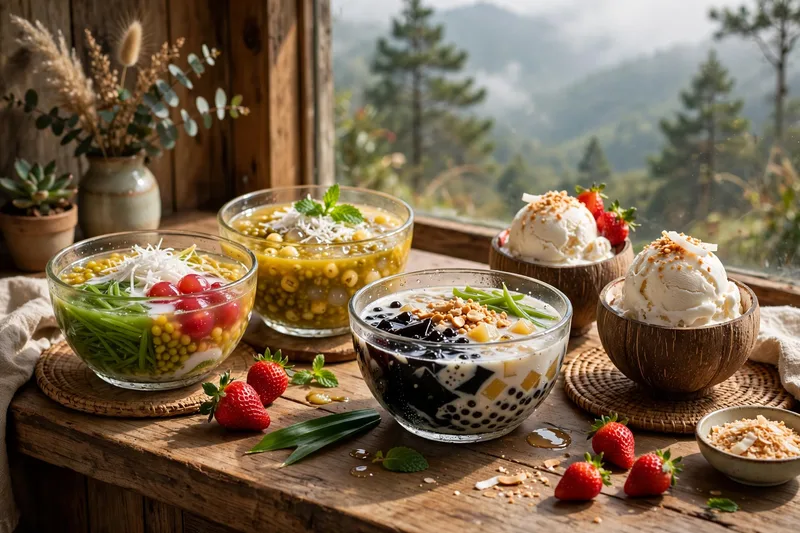
Saigon's dessert scene has embraced kem bo, and you can find excellent versions without leaving the city. Dessert streets and che shops across District 1, District 3, and District 10 serve it alongside the full Vietnamese sweet menu. Quality varies, so look for shops that blend to order rather than scooping from a pre mixed tub.
The tell of a good kem bo is texture: thick enough to hold a spoon upright, vivid pale green, with distinct layers rather than a uniform mush. The coconut ice cream should taste of coconut, not just sweetness, and the peanuts should be freshly roasted. A great glass costs 35,000 to 50,000 VND (about $1.40 to $2).
Make it part of a dessert crawl. Saigon's night markets and dessert alleys come alive after 8 pm, and a kem bo followed by a bowl of che is the correct ending to any Saigon day.
Saigon's best kem bo shops tend to be the specialists, not the generalists. A shop that sells three desserts will usually beat a shop that sells thirty, because the avocado is blended fresh all day. Look for the green glow of the blender and a short menu.
Da Lat's dessert repertoire runs deeper than one glass. Banh trang nuong, grilled rice paper with egg, cheese, and toppings, is the highland answer to pizza and the night market's crunchiest snack. Kem dau, strawberry ice cream made from Da Lat's famous berries, is the summer alternative to kem bo.
Che bap, sweet corn pudding, shows up across the highlands with a richness that surprises first timers. And the simple pleasure of hot soybean milk with a fried dough stick, eaten at a street cart in the cool evening air, might be the most atmospheric dessert in Vietnam.
Whatever you choose, eat dessert the Vietnamese way: late, outdoors, and unhurried. The sweet shops stay open until the crowds go home, and some of the best conversations of a trip happen over a melting glass at 10 pm.
For the adventurous, ask about kem bo sau rieng, the durian version. It divides opinion violently and delights the converted completely. Even durian skeptics should try one spoonful: the cold and the cream tame the fruit's intensity into something surprisingly elegant.
Avocado blended thick with condensed milk, topped with coconut ice cream, crushed peanuts, and toasted coconut. Da Lat's signature dessert.
25,000 to 50,000 VND (about $1 to $2) per glass, in Da Lat or Saigon.
No. It is fully a dessert: creamy, gently sweet, and closer to mousse than to anything savory.
Yes. Dessert shops and che stalls across the city serve it. Look for places that blend to order for the best texture.
 Keep exploring
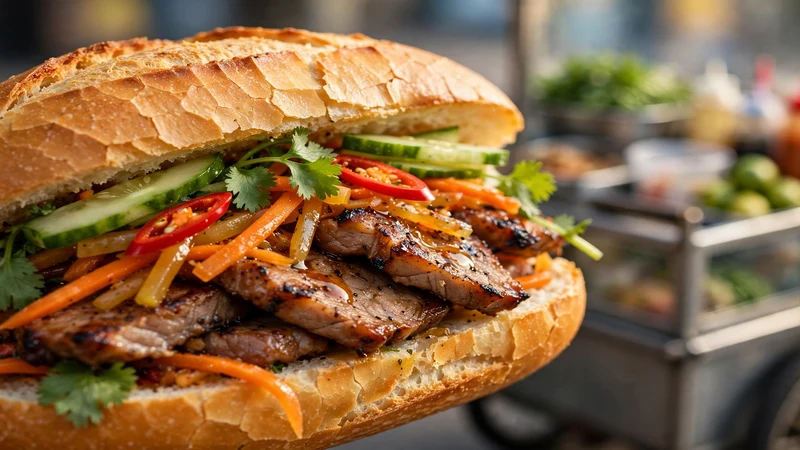
From street carts to a UNESCO heritage nomination, Saigon banh mi is the street food you cannot skip. Crispy crust, rich
 Keep exploring
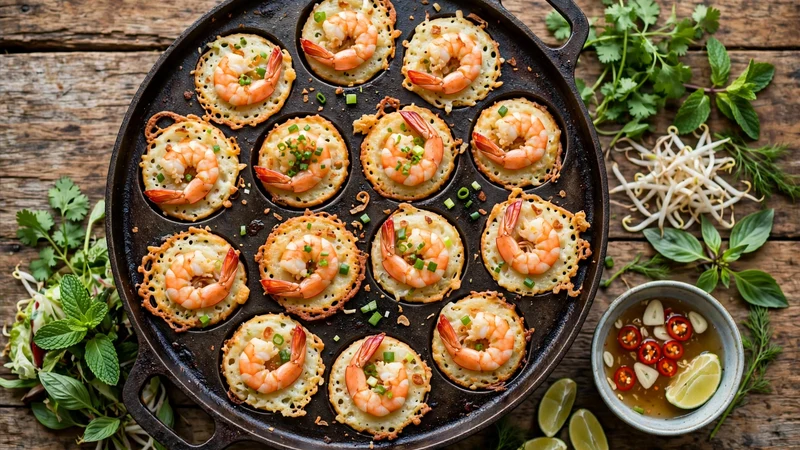
Tiny golden pancakes from a sizzling cast iron mold, topped with whole shrimp and wrapped in herbs. A plate of 10 to 15
 Keep exploring
Bitter robusta coffee brewed through a cloth filter, sweetened with condensed milk, poured over ice. The drink that defi
