In Saigon, coffee is not a drink, it is a venue. The city runs on tiny plastic stools, slow dripping phin filters, and conversations that stretch for hours over a single glass. From the pavement classic ca phe bet to a booming third wave scene, here is how the most caffeinated city in Vietnam takes its coffee.
AI illustration
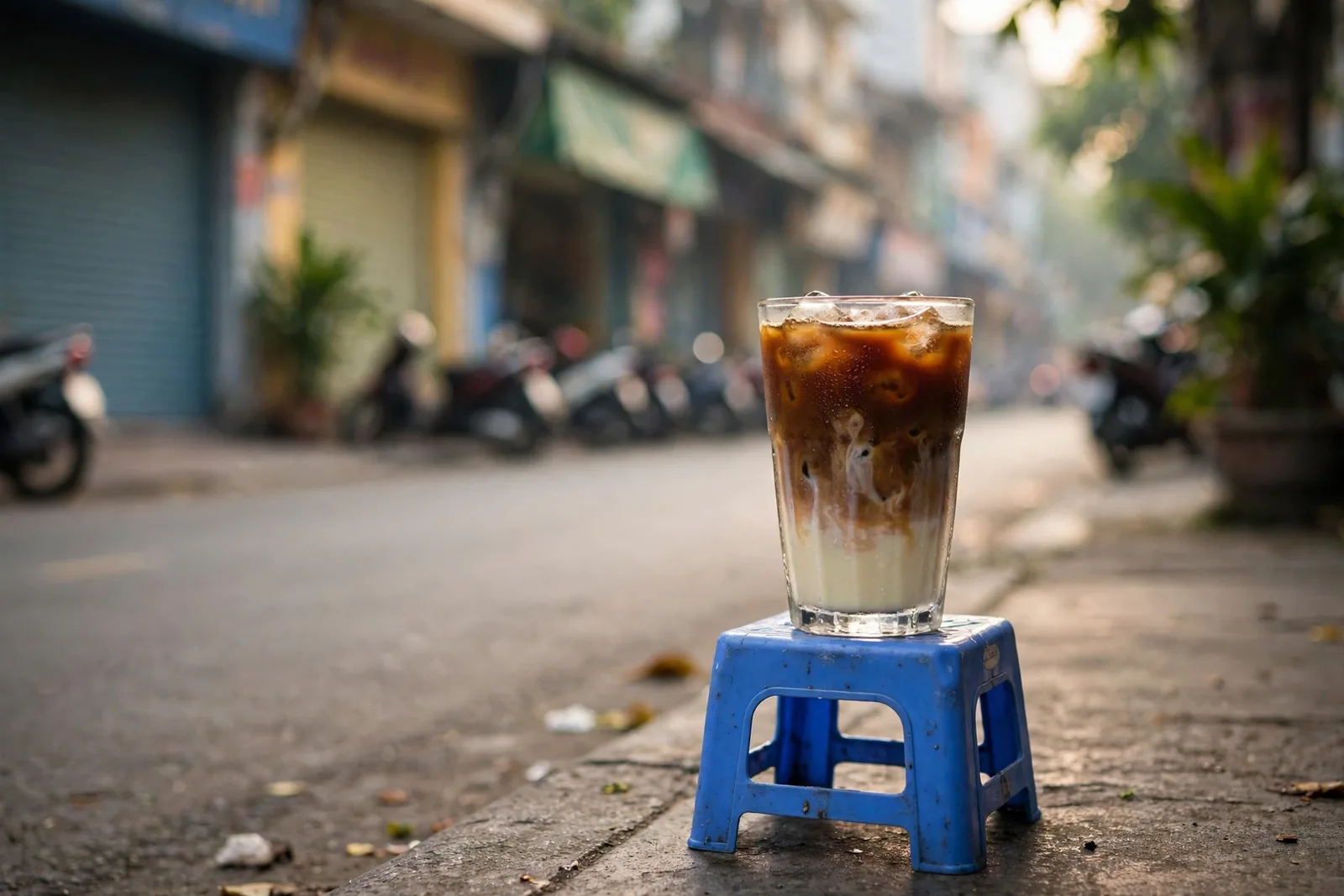
Bet means pavement, and ca phe bet is coffee drunk sitting on it. The setup is a low plastic stool, a glass of strong coffee, and the street as your theater. No menu, no fuss, just some of the best people watching in Southeast Asia.
The coffee is robusta, dark and unapologetic, brewed strong and served black over ice or with a slug of condensed milk. It costs 12,000 to 20,000 VND (about $0.50 to $1), arrives in minutes, and you are welcome to nurse it for an hour. Office workers, students, and retirees share the same curb.
The ritual is the point. Saigonese do not grab coffee to go; they sit, they talk, they watch the city move. An hour on a sidewalk stool teaches you more about the city than any tour.
The stool has a sociology. Office workers claim the curb at 7:00, students take over mid morning, and retirees hold the afternoon. The same vendor serves all three shifts, remembering orders and extending credit to regulars. The sidewalk cafe is the most democratic institution in Saigon.
The economics are part of the charm. A sidewalk coffee costs less than a bottle of water in many cities, yet nobody rushes you. The vendor makes their margin on volume and loyalty, and the regulars repay it by bringing friends. It is a business model built on community, and it works beautifully.
Before the phin filter conquered the country, there was ca phe vot, coffee brewed through a cloth sock. A few old shops still do it: the sock steeps in a pot, the coffee pours thick and chocolatey, with a texture no metal filter can match. Finding a vot shop feels like finding a living museum.
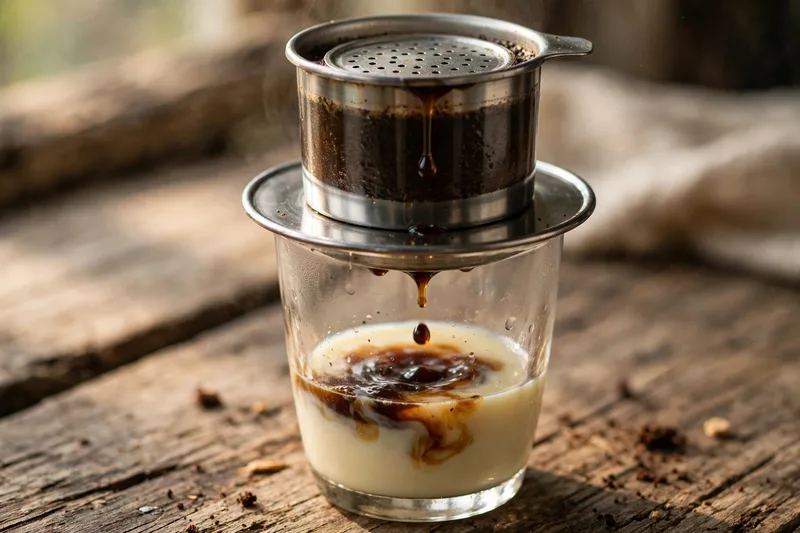
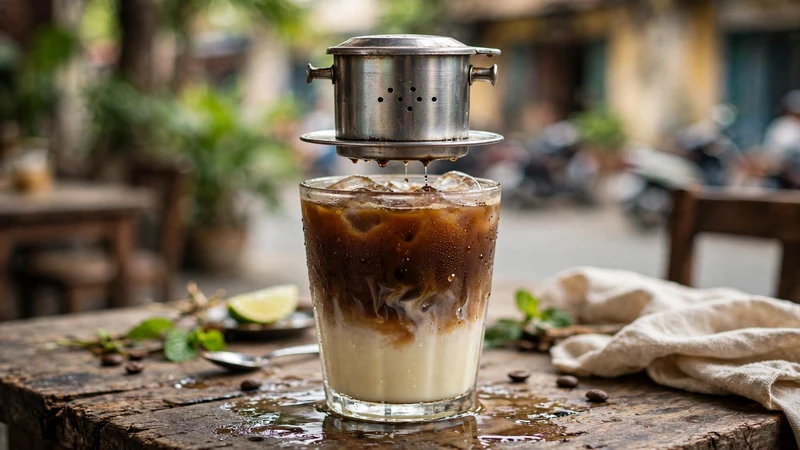
The phin is the icon most visitors meet. The small metal drip filter sits on the glass, coffee blooms and drips for five unhurried minutes, and you stir the condensed milk through at the end. Ca phe sua da, iced coffee with condensed milk, is the national drink for a reason: bitter, sweet, and cold all at once.
Order like a local: ca phe den da is black iced coffee, ca phe sua da is with milk, and bac xiu is the milky, lightly coffee flavored version for those who want the ritual without the punch.
Robusta is the local bean, and it is nothing like the arabica most visitors know. It is stronger and more bitter, with a chocolatey depth that stands up to condensed milk and ice. Vietnamese roasters often add a touch of butter during roasting, an old technique that gives the cup its distinctive richness.
Saigon's specialty scene has exploded. Roasters work with arabica from Da Lat and the Central Highlands, pour overs and espresso drinks sit beside phin brews, and cafe design has become an art form, from restored shophouses to minimalist concrete boxes in Thao Dien.
The interesting part is how the waves mix. Third wave shops serve ca phe sua da with single origin robusta, and old sidewalk vendors now pull from quality beans. The city did not replace its coffee culture; it layered the new on top of the old.
A proper crawl runs the full stack: dawn on a sidewalk stool, mid morning at a vot shop, afternoon in a specialty bar. Egg coffee makes the perfect dessert stop, and a banh mi is the classic breakfast companion.
Cafe design has become a competitive sport. Restored colonial shophouses, rooftop gardens, concrete minimalism, each new opening tries to outdo the last. But the old sidewalk stalls are not losing. They are busier than ever, proof that atmosphere beats architecture.
Keep it simple. Den da for black iced, sua da for milk, bac xiu for milky and gentle. Hot versions drop the da. Sugar is assumed in black coffee unless you say otherwise, so specify no sugar if you want it straight.
Sidewalk coffee runs 12,000 to 20,000 VND (about $0.50 to $1). Mid range cafes charge 25,000 to 45,000 VND (about $1 to $2). Specialty bars run 45,000 to 80,000 VND (about $2 to $3), fair for the craft involved.
Sit down, slow down, and order a second glass. In Saigon, the coffee is the excuse; the sitting is the activity.
The afternoon coffee break is sacred. Work pauses, friends gather, and a single glass stretches for an hour. Visitors who adopt this rhythm find their Saigon days suddenly have a pleasant, caffeinated structure.
The famous weasel coffee, ca phe chon, is the luxury curiosity: rare, expensive, and much debated. Try it once for the story, then return to the sidewalk stool that made you fall in love.
Sidewalk coffee, drunk sitting on low plastic stools on the pavement. Cheap, strong, and deeply social.
Den da is black iced coffee; sua da adds sweetened condensed milk. Bac xiu is mostly milk with a touch of coffee.
Yes. Robusta has roughly twice the caffeine of arabica, and it is brewed strong. Pace yourself.
Coffee brewed through a traditional cloth sock filter, an older method that gives a thick, chocolatey cup.
 Keep exploring
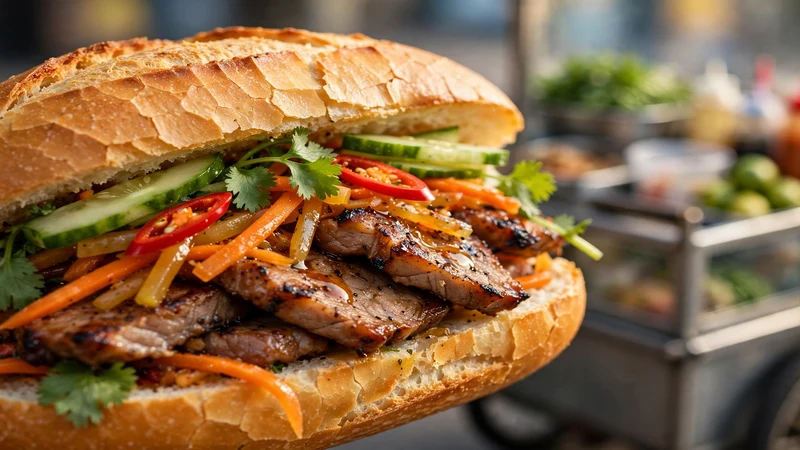
From street carts to a UNESCO heritage nomination, Saigon banh mi is the street food you cannot skip. Crispy crust, rich
 Keep exploring
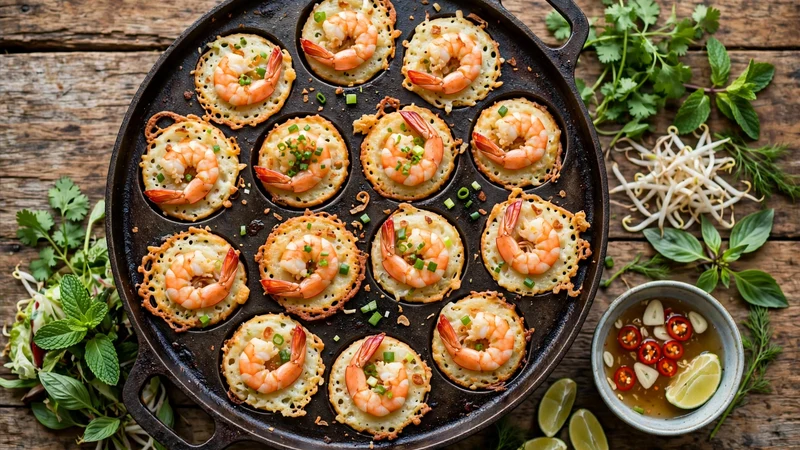
Tiny golden pancakes from a sizzling cast iron mold, topped with whole shrimp and wrapped in herbs. A plate of 10 to 15
 Keep exploring
Bitter robusta coffee brewed through a cloth filter, sweetened with condensed milk, poured over ice. The drink that defi
