While most visitors rush straight to Back Beach, Front Beach (Bai Truoc) sits on the sheltered west side of Vung Tau, facing the city and the setting sun. This is the beach where locals walk, exercise, and wind down, and it rewards travelers who prefer a quieter, more everyday kind of seaside.

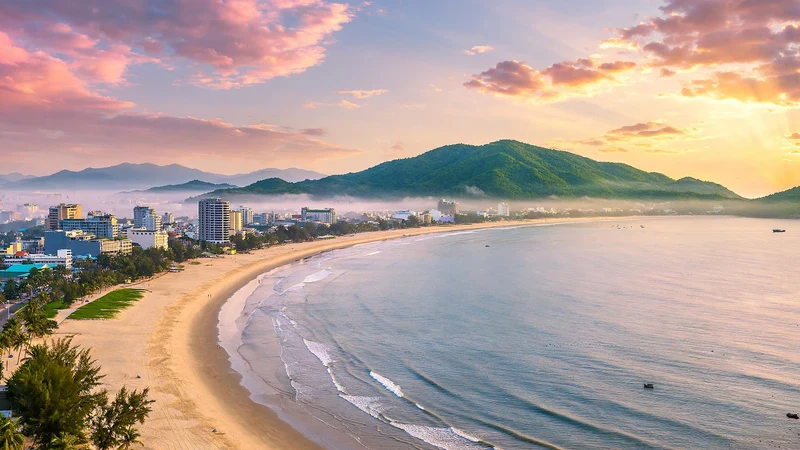
AI illustration
Front Beach curves along a sheltered bay on the west side of the Vung Tau peninsula, framed by Big Mountain to the south and Small Mountain to the north. The water here is calm almost all year, protected from the stronger swells that roll into Back Beach on the east side. What you get instead of surf is a wide, still surface that turns gold and pink every evening, with the lights of the city starting to flicker on behind you as the sun goes down.
This is not a postcard beach of white sand and clear water, and it is better to know that before you come. The sand is a natural yellow brown, the water is murky from the bay, and at low tide the shoreline can look a little tired. But the setting is genuinely lovely: fishing boats drift in the distance, Hon Ba island sits offshore like a punctuation mark, and the whole bay glows at sunset. Front Beach is a place for looking, walking, and sitting, more than for swimming.
The promenade along Tran Phu street is the heart of it. In the late afternoon the benches fill with couples and older residents, vendors sell drinks and snacks from carts, and the whole strip takes on a relaxed evening market feel. Come at dawn and you will find a different crowd: joggers, badminton players, and groups doing exercise routines on the pavement. Both versions are worth seeing, and both are free.
The two landmarks that define Front Beach are Hon Ba island and the White Palace (Bach Dinh), and both are easy to visit in half a day. Hon Ba is a small rocky island a few hundred meters offshore, topped with a small temple. At low tide a rough stone causeway emerges from the water and you can walk straight out to it, a small adventure that costs nothing and delights just about everyone who tries it.
Timing is everything for Hon Ba. The causeway only appears when the tide is low enough, usually in the morning, and the window can be short. Ask your hotel about tide times for the day you plan to go, or simply walk down in the morning and look: if you can see a line of rocks leading out to the island, you can go. Wear sandals you do not mind getting wet, watch your footing on the slippery stones, and give yourself plenty of time to walk back before the tide turns.
Up the slope of Big Mountain sits the White Palace, a whitewashed colonial era building set in shady gardens with one of the best views over Front Beach. It was built in the late 1800s as a residence for French colonial officials and today works as a small museum with period furniture, photographs, and artifacts from the region. The entry fee is small, typically a few tens of thousands of dong, and the gardens alone justify the short climb.
Even if museums are not your thing, walk up for the viewpoint. From the terrace you can take in the whole curve of Front Beach, the bay, and Hon Ba island in one frame. Combine it with a late afternoon visit so you can watch the light change, then walk back down to the promenade as the sunset crowd gathers.

When the sun drops, the streets behind Front Beach turn into one of the most enjoyable eating areas in Vung Tau. The lanes off Quang Trung and Tran Phu fill with open front seafood restaurants, plastic stools, charcoal grills, and tanks of live shellfish. The atmosphere is loud, smoky, and welcoming, and the food is cooked to order in front of you.
Order what the coast is known for. Banh khot, the small crispy rice pancakes topped with shrimp, are a Vung Tau signature: a plate typically costs 50,000 to 80,000 VND (about $2 to $3.20). Grilled squid, steamed clams, and the snail dishes the Vietnamese call oc are everywhere, with grilled squid often priced around 100,000 to 150,000 VND (about $4 to $6) depending on size. A seafood hotpot shared between two or three people makes a full, generous dinner for roughly 200,000 to 350,000 VND (about $8 to $14). Prices checked in 2026 and variable.
A few practical notes keep the experience smooth. Menus usually have pictures and prices, but it is worth confirming the price of anything sold by weight before it goes on the grill. Peak dinner hours run from about 6:30 to 8:30 pm, when the best known spots fill up and you may wait for a table. Bring cash, since most of these restaurants do not take cards, and do not be shy about pointing at the tanks: picking your seafood live is half the fun.
Be honest with yourself about swimming. Front Beach is swimmable on a calm day and you will see locals in the water, but the bay water is not clear and the bottom can be muddy. If a proper swim matters to you, spend your mornings at Back Beach, where the water is cleaner and the sand is better, and keep Front Beach for the late afternoon and evening. The two beaches are about a 10 minute ride apart, so combining them is easy.
Timing shapes the experience more than anything else. Arrive around 4:30 pm to find a bench, watch the sky change, and then walk straight into dinner. Weekday evenings are the calmest and most local. Weekends and public holidays bring big crowds of Vietnamese families, which is lively and fun but a different mood entirely. If you want Front Beach at its most peaceful, come on a weekday and stay past 8 pm, when the dinner rush fades and the promenade belongs to strollers again.
Getting around is simple. The whole Front Beach strip is walkable, and short taxi or ride hailing trips connect it to Back Beach, the cable car station, and the rest of the city for small change. Most visitors see Front Beach as part of a one or two night Vung Tau trip from Ho Chi Minh City, which is exactly the right pace: arrive, settle in, catch the sunset, eat well, and sleep to the sound of a calm bay.
You can, and locals do on calm days, but the bay water is murky and the bottom can be muddy. It is a beach for sunsets, walks, and sitting rather than serious swimming. Head to Back Beach for cleaner water and better sand.
It depends on what you want. Back Beach is better for swimming, resorts, and a classic beach day. Front Beach is better for sunsets, local life, evening walks, and seafood dinners. Most visitors enjoy both, since they are only about 10 minutes apart.
At low tide, usually in the morning, a rocky causeway emerges and you can walk out to the island for free. Ask your hotel about tide times, wear sandals you do not mind getting wet, and allow time to walk back before the tide turns.
The promenade is well lit and busy with families, vendors, and strollers well into the evening. As anywhere, keep valuables close and stay on the main lit strip after dark.
 Keep exploring
Back Beach (Bai Thuy Van) runs nearly 8 km along Vung Tau, about 2 hours from Ho Chi Minh City. Free entry, gentle surf,
 Keep exploring
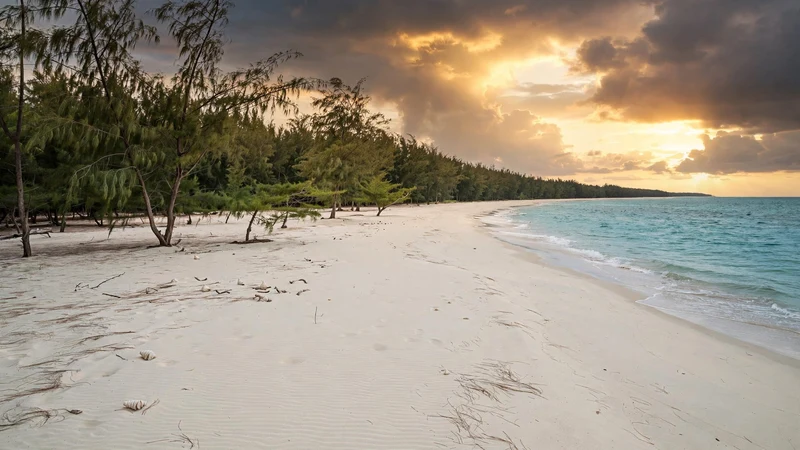
Ho Tram is a quiet beach strip two hours from Ho Chi Minh City, with casuarina trees, calm water, and upscale resorts, p
 Keep exploring
Vung Tau sits about 100 km from Ho Chi Minh City. Compare the expressway, the coastal road, and the ferry, and pick the
