Two rolls define Vietnamese street eating. Goi cuon is the fresh one: translucent rice paper wrapped around shrimp, pork, and herbs, dipped in peanut sauce. Cha gio is the fried one: golden, shattering, packed with pork and crab. Here is how they differ, how to eat each, and where Saigon rolls them best.
AI illustration
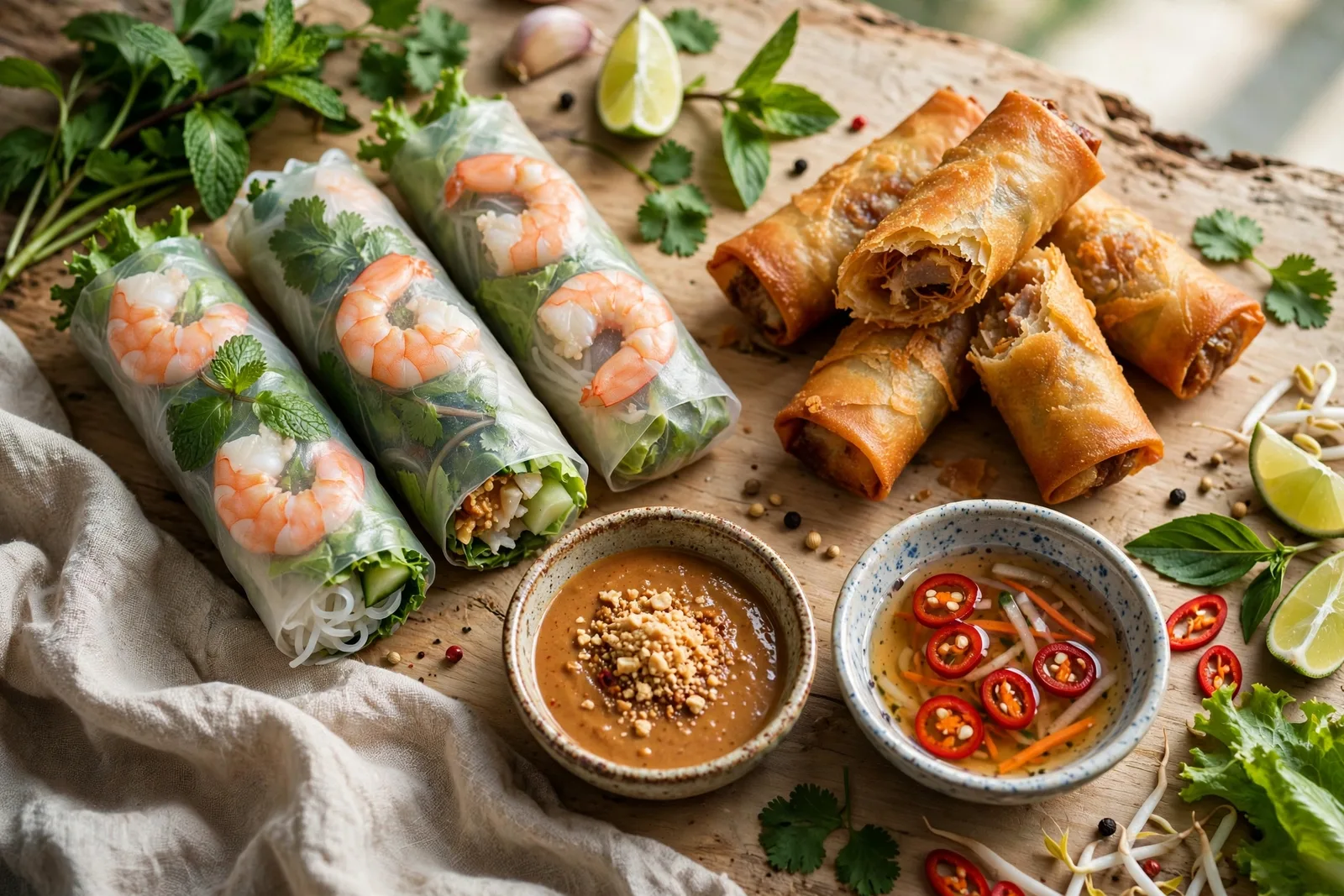
Goi cuon is restraint. A sheet of rice paper, softened in water, wraps around cooked shrimp, slices of pork belly, vermicelli, lettuce, and a tangle of mint and basil. The shrimp sit at the visible end, orange and decorative through the translucent skin. Nothing is cooked to order; the craft is in the assembly and the freshness.
Cha gio is indulgence. Minced pork, crab meat, wood ear mushrooms, and jicama get rolled in rice paper and deep fried until the skin turns golden and blistered. The contrast is the point: shattering outside, juicy inside, best eaten seconds from the oil.
They often share a plate, and they share a philosophy: fresh ingredients, precise wrapping, and a dipping sauce that makes the roll sing. Together they are the most approachable entry point to Vietnamese food.
The rice paper is the variable most people miss. Good paper is pliable, slightly chewy, and translucent enough to show the shrimp, while cheap paper tears or turns gummy. The best roll shops buy premium paper and keep it at the right humidity, a detail you taste without noticing.
The shrimp placement is deliberate craft. Two or three prawns, butterflied and arranged in a row, sit against the rice paper so they show through like an edible postcard. It is food designed to be seen before it is eaten, and the visual matters as much as the taste.
Goi cuon traditionally dips in tuong, a thick peanut hoisin sauce topped with crushed peanuts and sometimes chili. The sauce should be savory sweet and clingy, coating each bite. Some shops offer nuoc mam instead, lighter and brighter, and both are legitimate.
Cha gio wants nuoc mam pha, the sweet garlic chili fish sauce, and it wants it in quantity. The fried roll also gets the lettuce wrap treatment: tuck the roll in a lettuce leaf with herbs, roll it up, and dip. The greens cut the fried richness perfectly.
Sauce quality separates the great from the average. A peanut sauce should taste of roasted peanuts, not just sweetness; a fish sauce dip should balance sweet, sour, and heat. The best shops make both fresh daily.
Rolling is a skill you can learn in one sitting. Dip the paper briefly, lay the fillings in a neat row, fold the sides, and roll tight. The first one is ugly, the third is respectable, and by the tenth you are showing off. Some shops let you roll your own for the fun of it.
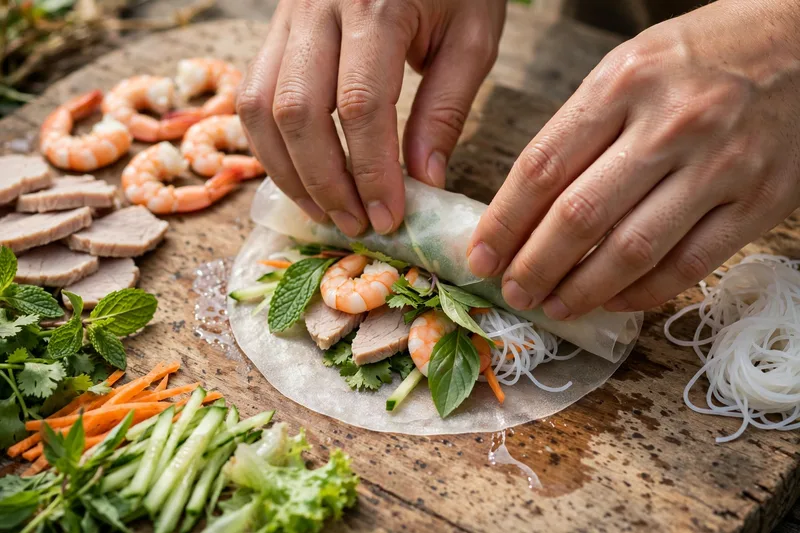
Eating them is easy. For goi cuon, pick up the whole roll and dip the end in peanut sauce, or pour a little sauce over the top. Eat in two or three bites; the rice paper is tender and the fillings are cool and fresh.
For cha gio, wrap in lettuce with herbs first, then dip in fish sauce. The wrap adds crunch and freshness and keeps your fingers cleaner. Eat it hot; a fried roll that has gone lukewarm has lost half its charm.
The rolling instinct runs through Saigon street food, from banh xeo wraps to the noodle bowls of bun thit nuong, where cha gio appears as the crunchy topping. Learn the wrap here and you will use it everywhere.
The fried roll filling varies by region. Southern cha gio leans pork and crab with jicama for crunch, while the northern version uses wood ear and glass noodles. Saigon shops often serve both, and comparing them is a delicious education.
Rolls are everywhere: street vendors with glass cabinets, market stalls, and dedicated roll shops. Dinh Cong Trang in District 1 is famous for its roll houses, and the markets run excellent versions at honest prices. Evening vendors near the backpacker streets sell to the night crowds.
Expect 5,000 to 15,000 VND (about $0.20 to $0.60) per roll. A combo plate of four fresh and four fried with full herbs and sauces runs 40,000 to 70,000 VND (about $1.50 to $3), a proper light meal.
For takeaway, ask for the sauces in separate bags and the lettuce packed dry. Rolls travel well for short distances, but the fried ones want to be eaten fast.
Rolls are the safest bet for cautious eaters. Everything is visible, nothing is challenging, and the flavors are clean and fresh. If you are introducing someone to Vietnamese food, start here. The rolls do the persuading.
Some vendors sell a DIY kit with rice paper, fillings, and sauces packed separately for rolling at home. It is a fun dinner party activity, and the kit costs little more than ready made rolls.
Goi cuon is fresh, unfried rice paper rolls; cha gio is deep fried spring rolls. Same family, opposite techniques.
Hoisin thinned with water or coconut milk, with ground peanuts and chili. Thick, savory, and sweet.
Goi cuon usually is, being rice paper and fresh fillings. Cha gio wrappers vary, so ask if it matters.
Six to eight rolls with herbs and sauce is a satisfying light meal for most people.
 Keep exploring
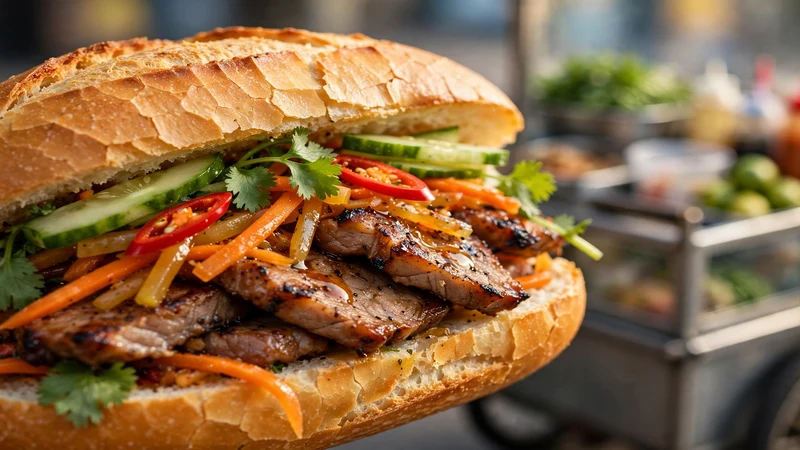
From street carts to a UNESCO heritage nomination, Saigon banh mi is the street food you cannot skip. Crispy crust, rich
 Keep exploring
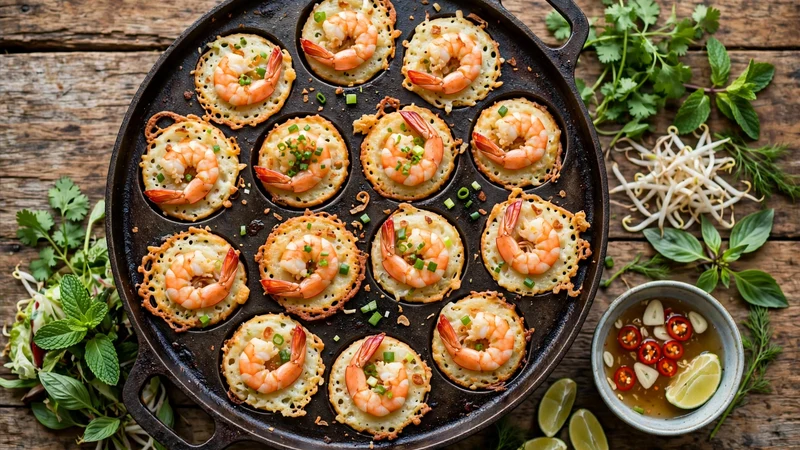
Tiny golden pancakes from a sizzling cast iron mold, topped with whole shrimp and wrapped in herbs. A plate of 10 to 15
 Keep exploring
Bitter robusta coffee brewed through a cloth filter, sweetened with condensed milk, poured over ice. The drink that defi
