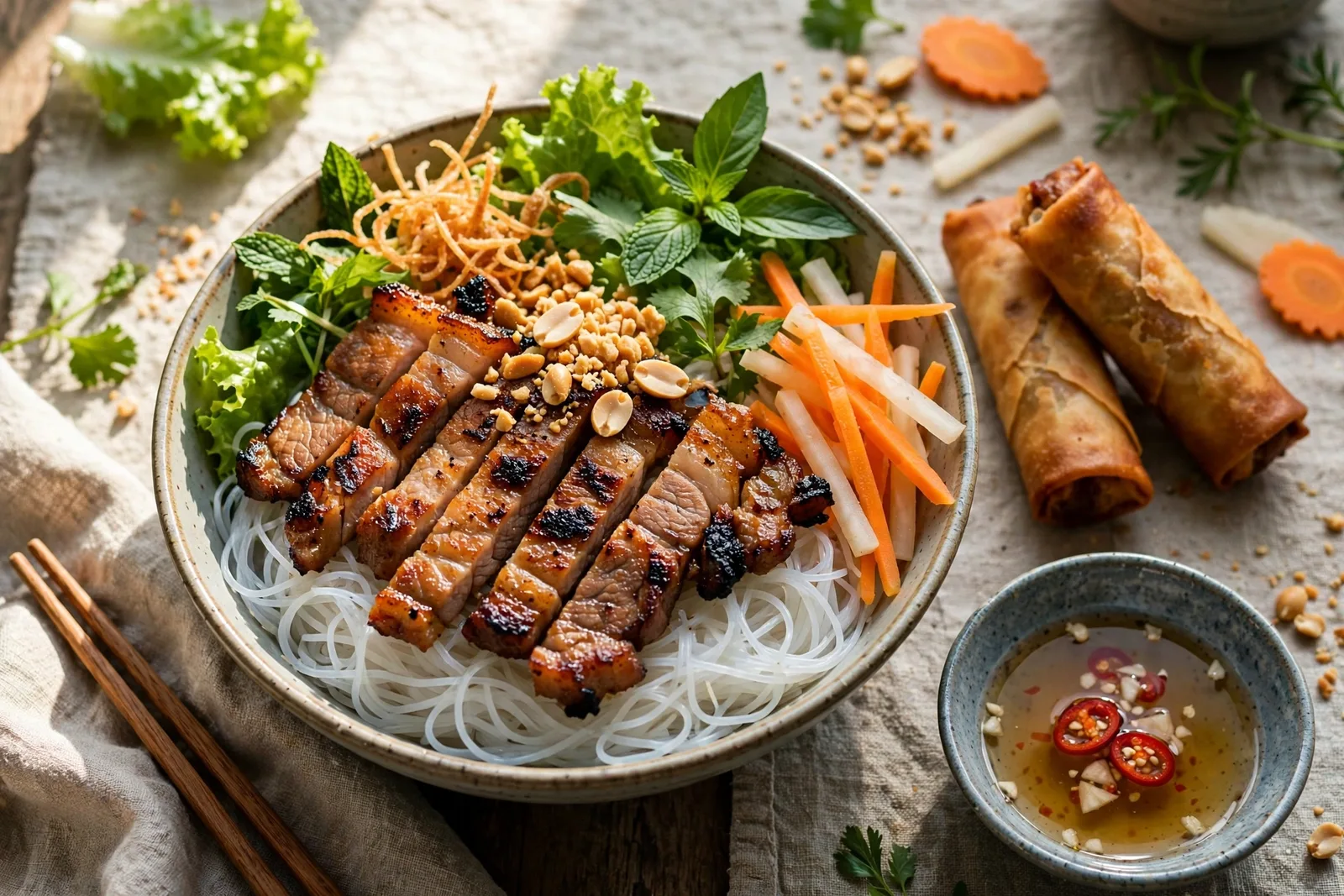
Bun thit nuong is Saigon's perfect lunch bowl: smoky charcoal grilled pork laid over cool rice vermicelli, with crispy spring rolls, pickled vegetables, crushed peanuts, and a flood of herbs. The magic is in the mix. Here is what goes in the bowl, how to eat it, and where to find the ones worth queuing for.
AI illustration
Start with the base: soft white rice vermicelli, cool and light. On top goes thit nuong, pork shoulder or belly marinated in lemongrass, garlic, fish sauce, and a touch of sugar, then grilled over charcoal until the edges char. The smoke is non negotiable; a bun thit nuong without charcoal perfume is just a salad.
Then the supporting cast. Cha gio, the golden fried spring rolls, cut into pieces for crunch. Do chua, pickled carrot and daikon for sour brightness. Crushed roasted peanuts and fried shallots for richness. A tangle of lettuce, mint, basil, and perilla for freshness. Everything gets drowned in nuoc mam pha, the sweet garlic chili fish sauce that ties it together.
It shares DNA with com tam, the broken rice plate that also celebrates grilled pork, but the cool noodles make this the lighter, fresher sibling.
The marinade is where stalls differentiate themselves. Lemongrass is standard, but the great ones add a whisper of honey for caramelization and a dash of fish sauce for depth. The pork rests in it for hours, and you can taste the patience. Ask a vendor about their marinade and you will get a proud, evasive smile.
The noodle itself deserves attention. Bun are thin rice vermicelli, pressed into small cakes and cut into bite sized bundles, with a soft chew that soaks up the fish sauce. They arrive at room temperature, never hot, which keeps the bowl refreshing. Stalls that source fresh bun daily have noodles with a clean rice flavor, while older noodles taste sour and flat, and the best vendors would never serve them.
Do not eat it in layers. Pour the fish sauce over everything, then toss the bowl thoroughly with your chopsticks until every strand glistens. The goal is a unified bite: smoky pork, sour pickle, crunchy roll, fresh herb, and peanut all at once.
Add chili to taste, but try the bowl first as the cook intended; the best stalls balance the sauce so it needs nothing. Squeeze the lime wedge over the top if one is served, it brightens the pork fat beautifully.
There is no wrong pace. Some people mix as they go, keeping the noodles pristine and the toppings distinct. Purists toss it all at the start. Both camps agree on one thing: the last spoonfuls, where the sauce pools at the bottom, are the best.
Temperature contrast is the secret pleasure of the dish. Cool noodles, warm pork, crisp pickle, fresh herbs, all in one bite. That is why the bowl works so well at lunch in the Saigon heat. It is refreshing and satisfying at once, without the heaviness of a hot soup.
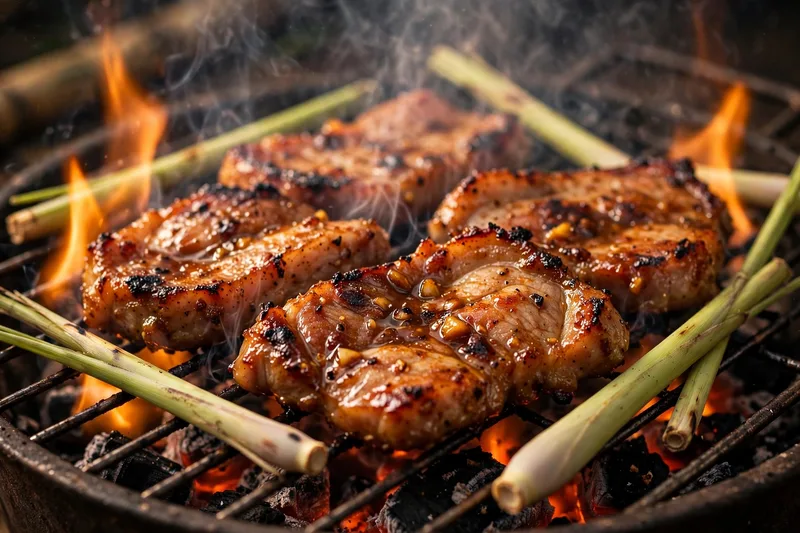
The great stalls announce themselves with charcoal smoke. Around Ben Thanh and the alleys of District 1, lunch crowds queue at family counters where the grill never stops. District 3 and District 5 run deep with neighborhood versions that locals defend fiercely.
Signs of quality: pork with real char on the edges, spring rolls fried to order rather than sitting, pickles that snap with acidity, and herbs that look like they were cut this morning. If the vermicelli is warm or gummy, walk away.
The rolling and wrapping instinct continues in goi cuon and cha gio, where the same flavors get packed into rice paper. Try both to see how Saigon remixes its greatest hits.
The lunch rush runs 11:30 to 13:00, and the best stalls sell out of grilled pork by 13:30. Arrive at 11:00 for the first grill batch, when the pork is at its juiciest and the spring rolls come straight from the fryer. Latecomers get the tail end of the grill, still good but never peak.
A standard bowl costs 35,000 to 50,000 VND (about $1.50 to $2). The dac biet version with extra pork and two spring rolls runs 55,000 to 60,000 VND (about $2 to $2.50). Takeaway is common and travels well, just ask for the sauce in a separate bag.
Watch for bun nem nuong, the variant with grilled pork sausage patties instead of sliced pork, common in central style shops. Some stalls offer a thit nuong banh mi too, the same smoky pork in a baguette, for the commuter crowd.
Pair it with iced tea or a fresh coconut. The bowl is rich enough to want something cold and simple beside it.
Many stalls also sell the components separately for home assembly: grilled pork by weight, pickles by the bag, sauce by the bottle. If you have a kitchen, a takeaway kit for four costs little and feeds a crowd. It is the easiest Saigon dinner party you will ever host.
Pork marinated in lemongrass, garlic, and fish sauce, grilled over charcoal until smoky and charred at the edges.
Mild by default. Chili comes on the side, so you control the heat.
Bun cha is Hanoi style with pork patties in a broth bowl for dipping; bun thit nuong is Saigon style, drier, with everything tossed together.
Some stalls offer grilled tofu or mushroom versions. Ask for bun chay thit nuong style.
 Keep exploring
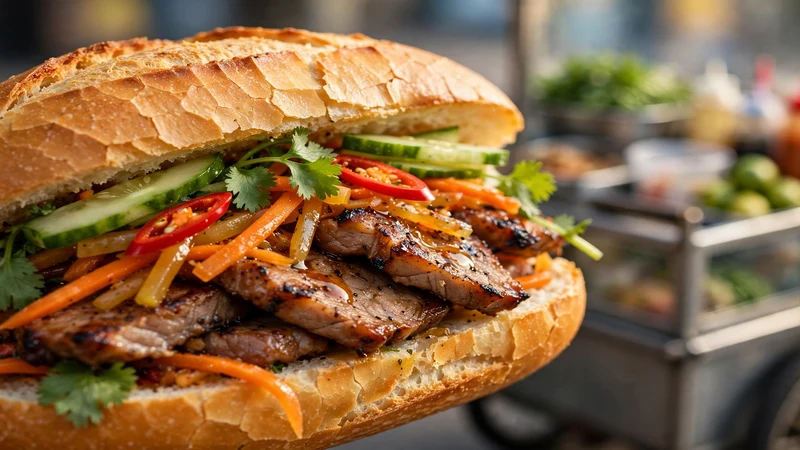
From street carts to a UNESCO heritage nomination, Saigon banh mi is the street food you cannot skip. Crispy crust, rich
 Keep exploring
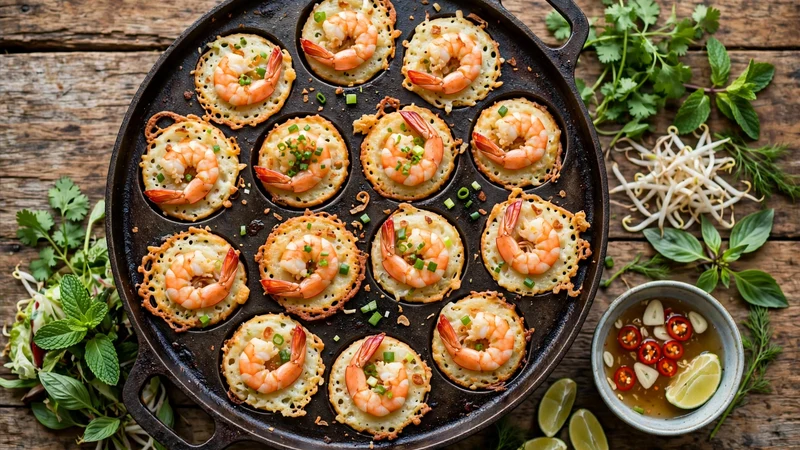
Tiny golden pancakes from a sizzling cast iron mold, topped with whole shrimp and wrapped in herbs. A plate of 10 to 15
 Keep exploring
Bitter robusta coffee brewed through a cloth filter, sweetened with condensed milk, poured over ice. The drink that defi
