Com tam, broken rice topped with smoky grilled pork, is the lunch Saigon runs on. It is cheap, filling, and eaten shoulder to shoulder with office workers at noon. Here is how to order it and eat it properly.
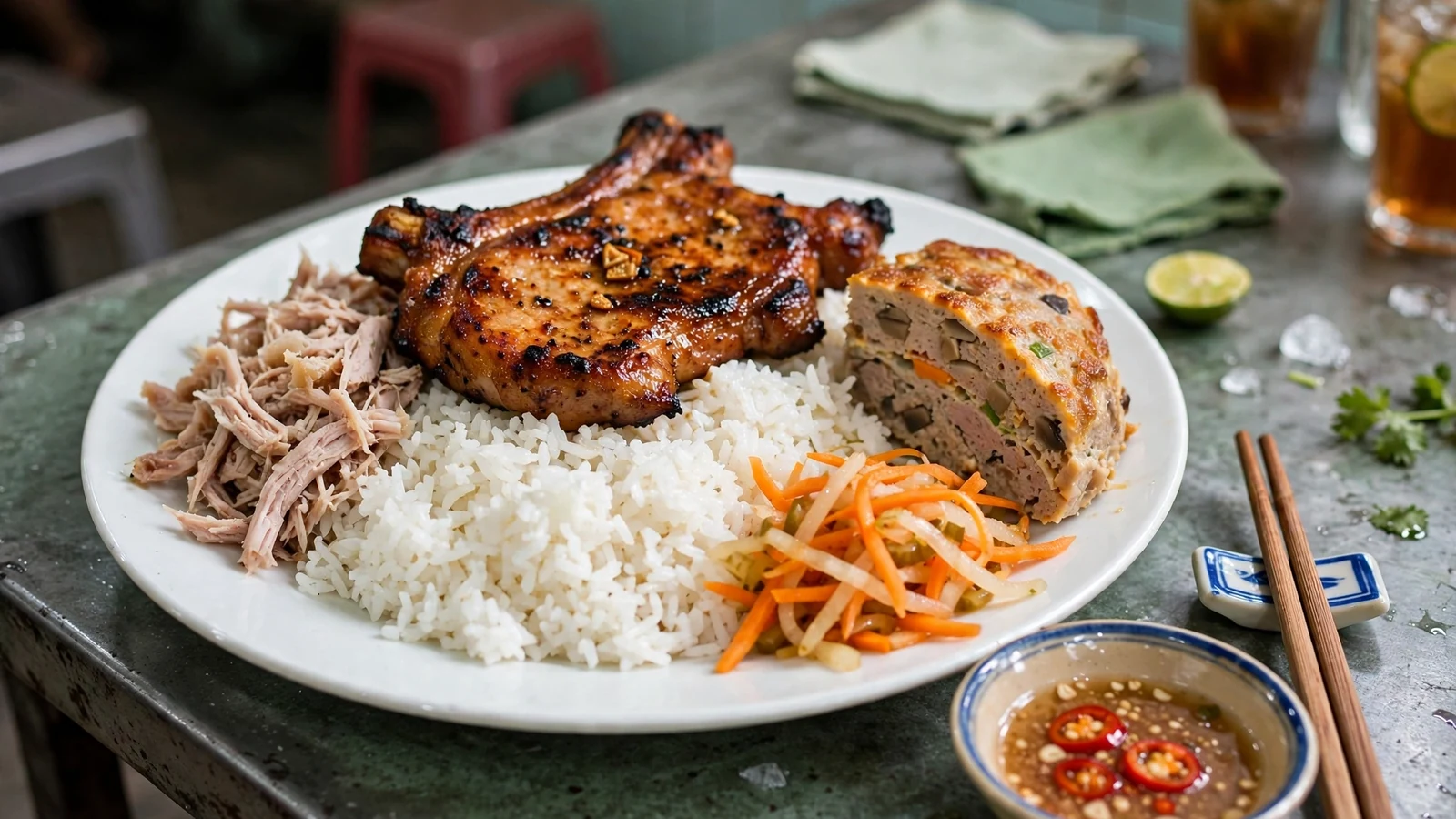
AI illustration
Com tam begins with rice that most of the world would call imperfect. During milling, some grains fracture into smaller pieces, and Saigon cooks treasure those broken grains for their texture: fluffier than whole rice, slightly chewy, and better at catching sauce. What began as humble farmer food, a way to use the fractured grains that could not be sold at full price, has become one of the proudest dishes in the city. The rice itself is the quiet star, and locals can taste the difference between a shop that cooks it well and one that does not.
The centerpiece is suon nuong, a pork chop marinated in fish sauce, sugar, lemongrass, garlic, and sometimes a little honey, then grilled over charcoal until the edges char and caramelize. A great chop arrives glistening, smoky, and tender enough to cut with the side of a spoon, with crisped fat along the rim that regulars fight over. The sweet savory marinade is the flavor signature of the dish, and the smell of it grilling is how you find a com tam shop from a block away.
Around the chop, the classic plate assembles its supporting cast. Bi is shredded pork skin tossed with toasted rice powder and thin strips of seasoned pork, adding a chewy, nutty texture. Cha trung is a steamed meatloaf of minced pork and egg, sliced into a pale golden slab with a soft, custardy bite. Trung op la, a sunny side up fried egg with lacy crisp edges, crowns the rice for anyone ordering the full combination. Pickled daikon and carrot, cucumber slices, and tomato cut through the richness, and a small bowl of scallion oil often waits on the side.
Nuoc cham is the light, sweet tangy dipping sauce that ties the whole plate together. Each shop mixes its own from fish sauce, water, sugar, lime juice, minced garlic, and chili, and the balance is a point of pride: too salty and it bullies the pork, too sweet and it turns cloying. The right nuoc cham tastes bright and savory at once, and you pour it generously over the rice rather than dipping daintily. Watch the locals and follow their lead with the spoon.
The genius of com tam is how the components play against each other in a single bite. Smoky charred pork meets the mild fluffy rice, the tangy pickles cut the fat, the rich egg yolk coats everything, and the nuoc cham lifts it all. Try to get a little of everything on your spoon: rice, a shred of pork, a bit of bi, a swipe of egg. Eaten this way, the plate never gets monotonous, even though it looks simple.
Most shops also offer extras for the hungry. An additional pork chop, a skewer of nem nuong (grilled pork sausage), or a slice of cha usually costs 15,000 to 25,000 VND (about $0.60 to $1.00). Extra rice is cheap and always available. If the full "thap cam" mixed plate feels like too much food, a simple "com tam suon," just rice and the grilled chop, is the purest expression of the dish and many regulars never order anything else.
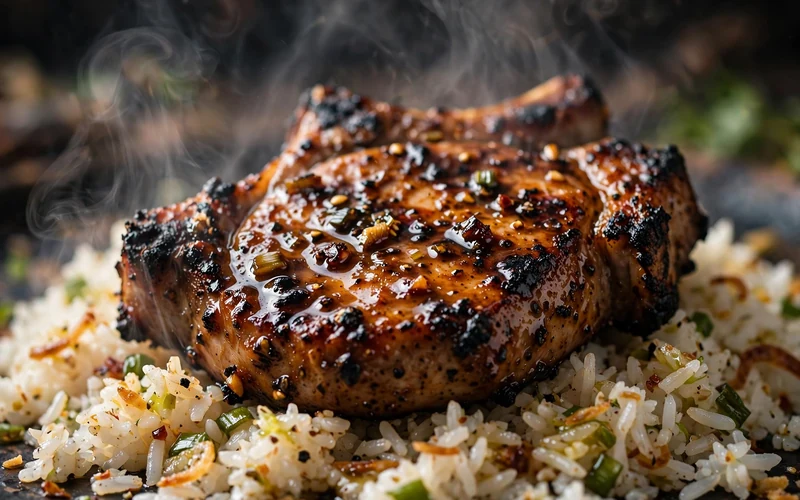
Ordering com tam is easier than it looks, because the whole system runs on a handful of set combinations. "Com tam suon" gets you rice with grilled pork chop. "Suon bi cha" adds the shredded pork skin and the egg meatloaf. "Thap cam" means the full mixed plate with everything, usually including the fried egg. Say "mot," meaning one, before the combination, point at the menu or at a neighboring plate that looks good, and you will be understood. Smiling helps everywhere.
Service at lunch is fast by design. Your plate typically arrives within minutes, already assembled, with the nuoc cham in a small bowl on the side. Chopsticks and a spoon come wrapped or in a shared holder. Use the spoon for rice and the chopsticks for the meat, the way everyone around you does. Pour the nuoc cham over the rice yourself, a spoonful at a time, tasting as you go. Nobody expects you to finish the sauce bowl.
Paying is simple. Many shops hand you a small bill at the table, while smaller stalls expect you to pay at the counter on your way out. Just watch what the table next to you does and copy them. Iced tea, called tra da, usually costs only a few thousand dong and is the standard companion. Lunch crowds move quickly, so linger a little after you finish but be ready to free your stool during the peak rush.
Com tam is Saigon’s definitive lunch, and the city eats it with the urgency of people on a clock. Between 11:00 and 13:30, office workers, motorbike drivers, and students fill every available stool, and the best shops develop a rhythm that borders on choreography. Eating com tam at noon, shoulder to shoulder with the lunch crowd, is as much a cultural experience as a meal. Arrive at 10:30 for a calm first seating or embrace the beautiful chaos of the peak hour.
You will find com tam everywhere, but the classic shops cluster along the busy lunch streets of District 1, District 3, and Binh Thanh, where charcoal smoke and the clatter of plates announce them before any sign does. Look for the grill out front, the glass cabinet displaying chops and cha, and a dining room full of locals. A long queue of office workers is the most reliable review a shop can earn.
Prices stay friendly. A basic com tam suon runs 40,000 to 55,000 VND (about $1.60 to $2.20), while the full mixed plate with egg lands between 55,000 and 70,000 VND (about $2.20 to $2.80), with prices checked in 2026 and variable by district and portion. For the quality and quantity, it remains one of the best value meals in Saigon, a complete lunch for less than the price of a coffee back home.
It means broken rice, referring to the fractured rice grains used in the dish. Once considered inferior grains, they are now prized for their fluffy, slightly chewy texture and their ability to absorb sauce.
Lunch is its prime time, roughly 10:30 to 14:00, when the grills are hottest and the crowds biggest. Many shops also open for dinner, and some beloved spots serve late into the evening, but the classic experience is midday.
Most com tam shops are built around pork, so options are limited. Some serve grilled chicken or a fried egg focused plate. Ask for "com tam trung" (rice with egg) or look for a shop displaying chicken. Vegetarian versions exist but are uncommon at traditional stalls.
 Keep exploring
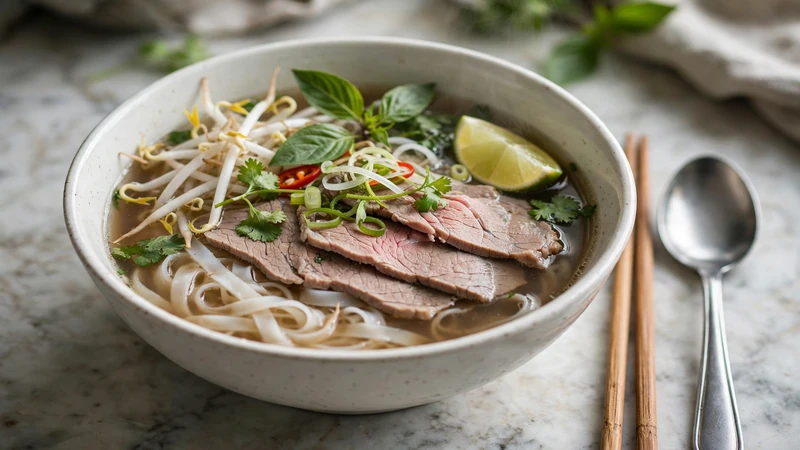
Saigon pho is sweeter and herbier than Hanoi pho. This guide covers pho bo vs pho ga, how to eat it step by step, and wh
 Keep exploring
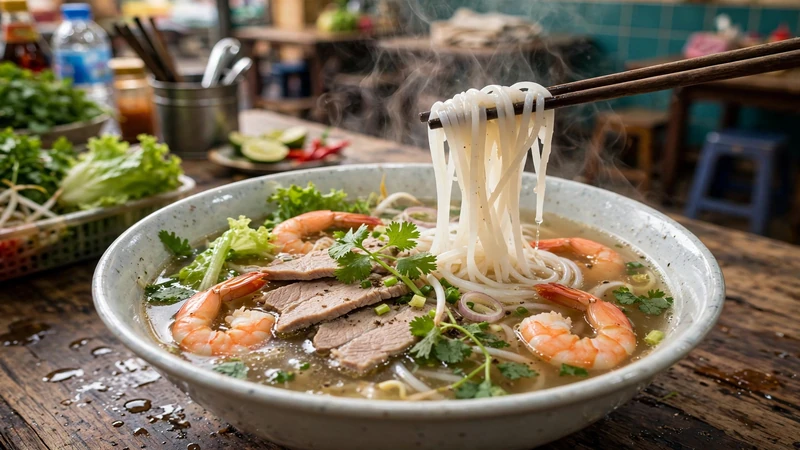
Hu tieu Nam Vang is Saigon’s clear, savory pork and seafood noodle soup with chewy thin noodles. Learn the dry vs soup v
 Keep exploring
From street carts to a UNESCO heritage nomination, Saigon banh mi is the street food you cannot skip. Crispy crust, rich
