Pho is Vietnam’s national dish, and Saigon cooks it with a bold southern accent. Expect a sweeter broth, a heaping plate of fresh herbs, and steaming bowls served from dawn. This guide shows you how to order and eat it like a local.
AI illustration
Pho was born in the north of Vietnam, but when it traveled south with migrants in the 1950s it changed its personality. Saigon cooks simmer their beef bones a little longer and are not shy with rock sugar, which gives the southern broth a noticeably sweeter, rounder flavor than the cleaner, saltier Hanoi style. The Saigon bowl is also a touch richer and slightly less clear, because southern shops often favor marrow heavy bones and a more generous hand with spices like star anise and cinnamon.
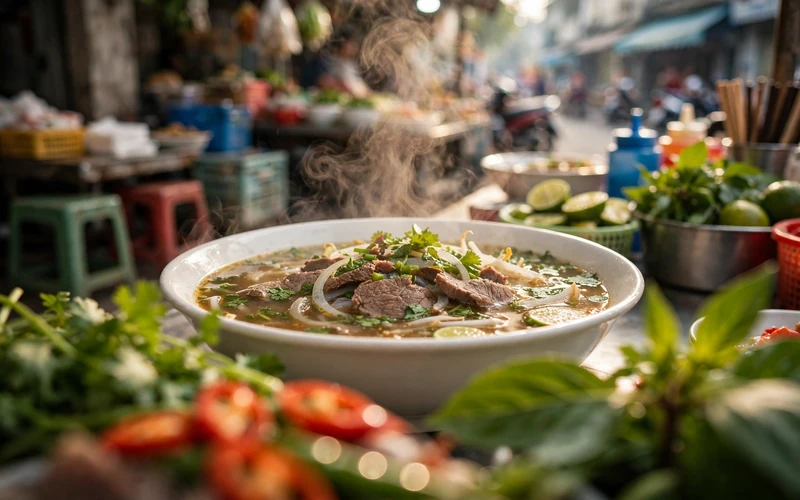
The biggest visual difference arrives before you even taste the soup. Every Saigon pho shop sets down a heaping plate of fresh herbs: Thai basil, sawtooth herb (ngo gai), crisp bean sprouts, lime wedges, and sliced fresh chili. In Hanoi you might get a modest sprig of green onion and a squeeze of lime, but in the south the herbs are half the experience. You tear them into the bowl as you eat, so the soup stays bright and fragrant from the first spoonful to the last.
The condiment tray tells the same story of southern boldness. Hoisin sauce and bright red chili sauce sit on nearly every Saigon table, along with fish sauce and sometimes pickled garlic in vinegar. Northern purists consider stirring hoisin into the broth a small crime, but in Saigon nobody will judge you. The southern palate leans sweeter, louder, and more generous, and the pho reflects that in every detail.
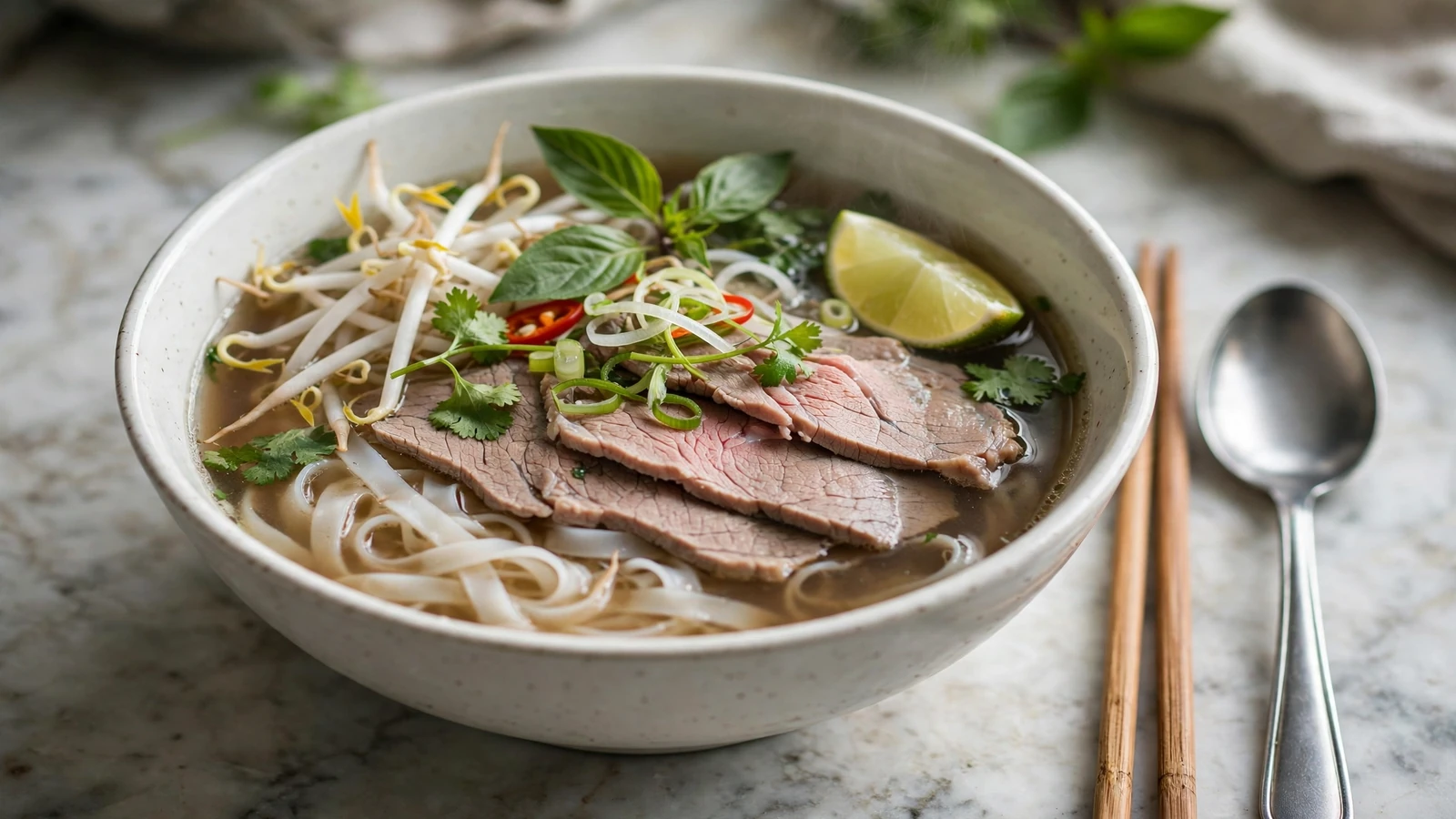
Pho bo, the beef version, is the classic that most travelers picture. The broth comes from beef marrow bones simmered for six to twelve hours with charred onion and ginger, star anise, cinnamon, cloves, and cardamom, producing a deep amber soup that smells of warm spice before it reaches your table. Toppings read like a small menu of their own: tai (paper thin slices of rare beef that cook in the hot broth), chin (brisket), nam (flank), gau (fatty brisket), and bo vien (springy beef meatballs). If you only eat pho once in Vietnam, most locals would steer you to a beef bowl first.
Pho ga takes a lighter path. The broth is golden and clear, built from whole chickens rather than bones, and it tastes clean and gently sweet with a fragrance of ginger and lime leaf. The chicken is poached, shredded by hand, and laid over the noodles, often with a scattering of thinly sliced kaffir lime leaves that perfume the whole bowl. On a hot Saigon morning or when your stomach wants something gentle after a long flight, pho ga is the kinder choice.
Choosing between them is mostly a matter of mood, but there is a useful shortcut. If a menu offers "thap cam," the mixed or special bowl, you can sample several beef cuts in one sitting. Prices for beef and chicken bowls are nearly identical at most shops. Order pho bo for depth and drama, order pho ga for clarity and comfort, and know that both count as the real thing.
Start by tasting the broth before you add a single thing. Lift a spoonful of the clear soup, blow on it, and sip. This first taste is how Saigon diners judge a shop, and it tells you exactly how much seasoning the bowl needs. A great broth should already taste complete: savory, lightly sweet, and layered with spice. If it tastes flat, the shop will earn its keep through your seasoning.
Next, build the bowl gradually. Squeeze in a wedge of lime, tear a few basil leaves and a stalk or two of sawtooth herb into the soup, and add a small handful of bean sprouts. Resist the urge to dump the entire herb plate in at once. Adding greens in stages keeps them crisp and keeps the broth hot, and each spoonful tastes a little different as the herbs release their oils. Add sliced chili sparingly at first. Fresh Vietnamese chilies carry real heat.
Now season to your taste. A dash of fish sauce deepens the savor, a spoonful of chili sauce adds warmth, and a squeeze of lime brightens everything. If you like hoisin, use it as a dipping sauce for the beef on the side rather than stirring it through the whole bowl, so you can still taste the broth the cook intended. Stir gently once, then leave the bowl alone and eat.
Eat with chopsticks in your dominant hand and the soup spoon in the other, the way everyone around you is doing. Lift noodles with the chopsticks, guide them with the spoon, and slurp without embarrassment. A little noise is normal and even welcome. Spoon up broth between bites of noodles, and finish the liquid if you love it. Leaving a little broth behind is perfectly fine, but an empty bowl is the highest compliment a traveler can pay.
Saigon’s great pho shops cluster in the old neighborhoods of District 1 and District 3, where family run storefronts have served the same recipes for decades. You will recognize them by the crowds of office workers on plastic stools, the giant steaming stockpots visible from the street, and an aroma of star anise that reaches you half a block away. These shops rarely advertise in English, which is exactly why they are worth finding.
Timing matters as much as location. Pho is a morning dish in Saigon, and the best shops open around 6:00 and often sell out by 10:30 or 11:00. Arrive before 9:00 for the full choice of cuts and the freshest broth, since the rarer beef slices go first. A handful of shops stay open through the evening, and late night pho after a long day out is a fine Saigon tradition, but the morning bowl is the classic experience.
Expect to pay 45,000 to 65,000 VND (about $1.80 to $2.60) at a humble street side shop and 65,000 to 80,000 VND (about $2.60 to $3.20) at a well known sit down restaurant, with prices checked in 2026 and variable by location and toppings. A "dac biet" or special bowl loaded with every cut costs a little more and is worth it once. Iced tea usually costs a few thousand dong extra, and nobody will rush you out of your seat.
Yes, in flavor and in spirit. Saigon broth is sweeter and a little richer, the herb plate is far more generous, and hoisin and chili sauce sit on every table. Hanoi pho is cleaner, saltier, and more restrained. Try both styles before you decide which you prefer.
Order pho ga, the chicken version, which is lighter and golden. Most pho shops also serve chicken exclusively or alongside beef, so just look for "ga" on the menu or point at a neighboring table’s chicken bowl.
Generally yes. Choose busy shops with high turnover, where the broth stays at a rolling boil and ingredients move fast. The boiling soup itself is one of the safest foods you can eat on the street.
 Keep exploring
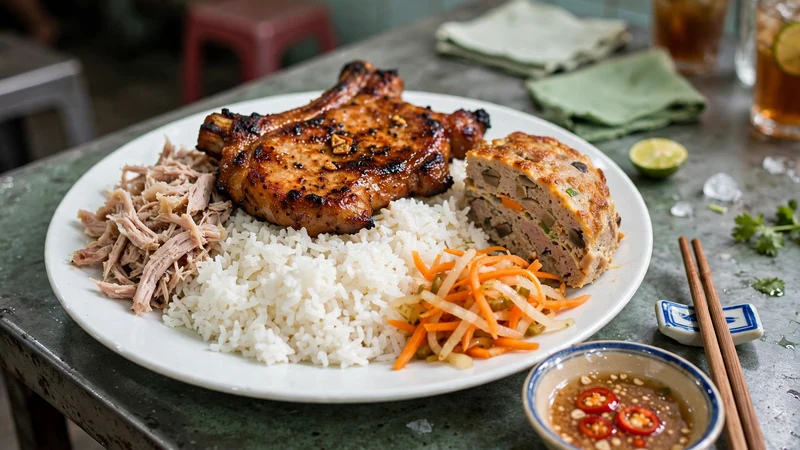
Com tam is Saigon’s signature lunch: broken rice with grilled pork chop, shredded pork skin, and egg meatloaf. Learn how
 Keep exploring
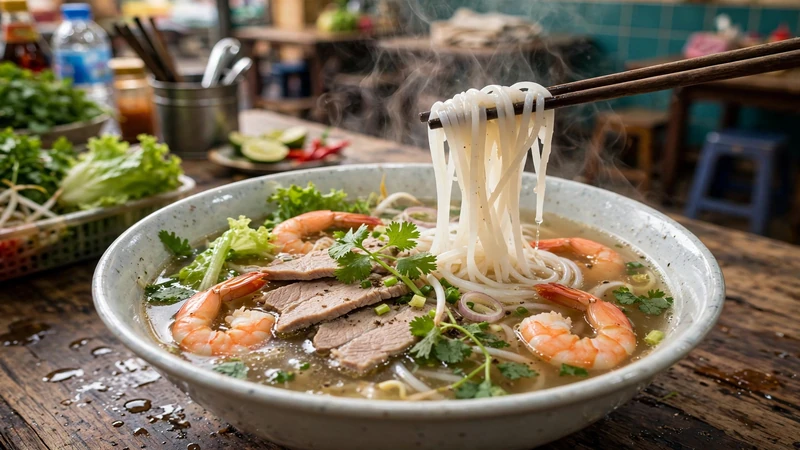
Hu tieu Nam Vang is Saigon’s clear, savory pork and seafood noodle soup with chewy thin noodles. Learn the dry vs soup v
 Keep exploring
From street carts to a UNESCO heritage nomination, Saigon banh mi is the street food you cannot skip. Crispy crust, rich
