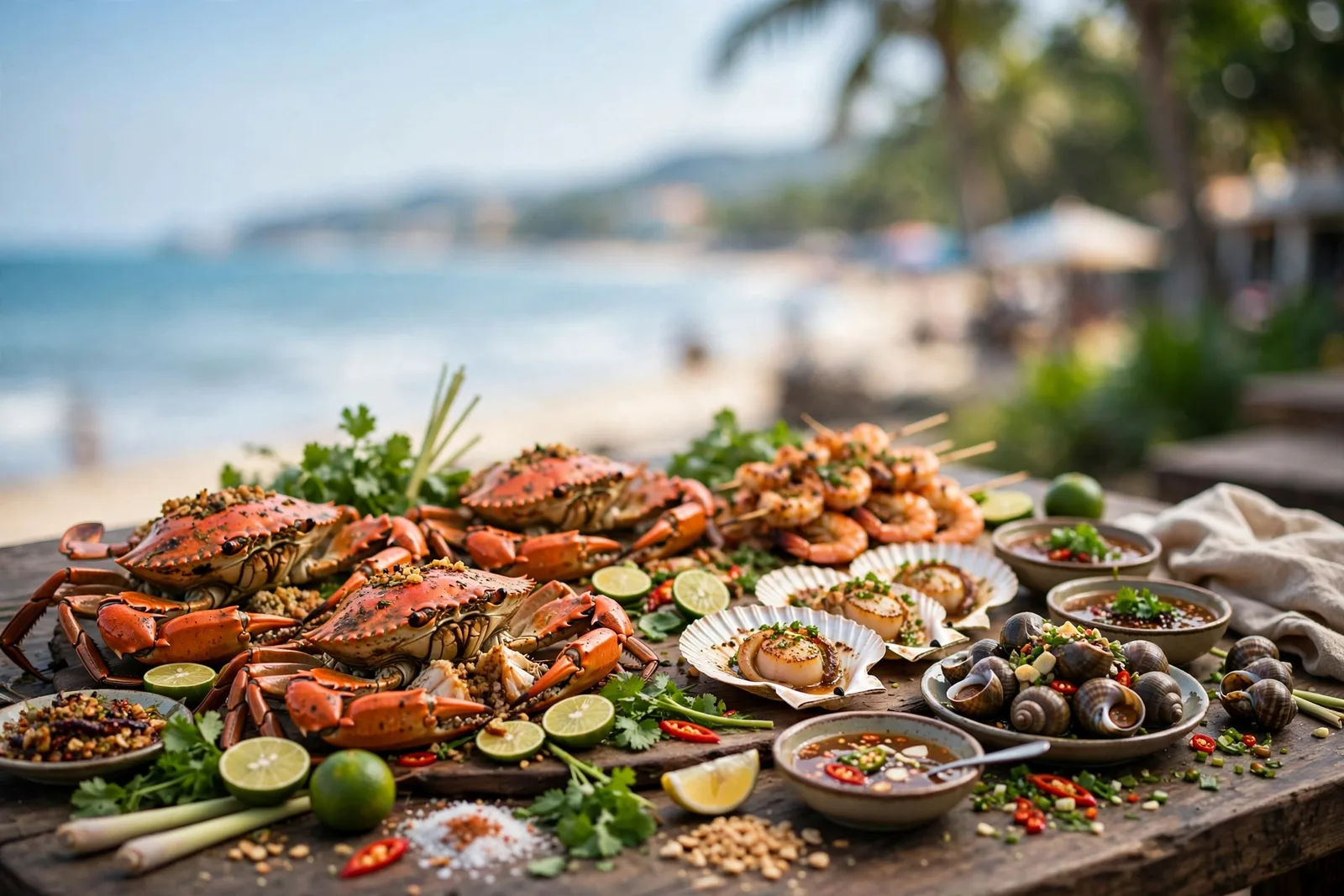
Two hours from Saigon, Vung Tau is where the city goes to eat the sea. This fishing port turned beach town serves the morning catch on plastic stools: crabs, shrimp, squid, and snails, picked live and cooked to order within sight of the water. Here is how the seafood streets work, what to order, and what fair prices look like.
AI illustration
Vung Tau is a working fishing port first and a beach town second, which is exactly the right order for eating well. The boats land in the morning, the markets fill by midday, and the distance from catch to plate can be measured in hours. Saigon's oc snail stalls source from these same waters, but here you eat at the source.
The town sits about 100 km southeast of Ho Chi Minh City, an easy day trip or weekend. Back Beach handles the swimming; the streets behind it handle the eating. Plan your beach time around your meals, not the other way around.
For the trip itself, see how to get to Vung Tau. The fast ferry from central Saigon is the scenic choice; the highway bus is the cheap one.
The fishing fleet lands before dawn, and the market wakes with it. By 6:00 the floors are wet, the tanks are full, and the auction chatter is in full swing. Visitors who rise early can watch the whole supply chain in an hour, from boat to tank to kitchen.
The town has been feeding beachgoers since the French colonial era, when Saigon elites built villas along the coast. The seafood tradition is older than the tourism, rooted in the fishing villages that still work the harbor. Eating here connects you to a working coast, not a resort invention.
Xom Luoi market is the classic move: buy live seafood from the morning market stalls, then hand it to a nearby eatery to cook. You pay market price for the seafood plus a cooking fee, and you watch your crab go from tank to table. It is the freshest and often the cheapest way to feast.
Tran Phu street and the Back Beach promenade run the restaurant version: tanks out front, grills smoking, and menus priced per kilo. Pick your seafood, pick your cooking style, grilled, steamed with ginger, tamarind glazed, salt and chili roasted, and the kitchen handles the rest.
Always confirm the price before cooking. Live seafood is priced by weight, and the per kilo price should be stated and agreed while the creature is still in the tank. This is normal and expected, not rude.
Cooking styles are a language worth learning. Hap means steamed, nuong means grilled, xao me is tamarind stir fried, and rang muoi is salt roasted. Each suits different seafood. Delicate fish wants steaming, squid wants the grill, crab loves tamarind. Ask the kitchen for a recommendation. They know.
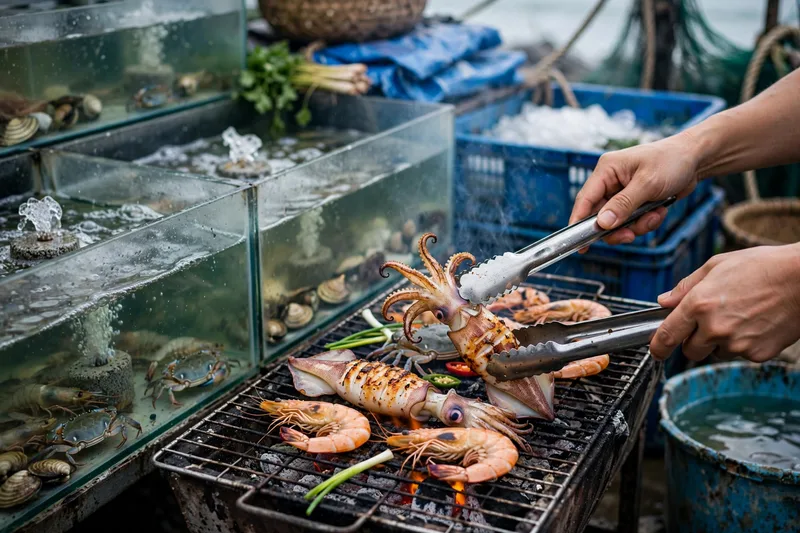
Crab is the headliner: meaty, sweet, best steamed with beer or tamarind glazed. Shrimp run from small sweet sea shrimp to giant river prawns grilled with salt and chili. Squid is excellent grilled whole or steamed with ginger; scallops get the scallion oil treatment; and the snail selection rivals Saigon's.
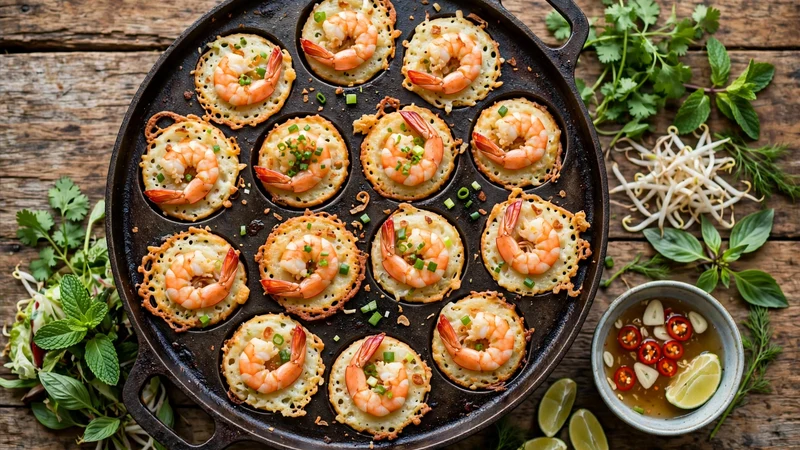
Do not miss lau ca duoi, the sour stingray hotpot with bamboo shoots, a Vung Tau signature that feeds a table. And save room for banh khot, the town's famous crispy shrimp pancakes, best from the dedicated street of banh khot shops.
Order across the table and share everything. A mixed feast of crab, shrimp, squid, scallops, and a hotpot is the correct shape of a Vung Tau meal.
The beachfront premium is real but modest. You pay perhaps twenty percent more for the ocean view, and on a clear evening it is money well spent. For pure value the market streets win, and for romance the promenade wins. Do both across two meals.
Fair prices as a guide: crab 300,000 to 500,000 VND (about $12 to $20) per kilo depending on size and season; shrimp 200,000 to 400,000 VND (about $8 to $16) per kilo; squid and scallops 150,000 to 300,000 VND (about $6 to $12) per kilo. Cooking fees run 30,000 to 50,000 VND per dish.
A full feast for four, with crab, shrimp, squid, snails, and a hotpot plus drinks, typically lands at 1,200,000 to 2,000,000 VND (about $48 to $80) total. Beachfront restaurants charge a premium over the market streets; the food is the same water, so choose by mood and budget.
Eat lunch at the markets and dinner by the beach. That is the Vung Tau rhythm, and it has never failed anyone.
Weekends are busy and prices firm up, while weekdays are calmer and bargaining is easier. If your schedule allows, a Tuesday seafood feast beats a Saturday one on both price and pace. The sea does not care what day it is.
About 2 hours by highway bus or fast ferry from central Saigon. See the getting to Vung Tau guide for options.
Fair. A full feast runs 150,000 to 400,000 VND per person. Crab is the priciest item at 300,000 to 500,000 VND per kilo.
The morning seafood market where you buy live seafood and have nearby eateries cook it for a fee.
Steamed crab, salt grilled shrimp, lau ca duoi stingray hotpot, and banh khot shrimp pancakes.
 Keep exploring
From street carts to a UNESCO heritage nomination, Saigon banh mi is the street food you cannot skip. Crispy crust, rich
 Keep exploring
Tiny golden pancakes from a sizzling cast iron mold, topped with whole shrimp and wrapped in herbs. A plate of 10 to 15
 Keep exploring
Bitter robusta coffee brewed through a cloth filter, sweetened with condensed milk, poured over ice. The drink that defi
