When the sun drops, Saigon heads out for oc. This is the city's most social dinner: snails, clams, scallops, and shellfish, picked live from tanks and cooked to order in a dozen rich sauces, eaten off metal trays with toothpicks and cold beer. Here is how the culture works, how to order without fear, and what to try first.
AI illustration
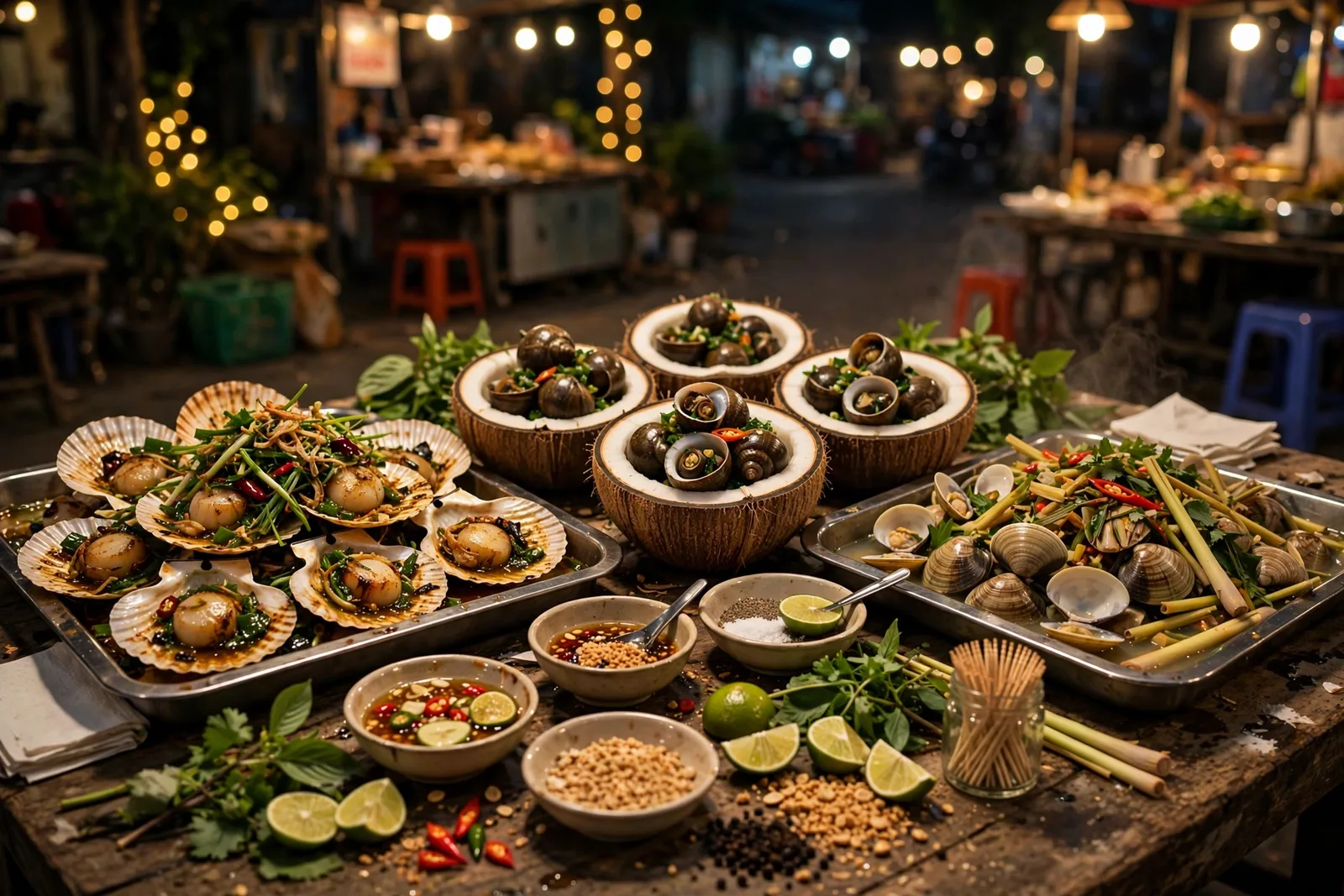
Oc means snail, but the word covers the whole universe of small shellfish. The classic oc street is a beautiful chaos: plastic stools spilling onto the pavement, glass tanks bubbling with live snails and clams, charcoal grills smoking, and tables shouting over the clatter. Vinh Khanh street in District 4 is the most famous, a full kilometer of stalls where the night never really ends.
This is slow food at street speed. You sit, you pick, you wait while the wok fires, and you work through plate after plate as the conversation stretches. Beer is the default drink, poured over ice in the Saigon style, and a table of four can easily spend three hours working through the menu.
The scene runs on freshness and turnover. The busiest stalls cook through their tanks every night, which is why locals trust the crowded places. If you are coming from the center, check how to get around Ho Chi Minh City so the ride to District 4 is painless.
The oc street has its own etiquette. You claim a table by sitting down, and a server appears with a laminated menu and a pencil. Mark your choices, hand it back, and the kitchen fires. Plates arrive as they are ready, not in order, so the table fills in delicious chaos. Flagging a server for more beer is always acceptable.
Start with oc len xao dua, spotted sea snails wok tossed in coconut milk, sweet and rich with a whisper of lemongrass. Then so diep nuong mo hanh, scallops grilled in the shell with scallion oil and crushed peanuts, the dish that converts skeptics. Oc huong, the sweet snails, are tiny and fragrant; chem chep hap are steamed mussels; ngheu hap xa are clams steamed with lemongrass and chili.
The sauces are half the fun. Nuoc mam pha is the sweet fish sauce base; muoi ot xanh is a fiery green chili salt for grilled items; bo toi is garlic butter; sa te brings chili oil heat; and me is tamarind, sour and sticky. Most stalls let you pick the sauce per plate, so one snail can taste five different ways.
For the full coastal comparison, the seafood streets of Vung Tau run the same playbook by the sea, with bigger shellfish and ocean views.
Beyond the classics, ask what is seasonal. Certain snails appear only in certain months, and the vendors are proud of the rotation. The chalkboard specials are usually the freshest thing in the tanks, and the regulars plan their cravings around whatever just came in.
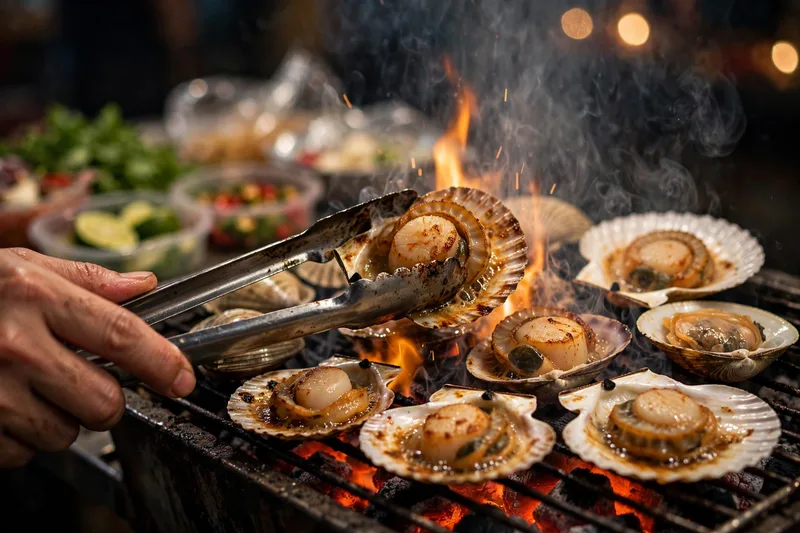
Walk the tanks first and point at what looks alive and moving. Prices are usually chalked on boards per plate, and it is normal to ask "bao nhieu" for the price before you commit. Big shellfish like crab and lobster are priced by weight, so confirm the weight and the per kilo price up front.
The tools are simple: a toothpick or a tiny seafood fork to pick the meat, and your fingers for the shells you suck. For snails with a cap, pull the meat out with the pick; for clams, use an empty shell as a spoon, the local trick that works better than any utensil. Suck the coconut milk broth straight from the shell, nobody will judge.
Eat where it is busy and the seafood is moving. Cooked through is the rule, and a packed stall turns its tanks over nightly, which is the best freshness guarantee there is.
Bring small bills. The bill is tallied from the marked menu and the empty plate count, and splitting it is easy since everything is shared. Tipping is not expected but rounding up is appreciated, especially when the crew has been running plates to your table all night.
Vinh Khanh in District 4 is the pilgrimage, but every district has its oc corner. District 5 runs strong near the Cholon border, Binh Thanh has local favorites along the canal roads, and District 10 keeps late hours for the after work crowd. The formula is the same everywhere: tanks, grills, stools, noise.
Budget 150,000 to 300,000 VND (about $6 to $12) per person for a generous spread with beer. Plates run 30,000 to 90,000 VND (about $1 to $3.50), and the bill stays friendly because you order in waves and stop when you are happy.
Come hungry and unhurried. Oc is not a quick bite, it is the whole evening, and the stalls reward the tables that settle in.
For the full experience, start at one stall for snails and migrate to another for grilled seafood. Stall hopping is normal and nobody takes offense. End the night with iced tea or a fresh coconut to cool down. The street winds down around 23:00, but the last tables always linger.
Snail, but on menus it covers all small shellfish: snails, clams, mussels, scallops, and cockles.
Stick to busy stalls with live, moving seafood and everything cooked through. The high turnover is your safety net.
Plates are priced individually, usually 30,000 to 90,000 VND. Big items are priced by weight, confirmed before cooking.
No. Pointing at the tanks and holding up fingers for quantities works everywhere.
 Keep exploring
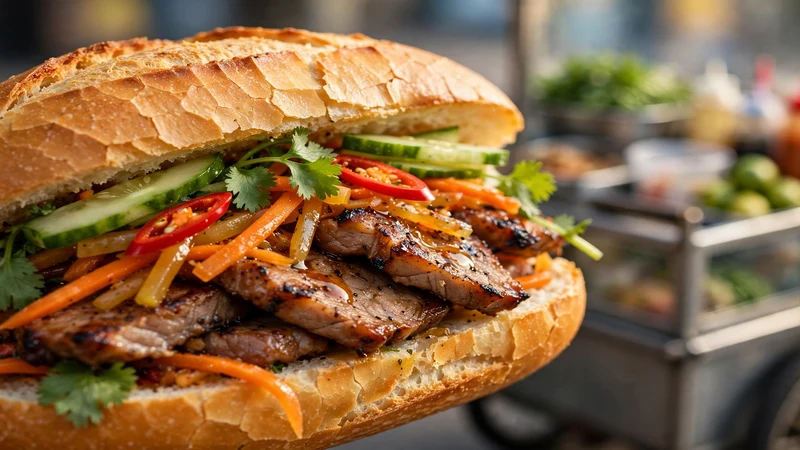
From street carts to a UNESCO heritage nomination, Saigon banh mi is the street food you cannot skip. Crispy crust, rich
 Keep exploring
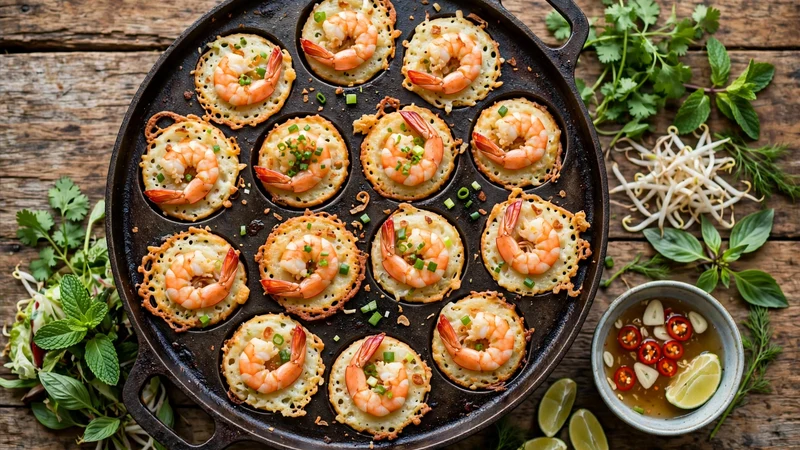
Tiny golden pancakes from a sizzling cast iron mold, topped with whole shrimp and wrapped in herbs. A plate of 10 to 15
 Keep exploring
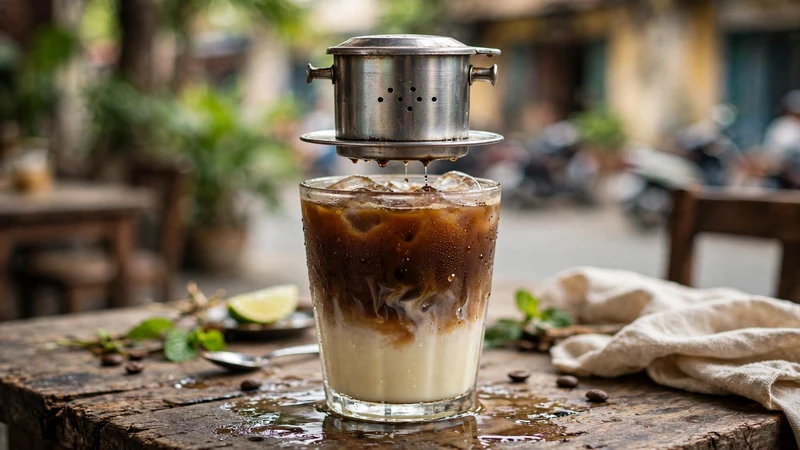
Bitter robusta coffee brewed through a cloth filter, sweetened with condensed milk, poured over ice. The drink that defi
