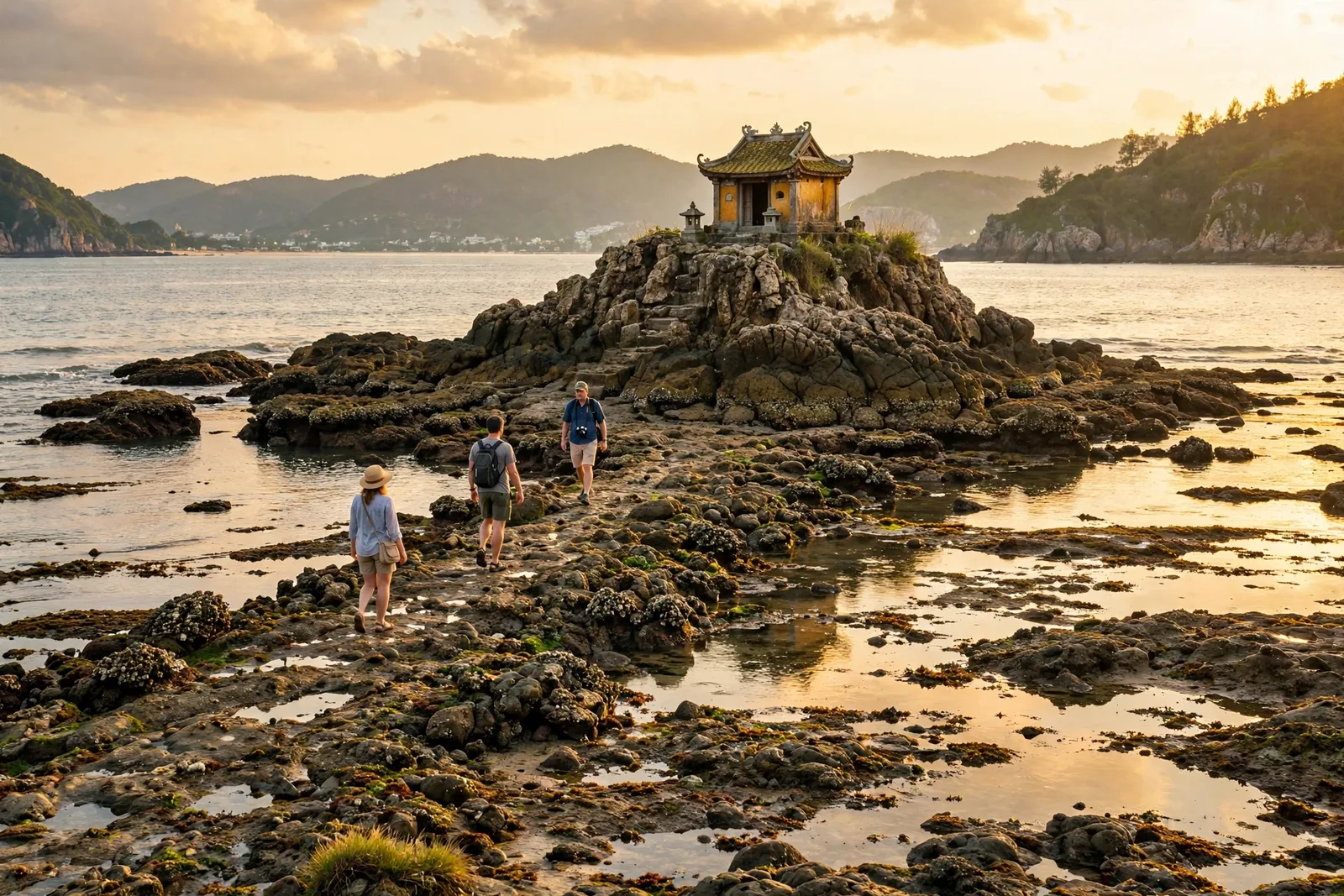
Twice a month, the sea steps aside. At low tide a rocky causeway surfaces off Vung Tau Back Beach and you can walk across the seabed to Hon Ba, a tiny islet with a 19th century temple on top. Miss the window and it is an island again.
AI illustration
Hon Ba is barely an island at all: a rocky outcrop about 200 meters off Back Beach, crowned with trees and the small Mieu Ba temple built in 1881. At high tide it sits alone in the waves, picturesque and unreachable except by boat. At low tide, the sea pulls back to reveal a causeway of rock and coral, and for two or three hours you can simply walk there.
The walk is the experience. The causeway is uneven, scattered with shells and seaweed, with shallow pools on both sides reflecting the sky. It feels like crossing to another world, and the photos are extraordinary: a road through the sea with the temple rising ahead.
The temple itself is modest but atmospheric, dedicated to the sea goddess and tended by caretakers. Fishermen have prayed here for safe voyages for over a century, and the annual festivals in the first, fourth, seventh and tenth lunar months draw crowds of pilgrims.
This trip lives or dies on timing. The causeway reliably appears around the 14th and 15th days of the lunar month, when low tide falls in the late afternoon and exposes the rocks for 2 to 3 hours. On other days the timing shifts and the window may be shorter, earlier, or nonexistent.
Check a Vung Tau tide chart before you go and aim to arrive as the water bottoms out, not before. Ask locals at the beach: the seafood vendors and lifeguards know the rhythm of the tides better than any app. Never start across if the water is already rising; the causeway floods faster than it drains.
Tide charts for Vung Tau are published online and in local newspapers. When in doubt, ask at your hotel: the front desks of beachfront hotels track the tides for exactly this reason.
Plan to be back on the mainland with margin to spare. Give yourself at least 45 minutes on the islet for the temple and photos, then walk back well before the water returns. Getting stranded means a long wait or an expensive boat rescue.
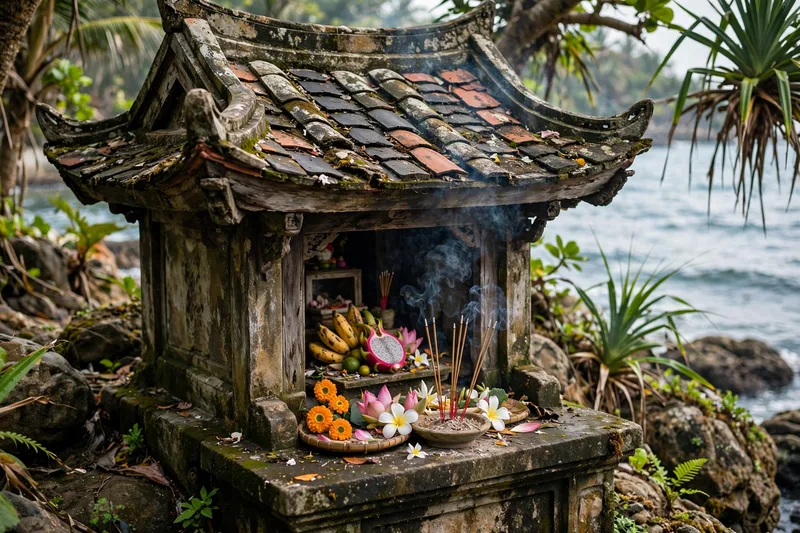
The climb to Mieu Ba is short but steep: stone steps wind up through the trees to the temple terrace. Inside, altars honor the goddess and the five elemental lady saints of local belief, with incense, offerings and the quiet of a place the sea visits twice daily.
Dress modestly as at any temple: covered shoulders and knees, quiet voices, no posing with the altars. The terrace offers a fine view back toward the Vung Tau shoreline and the mountains, especially beautiful near sunset when the returning tide starts silvering the causeway.
If you visit during one of the four annual festivals, expect crowds, chanting and a festive atmosphere, but also the shortest walking windows as everyone times the same tide. Weekday low tides outside festival months are the peaceful choice.
The goddess honored here goes by several names along the coast, and her story blends Cham, Vietnamese and Chinese folk beliefs into something uniquely local. Fishermen credit her with calming storms and guiding boats through the reefs. You will see her small shrines in fishing villages all along this coast, but Hon Ba, rising straight from the sea, is her most dramatic home.
The rocks are the real hazard: slippery with algae and sharp with oyster shells. Wear sturdy sandals or reef shoes with good grip, never bare feet and never smooth flip flops. Walk slowly, watch each step, and keep children close. The official tourism guidance says the same: wait until the water has fully receded before starting.
Bring water, sun protection and a dry bag for your phone. There are no shops on the islet and no shade on the causeway. At high tide, small boats from the beach will take you across for a negotiated fee if you cannot wait for the walk.
Pair Hon Ba with a Small Mountain morning: climb the lighthouse and Christ statue early, lunch on the beach, then walk to Hon Ba on the afternoon low tide. It is the perfect Vung Tau day.
After the walk, reward yourself at the seafood restaurants along the Back Beach road. The grilled oysters and steamed clams taste better with salt still in your hair, and the sunset from a beachfront table is the ideal end to a tide timed day. Most kitchens will cook market bought seafood for a small fee if you shopped at Xom Luoi market in the morning.
At low tide, most reliably around the 14th and 15th of the lunar month, for 2 to 3 hours.
Yes with care: good footwear, slow steps, and returning well before the tide turns.
Yes, small boats from Back Beach will take you across for a negotiated fee.
No. The islet and temple are free to visit.
 Keep exploring
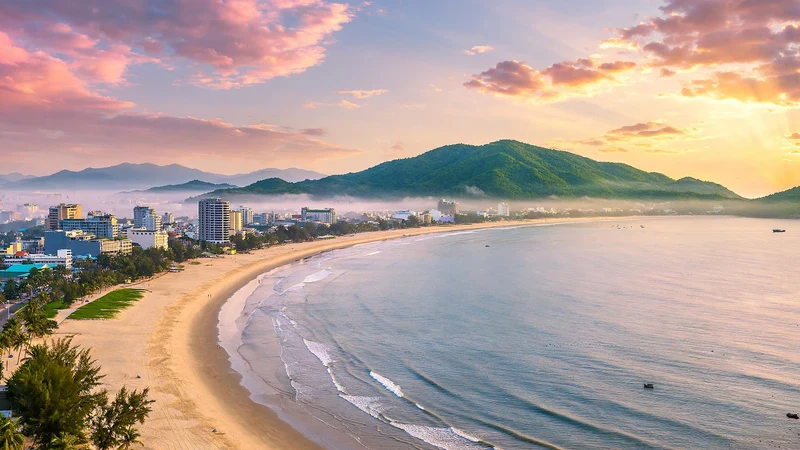
Back Beach (Bai Thuy Van) runs nearly 8 km along Vung Tau, about 2 hours from Ho Chi Minh City. Free entry, gentle surf,
 Keep exploring
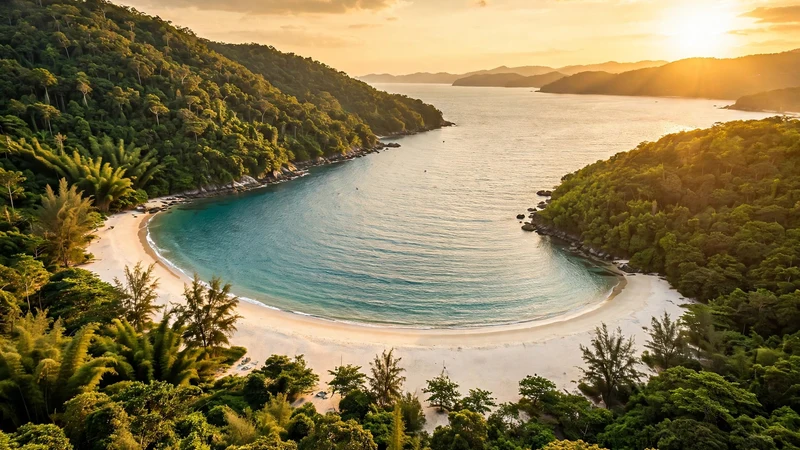
Dam Trau Beach sits 12 km from Con Dao town, backed by old forest and fronted by coral just meters from shore. Free entr
 Keep exploring
Founded in 1975, the War Remnants Museum documents the Vietnam War through aircraft, tanks, and thousands of photographs
