Banh canh is the noodle soup for people who like some chew. The noodles are thick, made from tapioca and rice flour, with a bouncy translucence that thin rice noodles cannot match. From crab to pork hock to fish cake, the toppings change but the comfort stays. Here is the guide to Saigon's heartiest bowls.
AI illustration
The noodle is the headline. Banh canh noodles are extruded thick, somewhere between udon and a rice cake, made from a tapioca and rice flour blend that turns translucent and bouncy in the broth. They drink up soup as they sit, which is why the bowl arrives with the noodles already married to the broth.
The broth is built to match: rich, often thickened slightly by the noodle starch, and deeply savory. This is not a delicate soup. It is a hug in a bowl, the thing Saigonese crave on rainy evenings and slow Sundays.
Regional versions vary the noodle thickness and the broth base, but the chew is constant. If you like your noodles with substance, this is your soup family.
The noodles are cut fresh at many shops, extruded directly into the pot or onto trays. Fresh cut noodles have a spring that dried ones cannot match, and the starch they release thickens the broth naturally. Ask if the noodles are made in house. The proud shops will show you.
The tapioca gives the noodles their signature bounce, a chew closer to mochi than to wheat noodles. It is a texture that divides first timers and converts them by the third spoonful. Children love it instinctively, which tells you everything about its comfort power.
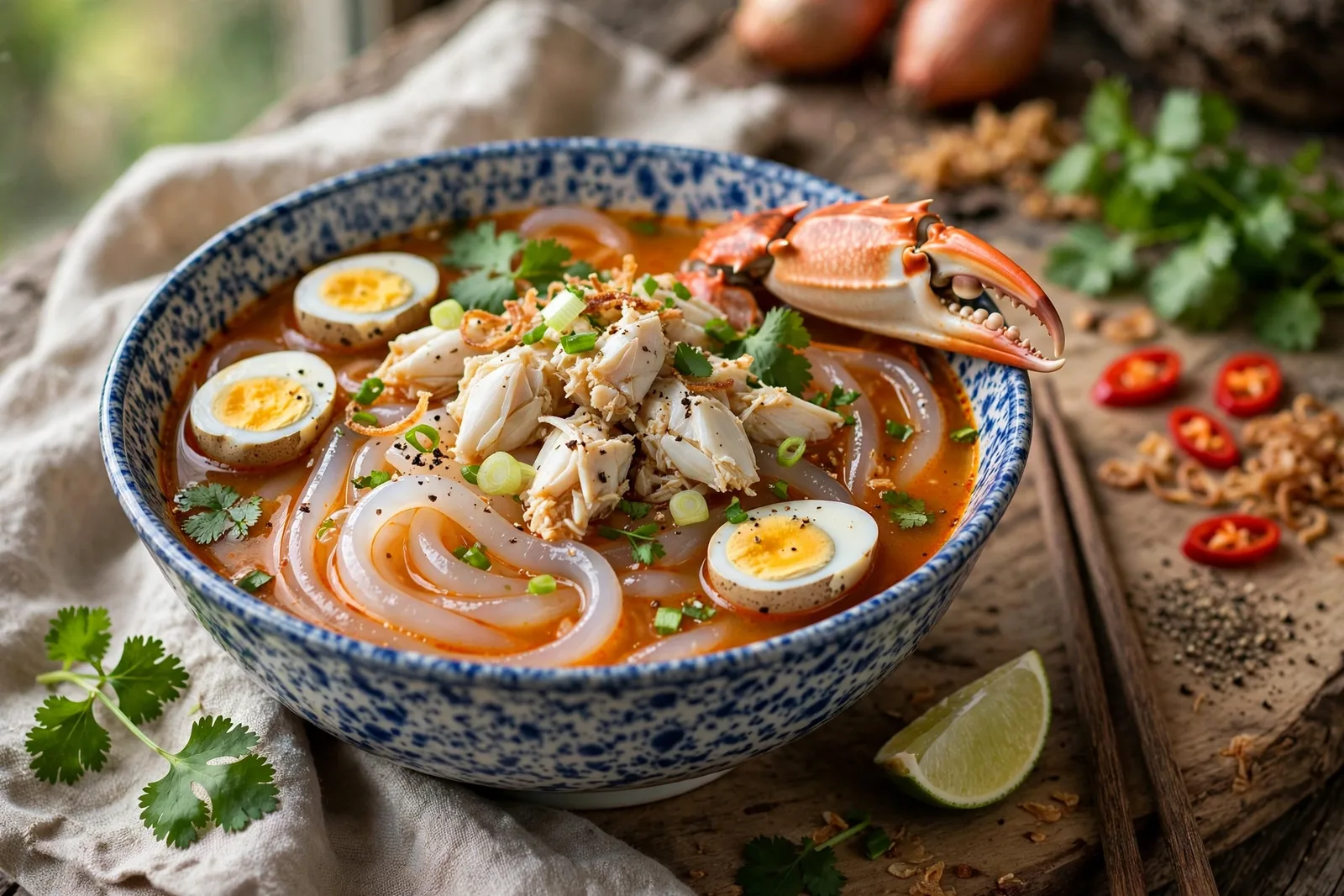
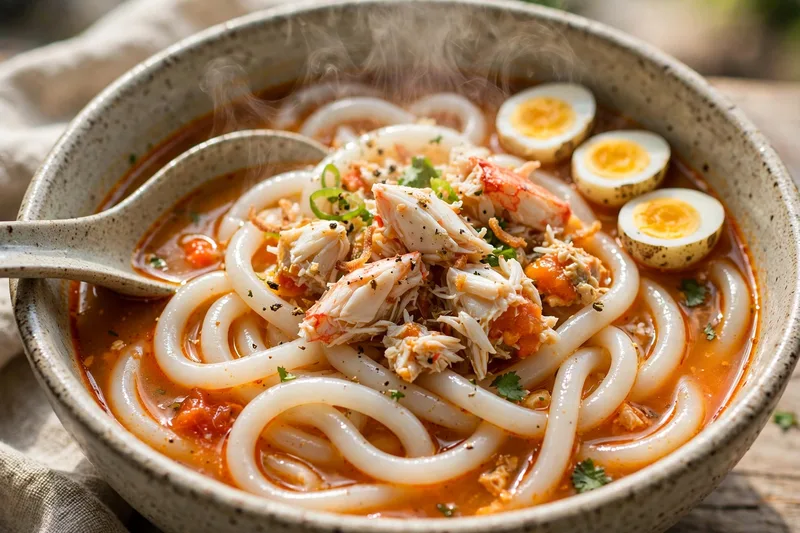
Banh canh cua is the star: crab meat and a rich orange broth, often with quail eggs and sometimes a whole crab claw for drama. The crab should taste sweet and fresh, and the best shops use real lump meat, not filler.
Banh canh gio heo is the pork hock version, with a silky trotter that has simmered for hours until the skin turns to velvet. Banh canh cha ca brings springy fish cake slices, a central coast influence. Banh canh tom tich features mantis shrimp, sweet and briny, a southern specialty.
The crab version shares its obsession with bun rieu, the crab and tomato soup, but where bun rieu is light and sour, banh canh cua is rich and enveloping. Try both to understand the range of Vietnamese crab cookery.
The crab claw presentation is theater with substance. A whole claw rising from the bowl signals generosity, and the meat inside is the sweetest in the crab. Crack it with the provided tools or ask the server. They do it daily and make it look easy.
District 1 has the famous crab specialists, where lunch lines form for the banh canh cua. District 5 runs the pork hock and fish cake versions with Cholon depth. The markets hide excellent generalists who do all four versions from a single pot.
A standard bowl costs 35,000 to 50,000 VND (about $1.50 to $2); the crab version with extra meat reaches 55,000 to 65,000 VND (about $2 to $2.50). The crab claw upgrade is worth it at least once.
Look for a broth with body, noodles with bounce, and toppings that taste of themselves rather than the pot. The bowl should arrive steaming and stay hot; thickness holds heat.
Rainy season is banh canh season. When the afternoon storms roll in, the city reaches for thick, hot soup, and the banh canh shops fill. There is no better sound than rain on an awning with a steaming bowl in front of you.
The crab specialists often run out by early afternoon, so lunch is the safe bet. If the claw version is sold out, the regular crab bowl is barely a step down. The broth is the same, the noodles are the same, and only the theater is missing.
Squeeze lime over the top and add chili to taste. The richness welcomes acidity, and a spoonful of black pepper from the table shaker is traditional. Stir gently so the noodles do not break.
Eat the noodles and toppings together rather than fishing for one or the other. The pleasure is the combined chew: bouncy noodle, sweet crab, soft quail egg, all in one spoonful.
For a lighter noodle contrast from the same streets, hu tieu Nam Vang shows what Saigon does with thin, delicate noodles and clear broth.
Many shops sell the noodles raw for home cooking, bagged by weight with a container of broth base. If you have a kitchen, it is the best souvenir: a proper banh canh dinner for friends, with all the credit and a fraction of the work.
A spoonful of pickled chili vinegar on the side brightens the whole bowl. Add it drop by drop. The broth is already rich, and a little acidity goes a long way.
A blend of tapioca and rice flour, extruded thick for a chewy, translucent bite.
Banh canh cua, the crab version. It is the most famous and the most rewarding.
Yes. The thick noodles and rich broth make it one of the heartiest Vietnamese soups.
Banh canh has thick chewy noodles and rich broth; bun rieu has thin noodles and a lighter, sour crab tomato broth.
 Keep exploring
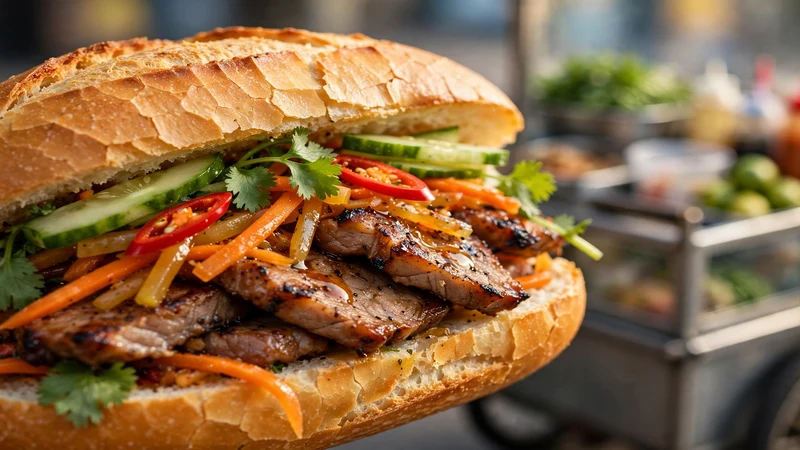
From street carts to a UNESCO heritage nomination, Saigon banh mi is the street food you cannot skip. Crispy crust, rich
 Keep exploring
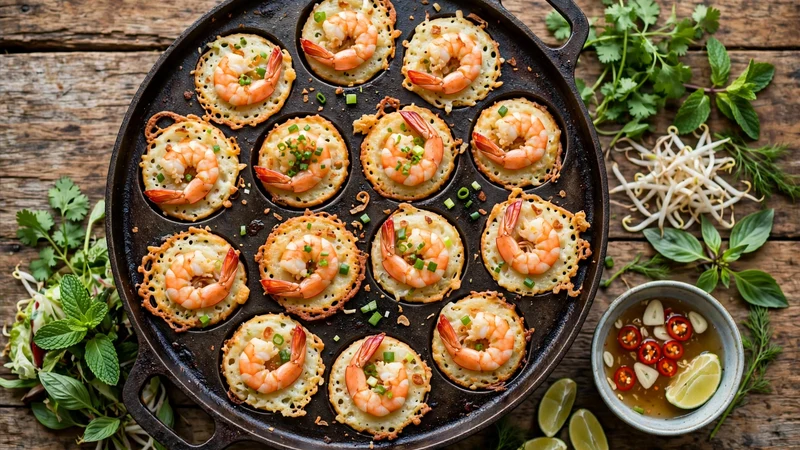
Tiny golden pancakes from a sizzling cast iron mold, topped with whole shrimp and wrapped in herbs. A plate of 10 to 15
 Keep exploring
Bitter robusta coffee brewed through a cloth filter, sweetened with condensed milk, poured over ice. The drink that defi
