Pho gets the fame, but bun bo Hue brings the fire. This lemongrass laced beef noodle soup from the old imperial capital has found a fierce second home in Saigon, where Hue transplants guard their family recipes. Here is what makes it different from pho, how to eat it, and where to find the bowls that locals queue for.
AI illustration
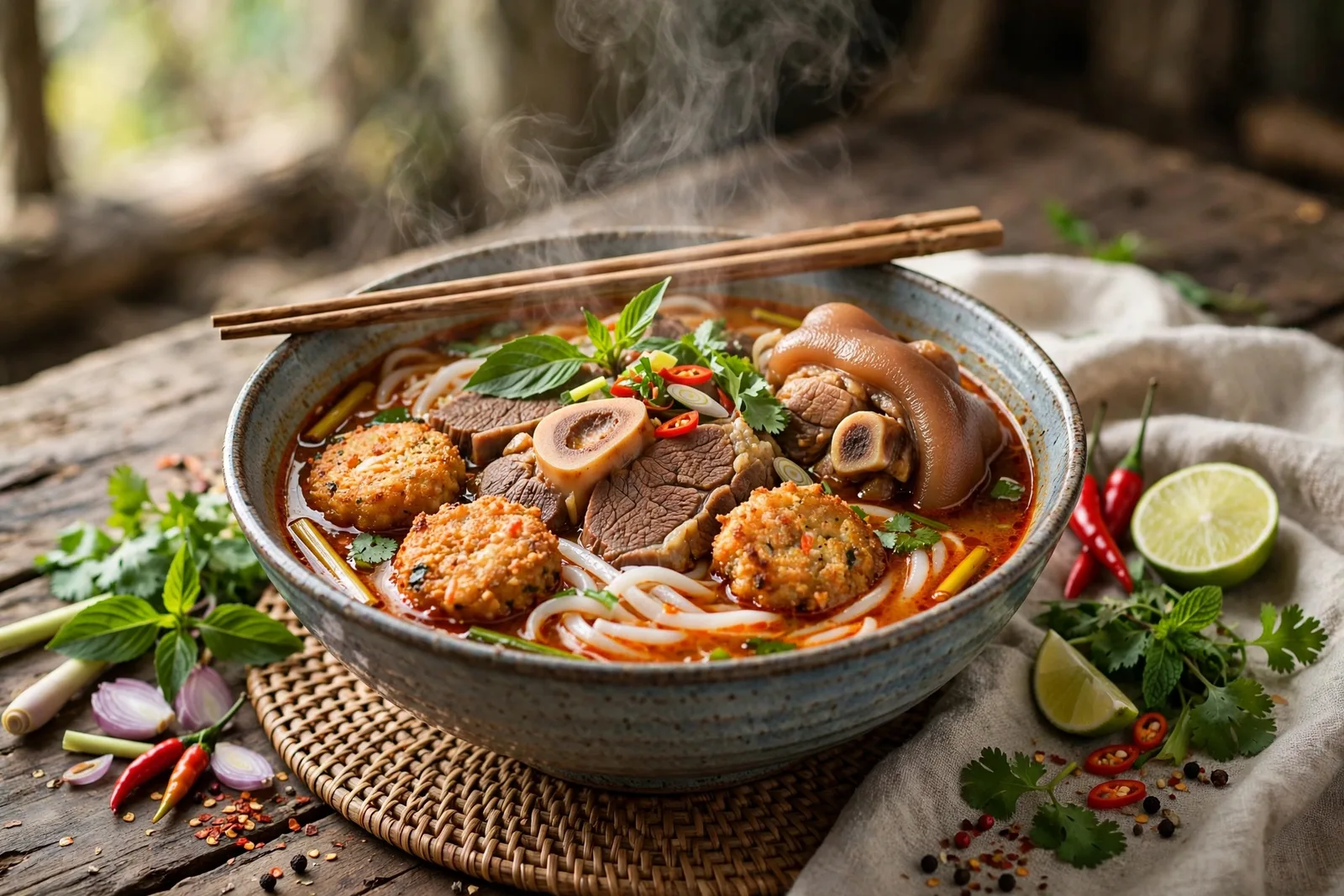
The broth is the first giveaway. Where pho leans clear and delicate, bun bo Hue is bold: beef bones simmered with lemongrass stalks, fermented shrimp paste for depth, and a slick of red chili oil that gives the surface its signature glow. The noodles are different too, thick round strands with real chew instead of flat ribbons.
The toppings read like a greatest hits of Hue butchery. Tender slices of beef shank, a hunk of pork knuckle with its silky skin, and cha cua, a springy paste of crab and pork that is steamed, not fried. Cubes of congealed pork blood are traditional; they taste mild and iron rich, and you can ask to leave them out.
Hue was the imperial capital, and its food carries that courtly ambition into street bowls. The balance is precise: spicy, sour, salty, and aromatic all at once, with nothing overpowering the beef.
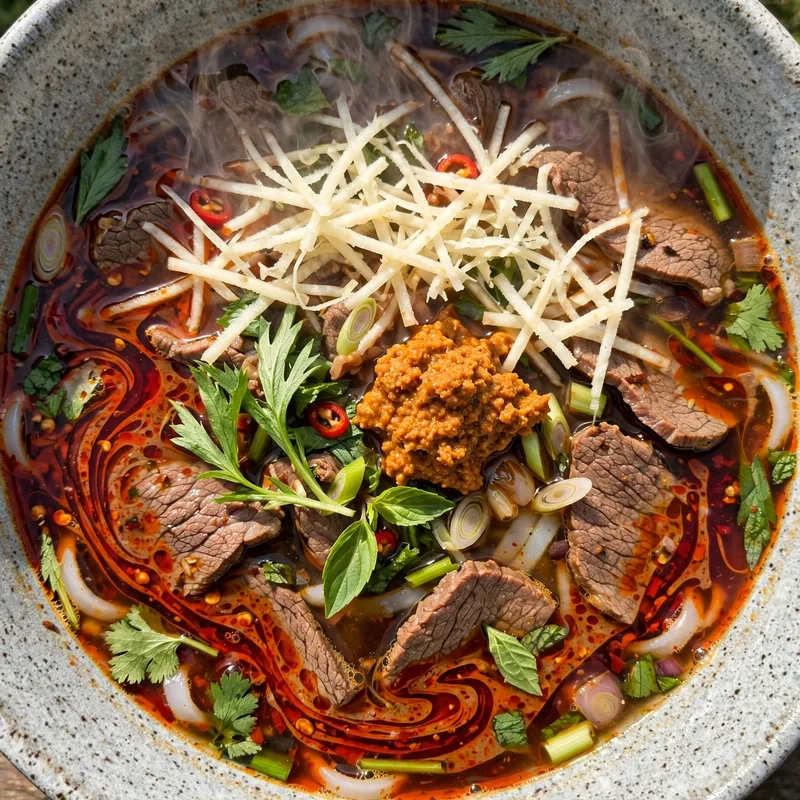
The chili oil deserves its own mention. It is made by blooming dried chilies and annatto seeds in oil until it turns a deep sunset red, carrying both color and a slow building heat. A proper bowl shows a visible slick of it, and skimming it off would be like ordering the dish with the volume turned down.
The bowl arrives with a side plate of shredded banana blossom, bean sprouts, and rau ram, the peppery Vietnamese coriander. Tip the greens in, squeeze in the lime wedge, and stir so the chili oil marries the broth. Taste first before adding more chili, because the base already carries real heat.
Slurping is expected and practical; the thick noodles hold heat. Alternate bites of meat with spoonfuls of broth, and save a spoonful of the shrimp paste dip on the side for the pork knuckle. If the spice runs hot, the trick locals use is a spoonful of plain broth and a bite of banana blossom to cool the palate.
Do not skip the lime. Its acidity lifts the rich broth and sharpens the lemongrass, and a squeeze halfway through the bowl refreshes the flavors like a reset button.
The banana blossom on the side plate is not decoration. Shredded fine and soaked to stay crisp, it adds a clean crunch that cuts the richness of the pork knuckle. Mix it in early so it softens slightly in the hot broth, and add more as you go. The good shops refill the herb plate without being asked.
Follow the Hue diaspora. Family run shops cluster in District 3, District 10, and Phu Nhuan, where many Hue families settled, and the best ones are often tiny: a dozen stools, a bubbling pot, and a cook who has made the same broth for decades. Look for a deep red chili oil, lemongrass you can smell from the doorway, and cha cua made in house rather than bought.
Morning is prime time, when the broth is freshest and the pork knuckle is at its silkiest. Many of the great shops sell out of the best cuts by late morning, so an early lunch beats a late one. If a shop also sells com hen, the Hue clam rice, that is usually a good sign of authenticity.
Another regional noodle worth comparing is hu tieu Nam Vang, the Cambodian Chinese style pork noodle that is another Saigon favorite. Trying both in one trip shows how the city collects the best of every region.
Many of the best shops are breakfast only operations run by Hue families, with the broth starting before dawn. The room is usually plain, the menu is one dish done obsessively, and the owner can tell you where the beef comes from. Those are the rooms worth seeking out.
A standard bowl costs 45,000 to 60,000 VND (about $2 to $2.50). Order a dac biet, the special, at 65,000 to 90,000 VND (about $2.50 to $3.50) and you get every topping in the pot. Extra noodles or an extra knuckle are cheap add ons, usually 10,000 to 15,000 VND.
Specify your spice level only if you want it milder; the default is already spicy by most standards. Takeaway works well because the thick noodles travel better than pho noodles, but ask for the herbs packed separately so they stay crisp.
Pair it with a glass of iced tea or a sugarcane juice from the stall next door. Heavy rich broth plus something cold and sweet is the Saigon rhythm.
If you are eating with a group, order one dac biet to share as a tasting bowl alongside standard bowls, so everyone can compare the full topping lineup. Take note of the shrimp paste dip too. A tiny dab on the pork knuckle, eaten separately from the soup, is a Hue habit worth copying.
Yes, by default. The chili oil and lemongrass broth carry real heat. Ask for less spicy if you are sensitive.
A springy steamed paste of crab meat and pork, sliced into the bowl. It is one of the signature toppings.
Absolutely. Ask for no huyet and the shop will happily leave them out.
Thicker round noodles, a spicy lemongrass broth with chili oil, and heartier toppings like pork knuckle and crab paste.
 Keep exploring
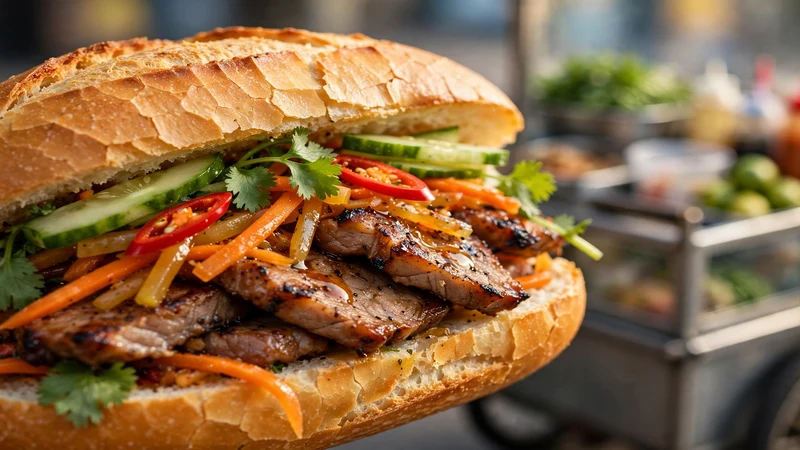
From street carts to a UNESCO heritage nomination, Saigon banh mi is the street food you cannot skip. Crispy crust, rich
 Keep exploring
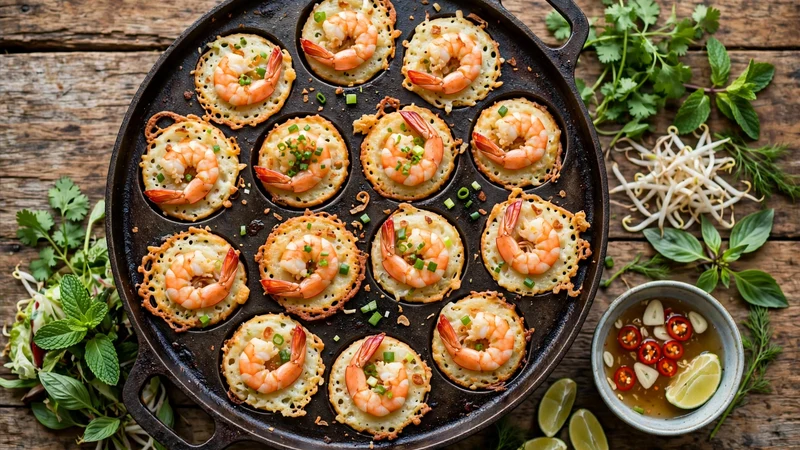
Tiny golden pancakes from a sizzling cast iron mold, topped with whole shrimp and wrapped in herbs. A plate of 10 to 15
 Keep exploring
Bitter robusta coffee brewed through a cloth filter, sweetened with condensed milk, poured over ice. The drink that defi
