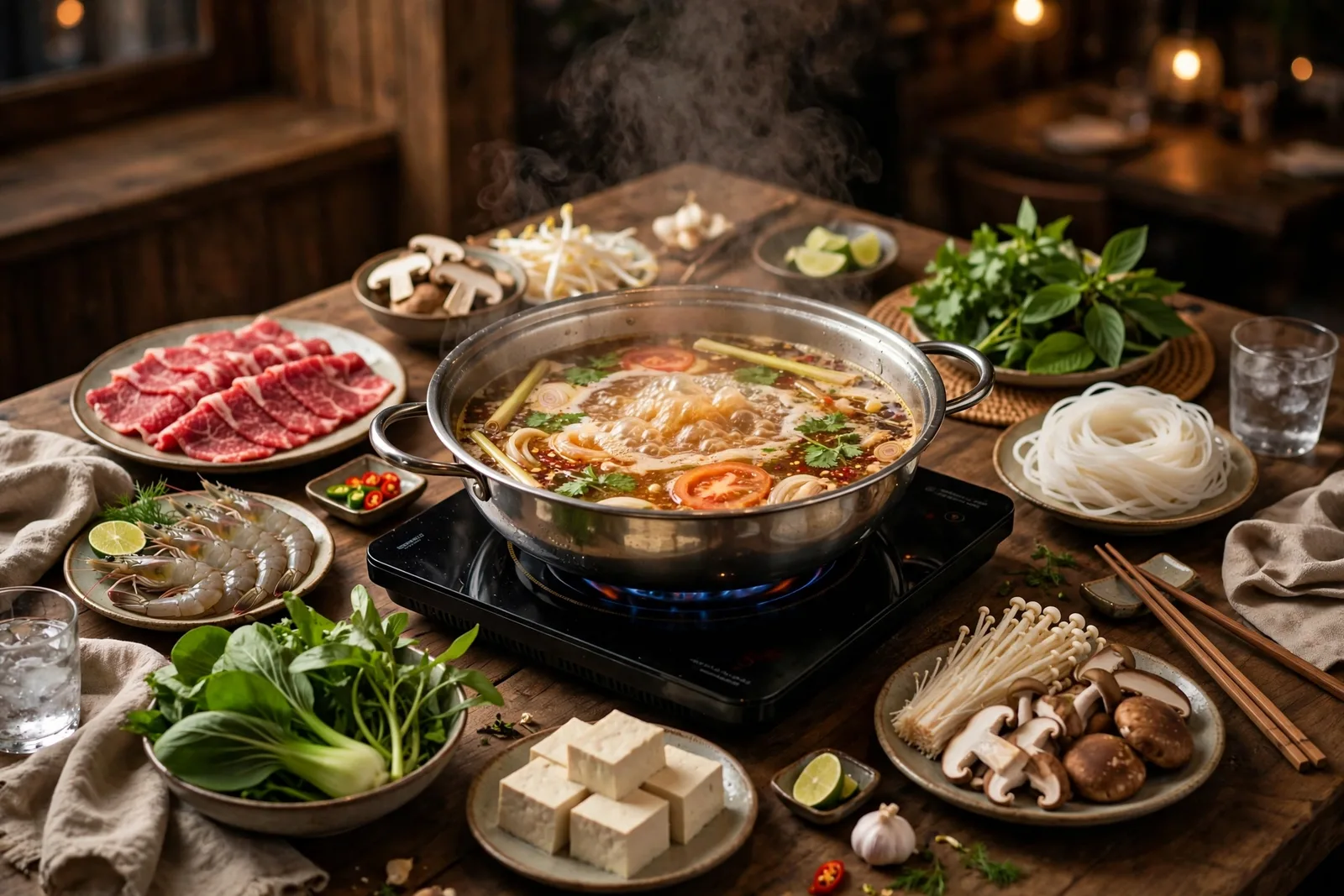
Lau is not dinner, it is an event. A bubbling pot of broth lands in the middle of the table, ringed by plates of raw meat, seafood, greens, and mushrooms, and the evening unfolds one dip at a time. Here is how a Vietnamese hotpot meal works, the great styles to know, and the etiquette that keeps the table happy.
AI illustration
The pot arrives already simmering on a portable burner, and the table fills with raw plates: sliced beef, shrimp, squid, fish fillets, leafy greens, mushrooms, tofu, and a basket of noodles or rice. You add ingredients a few at a time, wait for the boil to return, then fish them out and eat with dipping sauces.
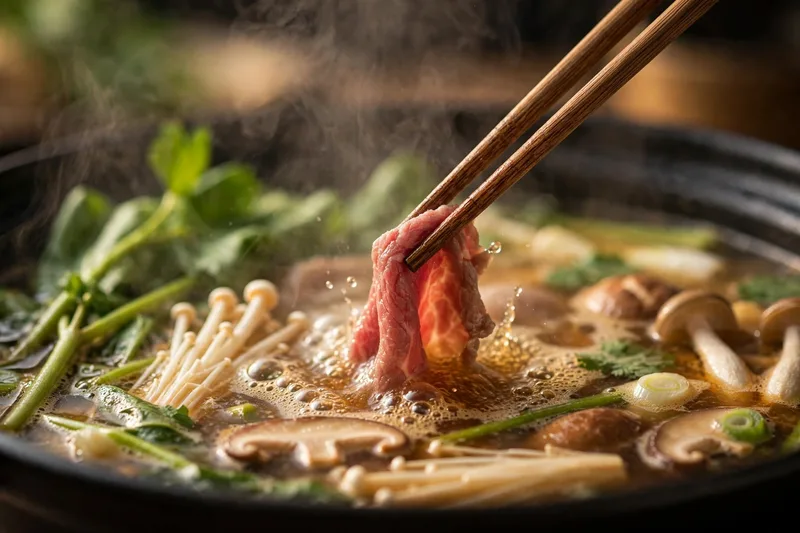
The rhythm matters. Hardy items like corn, taro, and root vegetables go in first to sweeten the broth. Quick cooking greens and thin beef go last, seconds per dip. Noodles or rice go in at the very end, when the broth is at its richest, having absorbed everything the table cooked.
Dipping sauces are personal. Nuoc mam with chili, fermented tofu, or a simple salt pepper lime mix, each diner builds their own. The broth itself gets better as the night goes on, which is why a lau meal never feels rushed.
The burner is usually a small gas canister or an induction plate, and the server sets the flame before the pot arrives. Keep it at a lively simmer, not a violent boil, so the broth stays clear and the ingredients cook gently. If the flame dies mid meal, flag a server. They relight it in seconds.
Lau thai is the crowd pleaser: a sour and spicy lemongrass broth loaded with seafood, the Vietnamese take on tom yum. Lau bo is beef hotpot, with a clear savory broth and mountains of greens. Lau ca is fish hotpot, and in the south the star is lau ca duoi, stingray hotpot with sour bamboo shoots.
Then the specialists. Lau ga la e is chicken with a peppery Mekong herb. Lau oc is snail hotpot, a natural extension of the oc snail stall culture. Lau nam is the mushroom hotpot for vegetarians, and lau de, goat hotpot, is the macho favorite with its herbal, gamey broth.
By the coast the playbook changes. The seafood streets of Vung Tau serve lau with the morning catch, and eating hotpot with an ocean breeze is one of the great southern pleasures.
Regional pride runs deep in lau styles. Northern tables favor clear broths and freshwater fish, central tables bring the heat, and southern tables go big on seafood and sour notes. Ordering the local specialty wherever you are is the fastest way to taste the region.
One pot serves two to four people comfortably; bigger groups order two pots. The set menu, called a combo or set lau, is the easy path: broth plus a fixed spread of ingredients for a set price. Ordering a la carte gives control but costs more.
Table manners are simple. Use the communal chopsticks or the slotted spoon for the pot, your own chopsticks for eating. Do not fish through the pot hunting for the best piece; take what surfaces near you. The host or the eldest usually manages the burner and the first additions.
Beer and lau are inseparable, and soju has joined the party at Korean influenced spots. Pace the drinking with the eating; the meal is a marathon, and the broth rewards those who stay to the noodle course at the end.
The last course has a ritual. When the pot is rich and the table slows, the noodles go in, soak up everything, and get divided into small bowls with a ladle of the concentrated broth. Skipping this course is considered a minor tragedy by lau devotees.
Su Van Hanh in District 10 is lau central, a street of hotpot houses glowing every evening. Phan Xich Long in Phu Nhuan runs the local favorite gauntlet, and every district has its late night lau de or lau bo corner. Rainy season, roughly May to November, is peak lau weather.
Expect 100,000 to 250,000 VND (about $4 to $10) per person. A basic lau thai set for two runs about 250,000 to 350,000 VND (about $10 to $14); premium seafood or beef sets climb higher. Drinks are extra, and the bill splits easily because everything is shared.
Book ahead on weekends for the famous houses. A table of four with a reserved pot beats a table of four hovering by the door.
Weekday nights are calmer and the service is more attentive, while weekends are louder and the good houses fill by 19:00. For a first lau, go on a weeknight with a local friend if you can. The guidance on what goes in when is worth more than any menu.
Two minimum for most sets. The sweet spot is three to four per pot.
Lau thai, the sour and spicy seafood hotpot, is the crowd pleaser everywhere.
Yes, lau nam, the mushroom hotpot, is widely available and genuinely delicious.
Plan two to three hours. Rushing a hotpot misses the point.
 Keep exploring
From street carts to a UNESCO heritage nomination, Saigon banh mi is the street food you cannot skip. Crispy crust, rich
 Keep exploring
Tiny golden pancakes from a sizzling cast iron mold, topped with whole shrimp and wrapped in herbs. A plate of 10 to 15
 Keep exploring
Bitter robusta coffee brewed through a cloth filter, sweetened with condensed milk, poured over ice. The drink that defi
