Vietnamese Buddhist culture gave Saigon one of the richest vegetarian food scenes in Southeast Asia. An chay, the practice of eating vegetarian, fills the city with affordable com chay eateries, especially on lunar full moon days. This guide shows you where to find them, what to order, and how to eat well without meat or fish sauce.
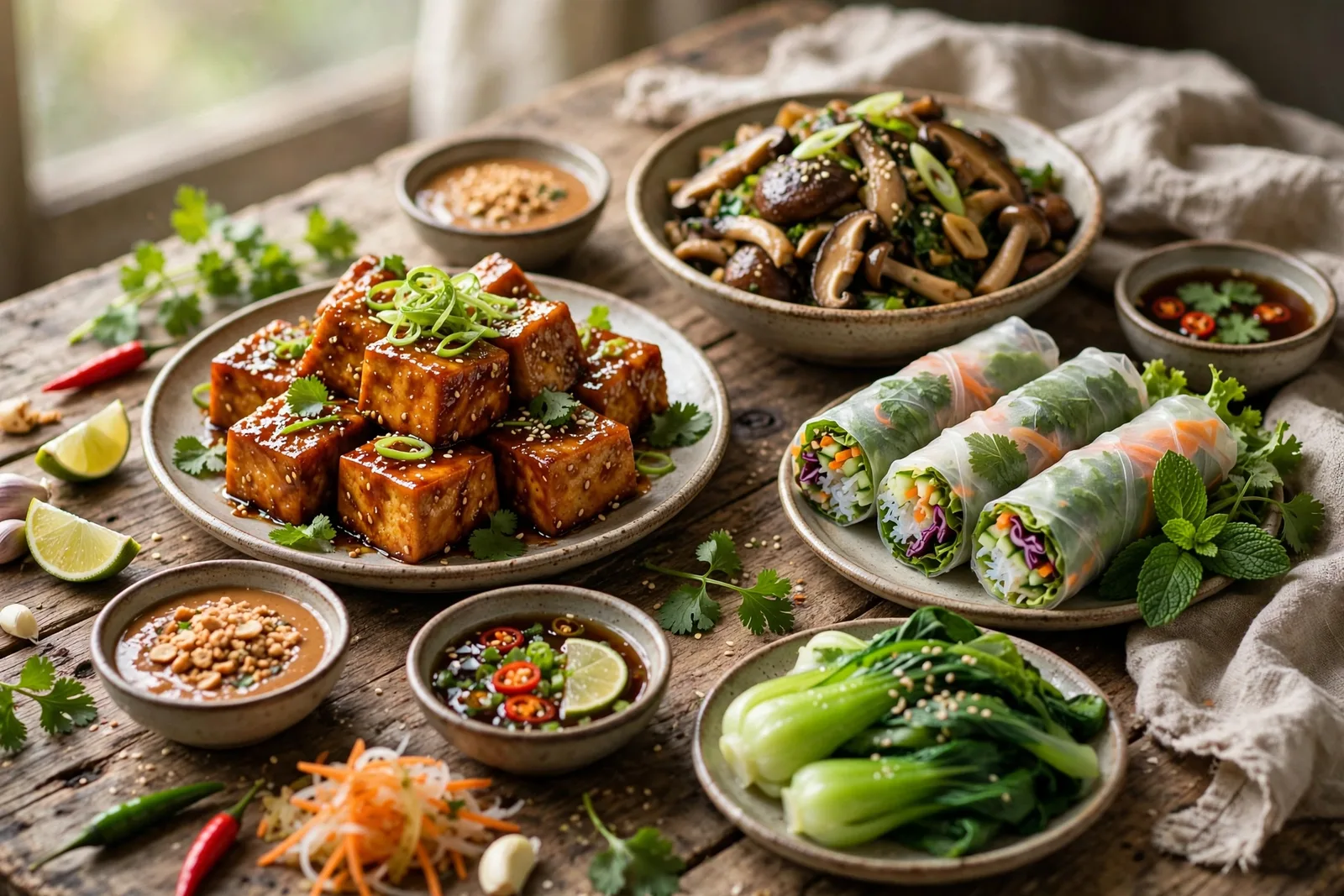
AI illustration
Few cities make vegetarian eating as effortless as Ho Chi Minh City. Buddhism runs deep in southern Vietnam, and millions of locals eat vegetarian regularly, not as a lifestyle statement but as spiritual practice. The result is a parallel food economy: entire streets of vegetarian kitchens, temple canteens, and lunch counters that never touch meat, all operating at local prices.
This is not the sad side salad version of vegetarian food. Vietnamese cooks treat vegetables, tofu, mushrooms, and wheat gluten with the same ambition they bring to pork and fish. Dishes are built on lemongrass, turmeric, fermented tofu, and rich mushroom broths, so the food tastes Vietnamese first and vegetarian second. Even committed carnivores tend to finish a chay meal surprised at how little they missed meat.
If you already love the city's classics, going meatless changes the texture but not the joy. A vegetarian rice plate keeps the broken rice, pickles, and fresh herbs of com tam, and a bowl of vegetarian noodle soup borrows the same fragrant broth craft as pho. You will eat just as well as everyone else, often for less money, and you will never struggle to find a seat.
The economics help too. A vegetarian lunch in Saigon costs less than its meat equivalent, often by a third, because the ingredients are humble and the kitchens are efficient. For budget travelers this is a quiet superpower: you can eat three excellent meals a day, in interesting rooms, for less than the price of one mediocre dinner back home.
The heartbeat of an chay follows the lunar calendar. On the 1st and 15th of each lunar month, observant Buddhists eat vegetarian for the day, and the city responds in force. Pop up stalls appear on sidewalks, regular restaurants add chay menus, and dedicated vegetarian eateries fill with office workers at lunch. These are the two liveliest eating days of every month.
They are also the best days to explore as a visitor. Walk through District 5 around Cho Lon, or the streets near Vinh Nghiem Pagoda in District 3, and you will find buffet style com chay counters where you simply point at what looks good. A plate piled with three or four dishes plus rice rarely costs more than 50,000 VND (about $2), and the turnover is so fast everything tastes freshly cooked.
Outside the full moon days the scene is quieter but far from dead. Permanent com chay shops serve office lunches every weekday, and many Buddhist temples run canteens open to the public. Ask your hotel for the nearest quan chay and you will rarely need to walk more than ten minutes to find one.
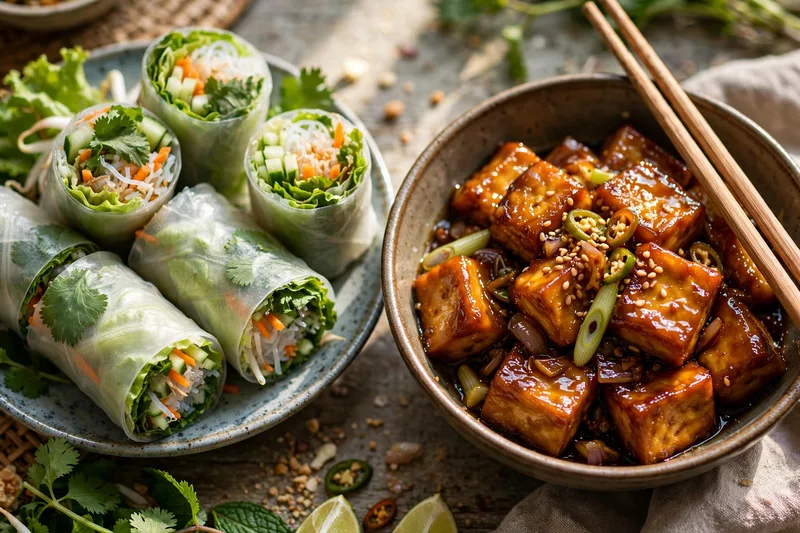
Start with the com chay rice plate, the workhorse of the scene. You get steamed rice plus your pick of braised tofu, caramelized mushrooms, stuffed bitter melon, mock pork, and pickled vegetables. It is the vegetarian mirror of the classic Vietnamese rice plate, eaten the same way: everything mixed together with a spoon, a spoonful of soy based dipping sauce over the top.
For noodles, try hu tieu chay or bun mang chay, light broths built on mushrooms and daikon that genuinely rival the meat versions. Banh mi chay, stuffed with lemongrass tofu or mushroom pate, makes a fine breakfast on the move. In the evening, gather friends for lau chay, a bubbling vegetarian hotpot loaded with greens, tofu skin, and mushrooms, cooked at the table and eaten communally.
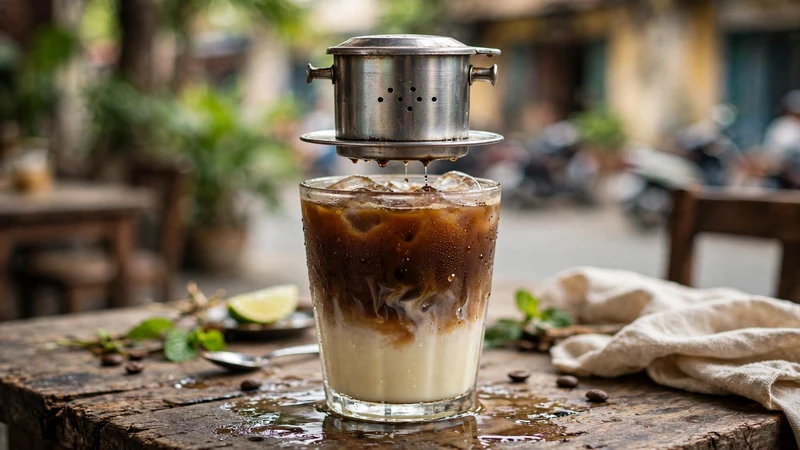
Dessert belongs to the che shops, and most che are naturally vegetarian. Black sesame soup, sweet corn pudding, and the three color dessert need no modification at all. Wash it all down with Vietnamese iced coffee, which is vegetarian by default and sold at nearly every corner of the city.
Here is the one real trap: nuoc mam, fish sauce, hides in dipping sauces and dressings at kitchens that are not strictly vegetarian. Dedicated chay restaurants never use it, but a regular restaurant's token vegetarian dish might. Learn the phrase khong nuoc mam, meaning no fish sauce, and use it whenever you order outside a chay kitchen.
Egg and dairy are much less of an issue. Traditional Vietnamese vegetarian cooking uses neither, so most chay food is effectively vegan without anyone trying. The exception is a handful of modern fusion spots that add cheese or egg for texture, so strict vegans should still ask at trendier places with English menus and avocado toast.
Temple adjacent restaurants are your safest bet for strict observance. Eateries near major pagodas cook for monks and devout regulars, which means no meat, no fish sauce, and often no onion or garlic on full moon days. The food is simple and honest, the prices are symbolic, and the calm of the setting is a bonus after the noise of the street.
Yes. Dedicated chay restaurants operate citywide, and the scene roughly doubles on lunar full moon days when extra stalls and menus appear everywhere.
Almost always. Traditional chay cooking uses no meat, fish sauce, egg, or dairy. Watch for fish sauce at non vegetarian restaurants and dairy at modern fusion spots.
A buffet style rice plate costs 30,000 to 60,000 VND (about $1.20 to $2.40). A full meal at a proper vegetarian restaurant runs 100,000 to 200,000 VND (about $4 to $8).
The 1st and 15th of each lunar month. Your hotel can confirm the next date, and the extra stalls make these the best days to explore.
 Keep exploring
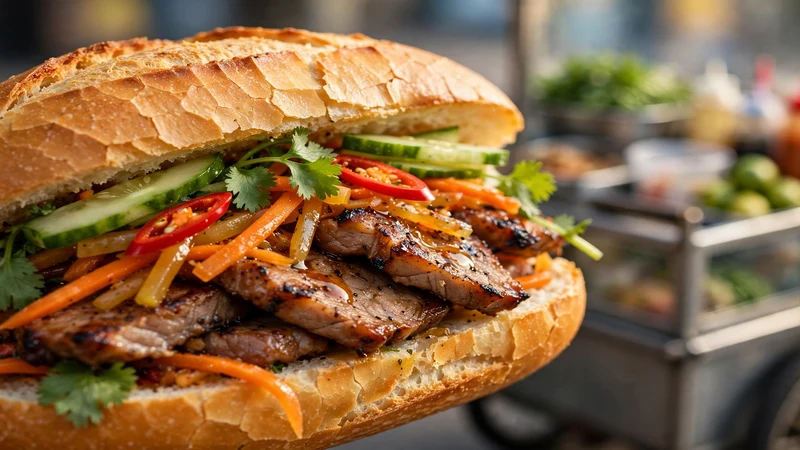
From street carts to a UNESCO heritage nomination, Saigon banh mi is the street food you cannot skip. Crispy crust, rich
 Keep exploring
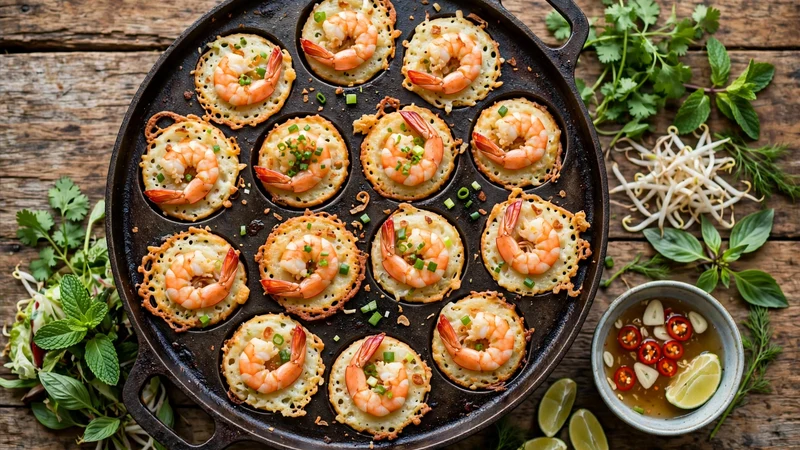
Tiny golden pancakes from a sizzling cast iron mold, topped with whole shrimp and wrapped in herbs. A plate of 10 to 15
 Keep exploring
Bitter robusta coffee brewed through a cloth filter, sweetened with condensed milk, poured over ice. The drink that defi
