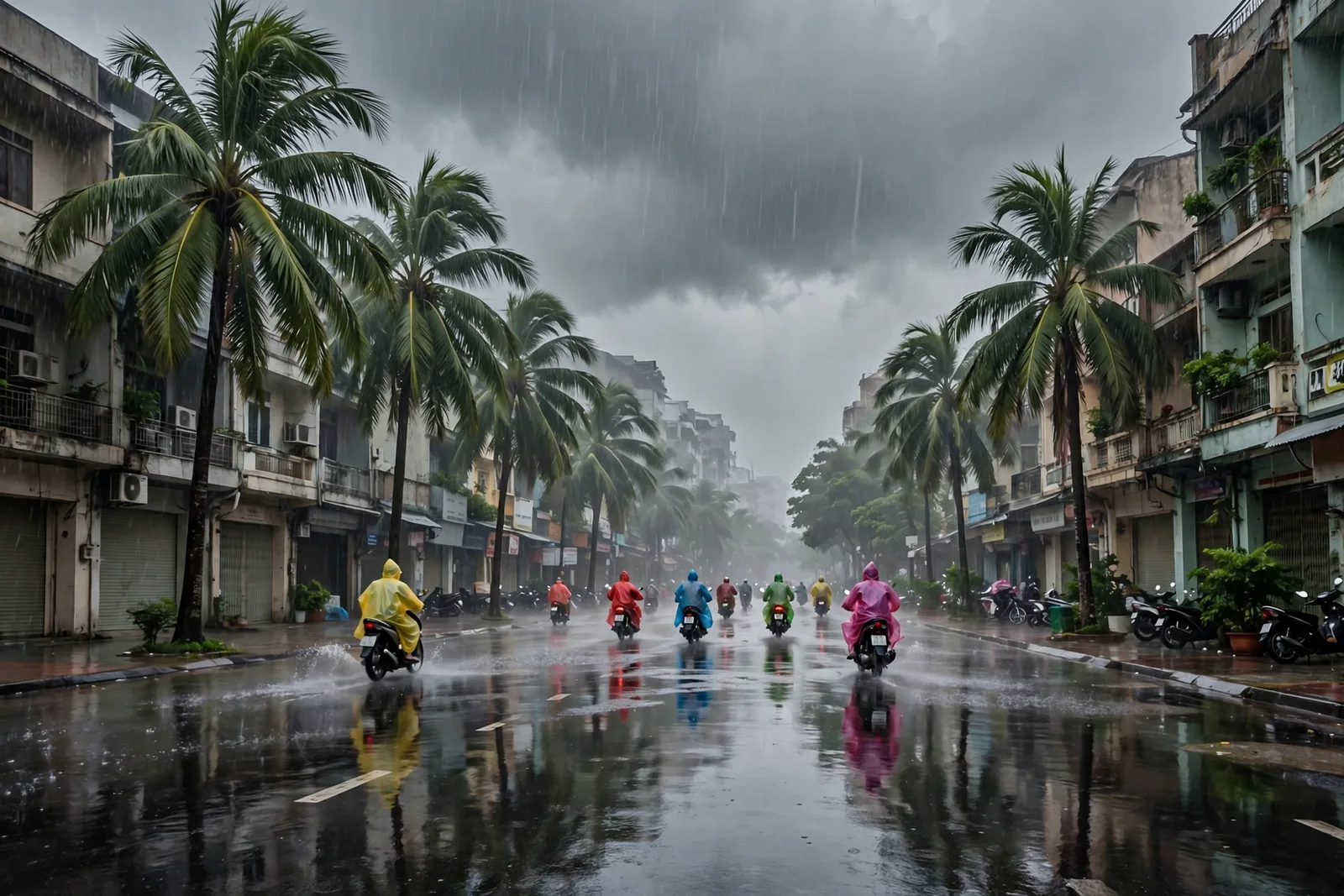
From May to October, Saigon gets its rain in dramatic daily installments: blazing mornings, towering afternoon clouds, then a downpour that turns streets into rivers for an hour before the city steams itself dry. It sounds intimidating, but the rainy season is one of the best times to visit, with lower prices, greener scenery, and far fewer tourists. You just need to plan around the water instead of fighting it.
AI illustration
Forget the idea of rain all day. The classic Saigon pattern is sunshine until early afternoon, then a heavy shower between 2 and 5 pm, then clearing skies by evening. Some days the storm misses you entirely, other days it arrives with theatrical thunder and rain so dense you cannot see across the street. Mornings are almost always usable, which is the single most useful fact for planning your days.
Rainfall peaks from June to September, when the southwest monsoon is strongest, while May and October are transitional months with lighter and less predictable showers. Temperatures stay high throughout, around 28 to 34 degrees, so the rain feels warm and the humidity after a storm is the real challenge. Typhoons rarely strike the south directly, but their outer bands can bring several days of steady rain, worth watching on a weather app if you are traveling in August or September.
The upside is real. Hotel rates drop 20 to 40 percent outside the December to February high season, attractions are quiet, and the countryside explodes into saturated green. Photographers get the year’s most dramatic skies, and the brief coolness after a storm is the most pleasant weather Saigon offers. Pack the right attitude and the season rewards you.
Saigon’s drainage struggles with the heaviest downpours, and certain streets flood predictably. Nguyen Huu Canh in Binh Thanh is the famous one, parts of District 7 near the canals, stretches of Thu Duc, and low pockets of District 8 and Binh Tan can all take on 20 to 40 centimeters of water during a big storm combined with high tide. Flooding usually drains within an hour or two after the rain stops.
For travelers, the practical rule is simple: do not wade through floodwater if you can avoid it. It mixes with street runoff and worse, and cuts and scrapes can get infected. If you must cross, wear sandals you can wash, keep your phone and wallet in a dry bag, and rinse your feet with clean water afterward. Never ride a motorbike through deep water, since flooded engines strand riders daily and the repair bill is yours.
Plan routes with flooding in mind. When the sky darkens, head for higher ground and covered places rather than trying to outrun the storm across town. Shopping malls, museums, and the covered sections of markets make perfect rain shelters, and a long Vietnamese coffee while the storm passes is a pleasure, not a compromise. Check tide tables if you are visiting during a full moon, when high tides amplify flooding.

Front load your outdoor sightseeing into the morning. Start at 7 or 8 am, when the light is golden, the streets are lively, and the rain is hours away. Schedule the War Remnants Museum, Ben Thanh Market, the colonial quarter walk, or a Cu Chi Tunnels half day for the morning slot, and keep afternoons for the city’s excellent indoor options: the Fine Arts Museum, the History Museum, the big malls, or a spa session.
The storm window, roughly 2 to 5 pm, is your built in rest period. Return to the hotel, work through your photos, or settle into a cafe in the backpacker quarter or Thao Dien and watch the city get washed. Evening plans rarely suffer, since streets drain fast and Saigon’s nightlife runs in all weather. Dinner cruises on the Saigon River still sail in light rain, with covered decks.
Keep one full flex day in any itinerary of four days or more. If a typhoon remnant parks over the city for two days, you will want a buffer rather than a missed flight connection. Day trips to the Mekong Delta actually shine in the rainy season, with full canals and lush orchards, though Vung Tau beach days are a gamble, so check the marine forecast before committing to the coast.
Your essential purchase is the Vietnamese rain poncho, the ao mua, sold on every corner for 10,000 to 30,000 VND (about $0.40 to $1.20). The cheap ones are single use, the thicker 30,000 VND versions survive the whole trip. Buy two, since they tear at the worst moments. A dry bag or even a sturdy plastic bag inside your daypack protects cameras and passports, and quick dry clothing beats cotton every time.
For transport in the rain, switch from motorbike taxis to Grab cars, the price difference is small and staying dry matters. Walking is fine with an umbrella between showers but miserable during them, so time your moves. Our getting around guide covers the full transport menu, and in the rainy season the car options deserve priority.
Footwear strategy: wear sandals or waterproof shoes, never your best sneakers, and accept that your feet will get wet. Hotels are used to it and provide mats and drying racks. Mosquitoes breed enthusiastically in standing water, so this is also the season to be strict about evening repellent, as our health and safety guide explains. A little preparation and the rainy season becomes not a compromise but a characterful way to see the real Saigon.
Roughly May to October, with the heaviest rain from June to September. May and October are transitional with lighter, less predictable showers.
Rarely. The typical pattern is sunny mornings, a heavy afternoon downpour of one to two hours, then clearing. Full day washouts happen but are the exception.
Yes. Prices drop significantly, crowds thin out, the countryside is at its greenest, and mornings are reliably usable for sightseeing.
Quick dry clothing, sandals, a quality poncho, a dry bag for electronics, insect repellent, and a small umbrella for light showers.
 Keep exploring
Vung Tau sits about 100 km from Ho Chi Minh City. Compare the expressway, the coastal road, and the ferry, and pick the
 Keep exploring
From walkable District 1 to buses, ride hailing apps, and coaches to the coast, here is how to move through the new Ho C
 Keep exploring
Vietnam visa rules for 2026: who gets visa free entry, how the 90 day e-visa works, official costs, and mistakes that ge
