Saigon is one of Southeast Asia’s great shopping cities, and it rewards buyers who know what they are looking for. The markets overflow with lacquerware, silk, coffee, and conical hats, the malls gleam with international brands, and Cholon’s wholesale streets sell everything at prices that make haggling feel like sport. This guide sorts the treasures from the tourist traps, with fair prices so you can bargain from knowledge.
AI illustration
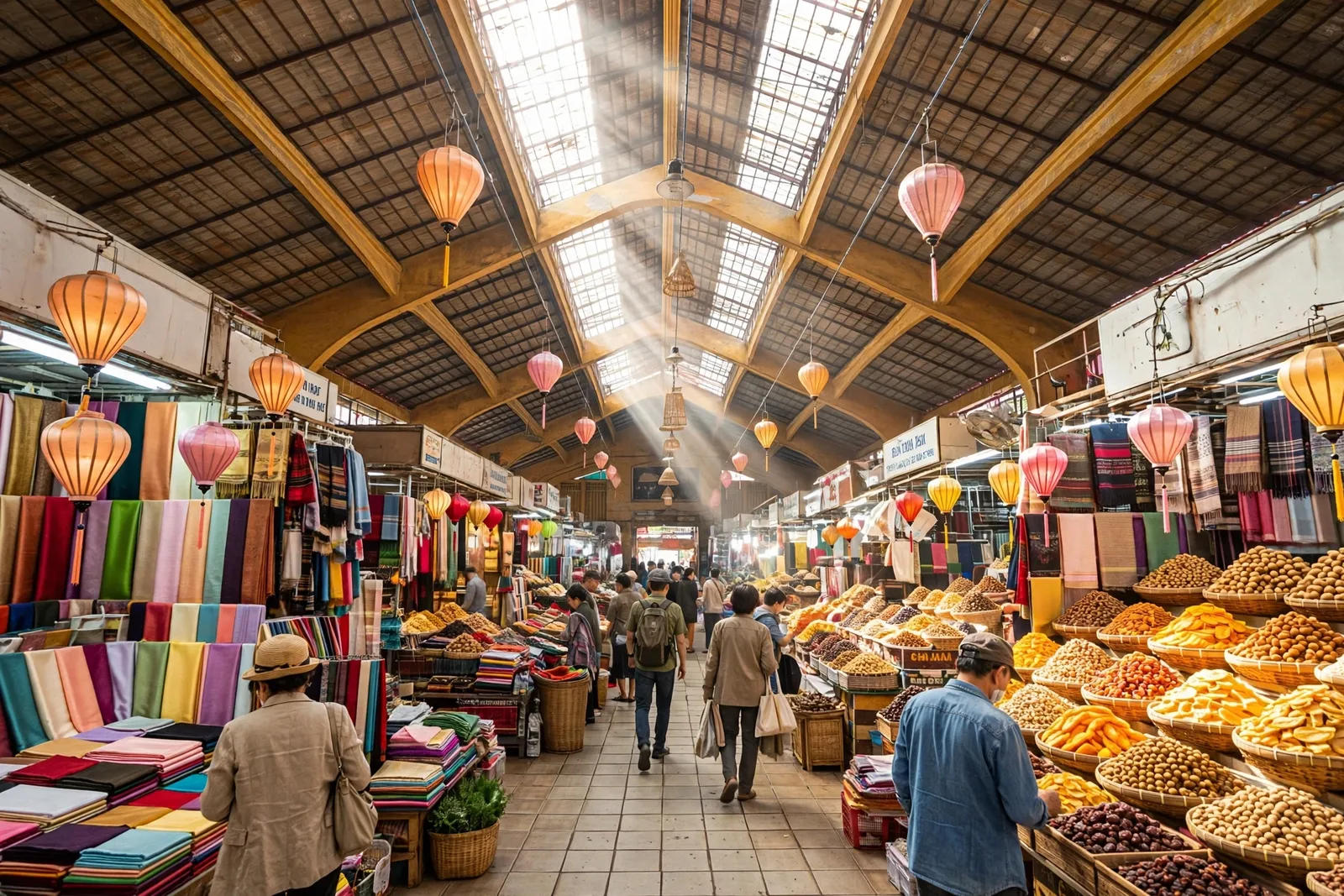
Ben Thanh Market in District 1 is the postcard market: a century old hall packed with lacquerware, embroidered linens, coffee, dried fruit, and souvenirs under one arched roof. Prices start high and expect bargaining, roughly 30 to 40 percent off the first quote is a fair landing zone. Go in the morning for the full energy, and eat lunch at one of the legendary food stalls inside, where the shopping crowds thin and the flavors concentrate.
For deeper and cheaper hunting, head to Cholon, Saigon’s Chinatown in District 5. Binh Tay Market is the wholesale heart, where locals buy in bulk and retail visitors find the same lacquer boxes and silk scarves as Ben Thanh at noticeably lower prices. Nearby, An Dong Market and the fabric streets around Soai Kinh Lam sell cloth by the meter, and the herbal medicine streets around Hai Thuong Lan Ong are a fragrant wander even if you buy nothing.
Saigon Square and the so called Russian Market near Tan Dinh deal in garment overruns and branded surplus, a lucky dip where patience pays. Whatever the market, keep your bag zipped, count change carefully, and remember the bargaining manners from our tipping and etiquette guide: smile, stay friendly, and walk away politely rather than arguing.
When the heat or the haggling wears you down, Saigon’s malls offer air conditioned relief with fixed prices. Saigon Centre and Takashimaya at the top of the building share the prime District 1 corner, mixing international brands with Vietnamese designers. Vincom Center on Dong Khoi leans luxury, while Vincom Mega Mall in Thao Dien across the river serves the expat east side. Crescent Mall in District 7 is worth the trip for its lakeside setting alone.
Malls are also the honest place to buy electronics, cosmetics, and branded goods, since fakes concentrate in markets and on sidewalks. Prices for international brands run close to home country levels, so the real mall bargains are Vietnamese labels: local fashion, leather goods, and skincare brands you will not find elsewhere. The book streets and stationery shops inside malls make surprisingly good souvenir stops too.
For tailoring, the ao dai, Vietnam’s elegant long tunic, is the classic commission. Reputable tailors in District 1 and Cholon can measure, cut, and finish an ao dai or a linen suit in 3 to 5 days, with prices from around 1,500,000 VND (about $60) for good fabric. Order early in your trip so there is time for a fitting.
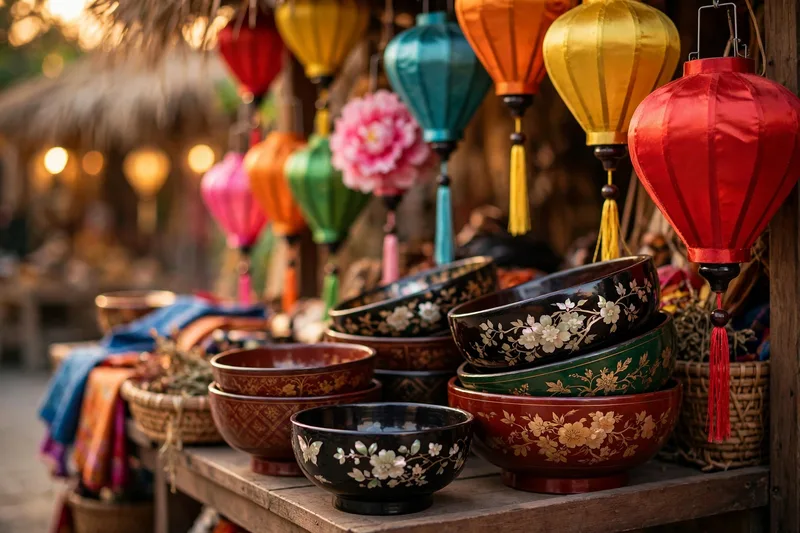
Coffee tops the list. Vietnam is the world’s second largest coffee producer, and bags of Trung Nguyen or specialty Da Lat arabica make superb gifts at 150,000 to 400,000 VND (about $6 to $16) per half kilo. Buy whole beans from reputable shops rather than pre ground market packets of uncertain origin. Lacquerware bowls and trays, silk scarves, and hand embroidered linens are the classic crafts, with fair prices from 100,000 VND for small items to several million for large inlaid pieces.
Conical hats, the non la, cost as little as 30,000 to 50,000 VND (about $1 to $2) and photograph beautifully, though packing one home is its own adventure. Propaganda style art prints, lacquer paintings, and water puppet carvings suit art lovers, while fish sauce, dried mango, and coconut candy please food lovers, all cheap and packable. Skip anything claiming to be antique, ivory, or wild animal products: the first is fake, the others are illegal and unethical.
Learn a few numbers before you shop, since our Vietnamese phrases guide shows how far Bao nhieu, how much, and Dat qua, too expensive, will carry you. Vendors respect buyers who know the going rate, and the whole exchange stays friendly when both sides feel the price is fair.
Bargain only where it is expected: markets, street stalls, and souvenir shops without price tags. A calm opening offer around half the asking price, a smile, and a willingness to walk away will land most souvenirs at a fair number. Once you agree, honor it. Aggressive last second renegotiation is the fastest way to sour a Vietnamese vendor’s mood and your own afternoon.
Assume anything branded in a market is a copy unless proven otherwise, and judge it on quality rather than the label. For ceramics and lacquerware, check for smooth finishes and even inlay, tap ceramics for a clear ring, and ask the shop to wrap pieces in layers of newspaper and bubble wrap, which they do expertly and usually free. Keep receipts for larger purchases in case customs asks questions on the way home.
Packing strategy matters more than people expect. Put fragile items in the center of your suitcase surrounded by clothes, carry lacquerware in hand luggage when possible, and remember airline weight limits before buying that magnificent two kilo lacquer tray. Vietnam Post and private shippers can send larger hauls home, with a medium box to most countries costing roughly 1,000,000 to 2,000,000 VND (about $40 to $80) by surface mail.
In markets and street stalls, yes. In malls, restaurants, and any shop with price tags, no. Fixed price souvenir shops are increasingly common in District 1.
Small lacquer boxes 100,000 to 200,000 VND, silk scarves 150,000 to 350,000 VND, coffee 150,000 to 400,000 VND per half kilo, conical hats 30,000 to 50,000 VND.
Binh Tay Market and the surrounding streets in Cholon, District 5. Prices run noticeably lower than Ben Thanh for similar goods.
Yes. Vietnam Post and private couriers in District 1 handle international parcels, with medium boxes costing roughly 1,000,000 to 2,000,000 VND by surface mail.
 Keep exploring
Vung Tau sits about 100 km from Ho Chi Minh City. Compare the expressway, the coastal road, and the ferry, and pick the
 Keep exploring
From walkable District 1 to buses, ride hailing apps, and coaches to the coast, here is how to move through the new Ho C
 Keep exploring
Vietnam visa rules for 2026: who gets visa free entry, how the 90 day e-visa works, official costs, and mistakes that ge
