Tet, the Lunar New Year, is Vietnam’s biggest holiday by an enormous margin: Christmas, Thanksgiving, and the Fourth of July rolled into one, stretching across a week or more of family reunions, flower markets, and fireworks. Visiting during Tet is unforgettable, with the city dressed in blossoms and good cheer, but it requires planning, since much of normal life pauses. Here is what actually closes, what stays open, and how to enjoy the holiday like an insider.
AI illustration
Tet Nguyen Dan, usually just called Tet, marks the lunar new year and is the cultural center of gravity for all of Vietnam. Families reunite, ancestors are honored with offerings, debts are settled, and the first days of the year are believed to set the tone for the months ahead. The public holiday officially runs about five days, but the festive season stretches from a week before, when flower markets peak, to a week after, when the celebrations wind down.
Dates follow the lunar calendar and shift each year, falling somewhere between late January and mid February. The year 2026 welcomes the Year of the Horse around mid February, so always check the exact dates for your travel year before booking anything. The week before Tet is the busiest domestic travel period of the year, as millions head to their hometowns, while the holiday days themselves are quiet in the big cities.
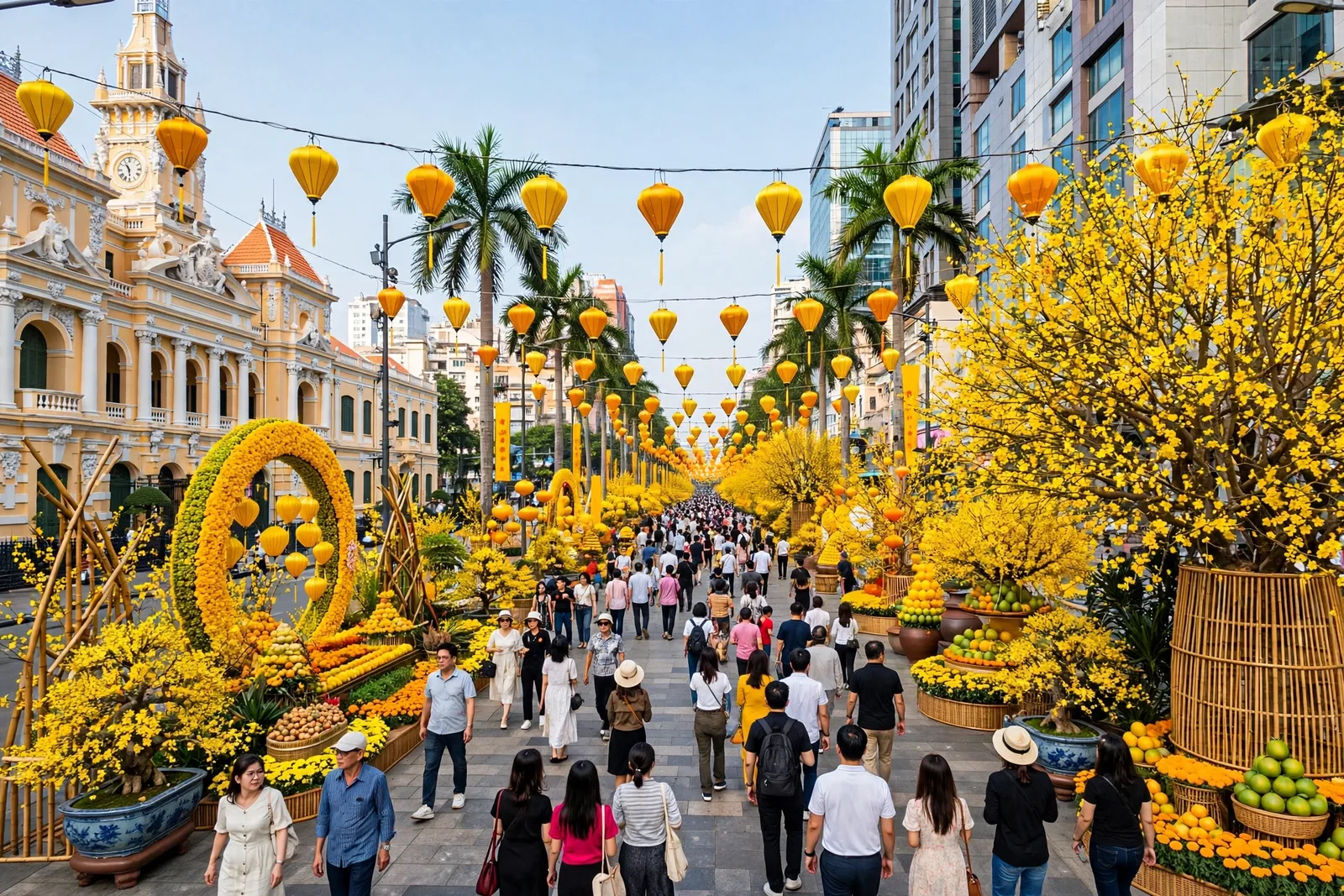
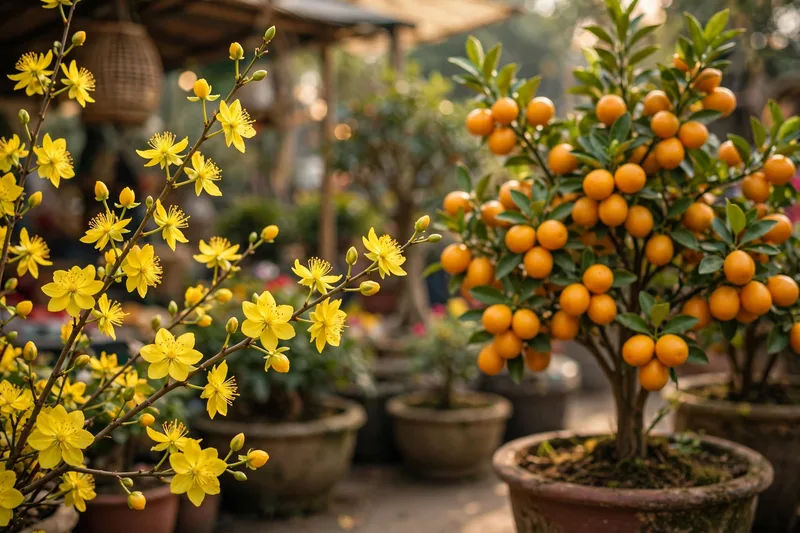
Two customs shape the visitor experience most. First, the country decorates extravagantly: yellow apricot blossoms in the south, pink peach blossoms in the north, kumquat trees heavy with golden fruit, and red and gold banners everywhere. Second, the concept of the first visitor, the xong dat, means families prize who enters their home first in the new year, so invitations carry real honor. If a local invites you for Tet, accept with delight.
Be realistic about closures. Government offices, banks, and post offices shut for the full official holiday, usually five working days, sometimes longer. Most family run restaurants, street food stalls, and small shops close for three to seven days as owners return to their hometowns, which means your favorite pho spot will likely be dark. Domestic buses, trains, and flights sell out weeks ahead at premium prices, and the roads on the last working day before Tet are the most congested of the year.
Tourist services thin out unevenly. Many tour operators pause for two to four days around New Year’s Eve and New Year’s Day itself, and freelance guides disappear to their villages. ATMs can run dry in smaller towns as everyone withdraws lucky money cash, so carry a buffer of dong. If you need tailoring, shipping, or official paperwork, finish it at least a week before the holiday.
The closures concentrate in the three days around New Year’s Eve and the first two days of the new year. By the fourth or fifth day, cities begin waking up, street vendors return, and normal life resumes in stages. Plan your must do activities for before or after this core window, and treat the quietest days as a chance to see an emptier, more contemplative Saigon.
Now the good news. Major hotels, international restaurants, shopping malls, and most tourist attractions stay open through Tet, often with festive decorations and special programs. The War Remnants Museum, the Reunification Palace, and the Cu Chi Tunnels typically operate on holiday hours, so the big sights remain visitable. Upscale restaurants in District 1 serve Tet tasting menus, and hotel buffets go all out.
Tet’s signature spectacle is the Nguyen Hue Flower Street, a pedestrian boulevard in the city center transformed into an elaborate floral exhibition for about a week around the holiday. It draws enormous crowds, especially in the evenings, and is genuinely worth seeing. The Tao Dan Park flower festival runs concurrently with prize blooms and bonsai displays. Temples and pagodas, especially Vinh Nghiem and Giac Lam, overflow with worshippers and incense, and respectful visitors are welcome to observe.
Fireworks light up the sky at midnight on New Year’s Eve over the Saigon River and at several parks, with the Bach Dang riverside drawing the biggest crowds. Book a riverside restaurant table or a dinner cruise well ahead for the best views. Street life on the first morning of Tet is hauntingly quiet, then the city slowly reanimates, and watching that revival is one of the holiday’s subtle pleasures.
Book everything early: flights, trains, buses, and hotels, ideally a month or more ahead for the peak travel days. Prices roughly double on popular routes, and the good rooms go first. Carry more cash than usual, since ATMs empty and many small vendors go cash only during the holiday. A buffer of 3,000,000 to 5,000,000 VND (about $120 to $200) per person covers several days of holiday spending.
Learn the greeting Chuc mung nam moi (chook moong nahm moy), Happy New Year, and use it everywhere. Small red envelopes of lucky money, li xi, are given to children and elders; as a visitor you are not expected to give them, but carrying a few small envelopes with 20,000 VND notes for hosts’ children is a charming gesture if you are invited to a home. Dress a little smarter than usual during Tet, since the holiday has a dressed up feeling and new clothes are part of the tradition.
Eat strategically. Hotel restaurants, mall food courts, and international chains stay open reliably, and Chinatown in District 5 keeps more kitchens running than other districts. Stock snacks and water before New Year’s Eve. And check our one day Saigon plan for a route that strings the flower street, temples, and riverside fireworks into a single memorable holiday day.
For Tet market runs, from apricot blossoms to lucky money envelopes, our Saigon shopping guide covers fair prices and friendly bargaining.
Tet 2026 falls around mid February, welcoming the Year of the Horse. Exact public holiday dates are announced by the government each year, so confirm before booking.
Yes, if you plan for it. The flower street, temple atmosphere, and fireworks are unique, and the city is peaceful during the core holiday days.
Major attractions like the War Remnants Museum, Reunification Palace, and Cu Chi Tunnels generally stay open on holiday hours. Small tour operators may pause for a few days.
A small Tet bonus for hotel staff, guides, and drivers who work through the holiday is a kind and culturally resonant gesture.
 Keep exploring
Vung Tau sits about 100 km from Ho Chi Minh City. Compare the expressway, the coastal road, and the ferry, and pick the
 Keep exploring
From walkable District 1 to buses, ride hailing apps, and coaches to the coast, here is how to move through the new Ho C
 Keep exploring
Vietnam visa rules for 2026: who gets visa free entry, how the 90 day e-visa works, official costs, and mistakes that ge
