The best way to understand central Saigon is to walk it. This two to three hour route connects the five landmarks every first time visitor should see, in a logical order that keeps you in the shade as much as the city allows, and it costs nothing but a bottle of water and a little sweat.
AI illustration
Begin at Ben Thanh Market around 8 in the morning, when the stalls are opening and the heat is still manageable. Walk north up Le Loi Boulevard toward Lam Son Square, where the white facade of the Saigon Opera House rises above the traffic. This first leg takes about fifteen minutes and sets the tone: colonial architecture on one side, glass towers on the other.
From the Opera House, turn onto Dong Khoi Street and stroll its full length to the Notre Dame Cathedral and the Central Post Office, which stand side by side at the top of the boulevard. Dong Khoi is the city’s most storied shopping street, once called Rue Catinat, and walking it slowly lets you spot the old shophouse facades tucked between luxury boutiques.
The whole loop covers roughly two and a half kilometers of actual walking. With photo stops, a coffee break, and a look inside the Post Office, plan on two to three hours. Finish at the cathedral square, where benches under the trees make a natural resting point before you decide what to do with the rest of your day.
Ben Thanh Market is the city’s most famous landmark and its great clock tower has appeared on postcards for a century. The current building dates to 1912 and was built on a former marsh, and while the interior is aimed squarely at tourists today, the morning food stalls around its edges are where locals still eat. It is the right place to start because it shows you the commercial heart of old Saigon.
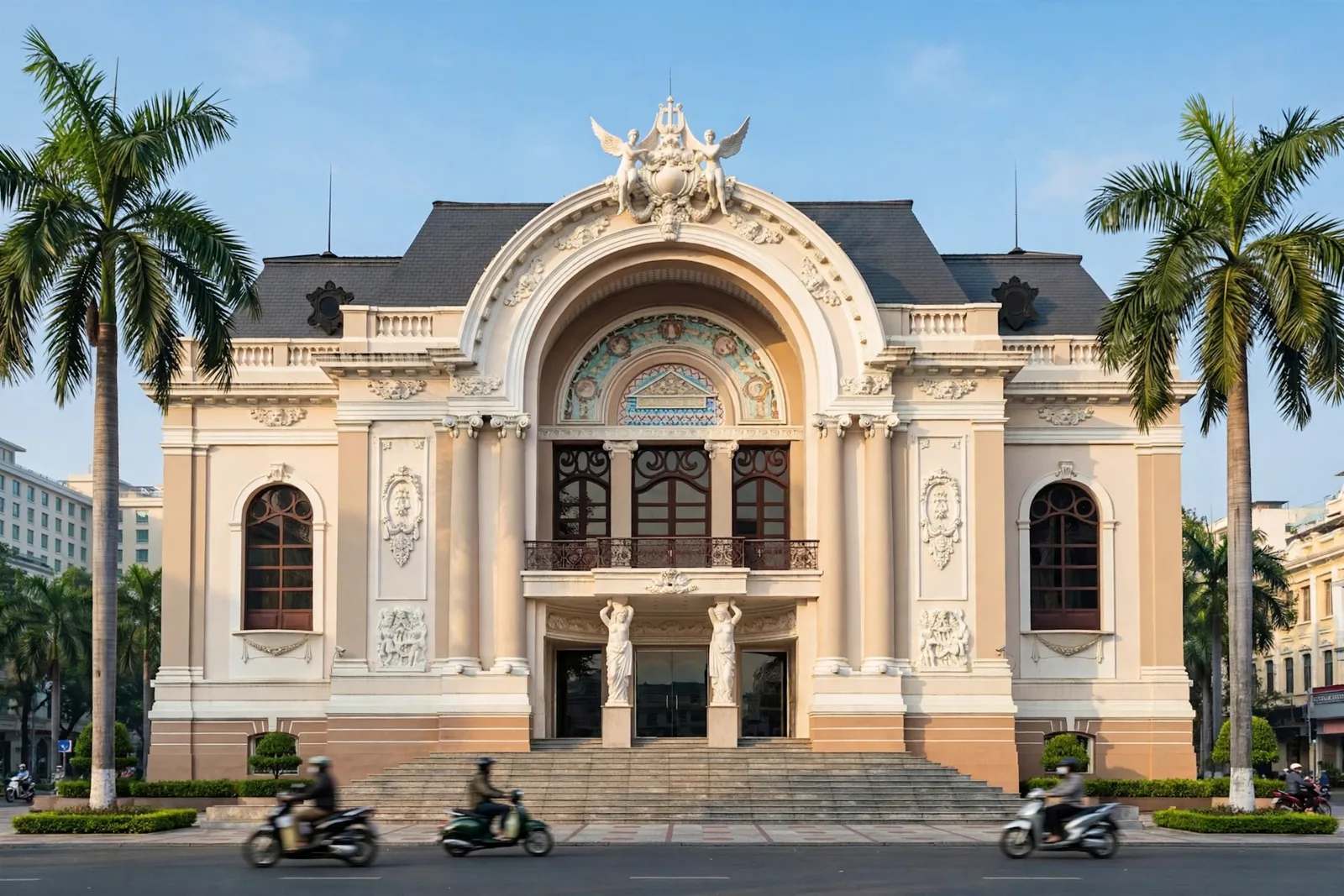
The Opera House, completed in 1897, is one of the finest French colonial buildings in Vietnam, with its arched windows and sculpted stonework recently restored to their original detail. If you time it right you can join a daytime guided look inside, or simply admire the facade from the square, which is also the city’s favorite spot for wedding photos.
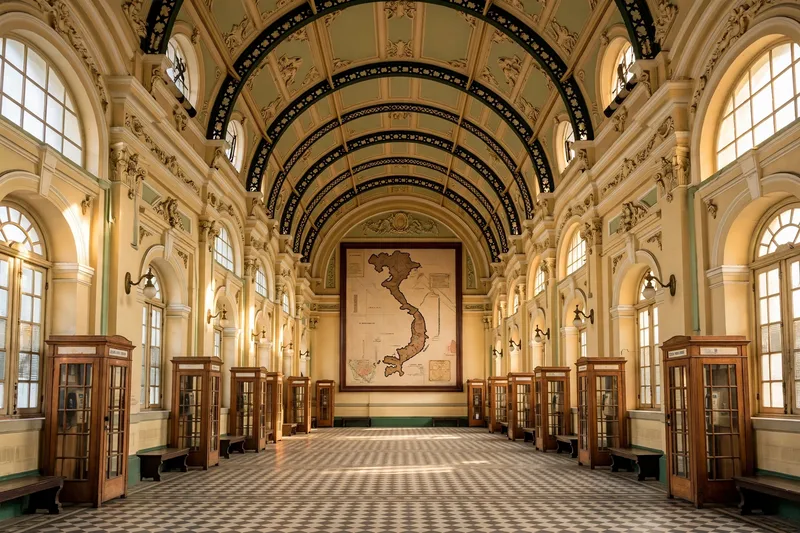
At the top of Dong Khoi, the twin landmarks of Notre Dame Cathedral and the Central Post Office anchor the walk. The cathedral, built between 1863 and 1880 with red bricks shipped from France, is currently under long term restoration, so check what is visible before you go. The Post Office next door, completed in 1891 with its vaulted iron roof, is fully open and free to enter, and its old fashioned phone booths and wall maps make it the most photogenic interior on the route.
Start early or start late. Between 10 in the morning and 3 in the afternoon the sun on Dong Khoi is punishing, and there is little shade along the boulevards. An 8 am start gets you to the Post Office before the tour buses, while a 4 pm start lets you finish at golden hour, when the cathedral square glows and the heat finally breaks.
Carry water and buy more at the convenience stores that appear every few blocks. Wear a hat and sunscreen even on cloudy days, because Saigon’s cloud cover filters far less ultraviolet than it looks like it does. Comfortable shoes matter more than style here: the sidewalks are uneven, and you will step around parked motorbikes constantly.
Crossing streets is the skill every visitor must learn. Traffic rarely stops fully, so cross slowly and steadily at crosswalks and let the motorbikes flow around you. Never step backward or run. After two or three crossings it feels natural, and by the end of the walk you will cross like a local.
If you finish by late morning and still have energy, the Independence Palace is a ten minute walk from the cathedral and takes about ninety minutes to tour. Its frozen in time 1975 interiors are the single best history stop in the city center, and the air conditioned halls are a genuine relief on hot days.
For a longer day, continue to the War Remnants Museum, about twenty minutes on foot from the palace. Pairing the two gives you the political history of the war in one demanding but rewarding afternoon. Take water and pace yourself, because the museum’s courtyard exhibits sit in full sun.
Prefer to keep things light? End your walk with a slow coffee at one of the old apartment block cafes on Dong Khoi, then ride out the midday heat before returning for the evening promenade on Nguyen Hue Walking Street. For getting between stops when your feet give up, see our guide to getting around Ho Chi Minh City.
About two and a half kilometers of walking, which takes two to three hours with photo stops, a coffee break, and a look inside the Post Office. Fit walkers can rush it in ninety minutes, but there is no reason to.
The boulevards around the Opera House and Nguyen Hue stay busy and well lit into the evening, and an after dinner stroll is pleasant. Side streets empty out faster, so stick to the main lit streets after 10 pm.
Ben Thanh Market and the Post Office are open to everyone for free. The Opera House interior is visitable on guided tours or with show tickets. Notre Dame Cathedral is under long term restoration with limited access, so check current status before your visit.
No. The route is simple, signage is in English, and everything is explained well enough on plaques and in the buildings themselves. A guide adds color if you want deep history, but independent walkers will be fine.
 Keep exploring
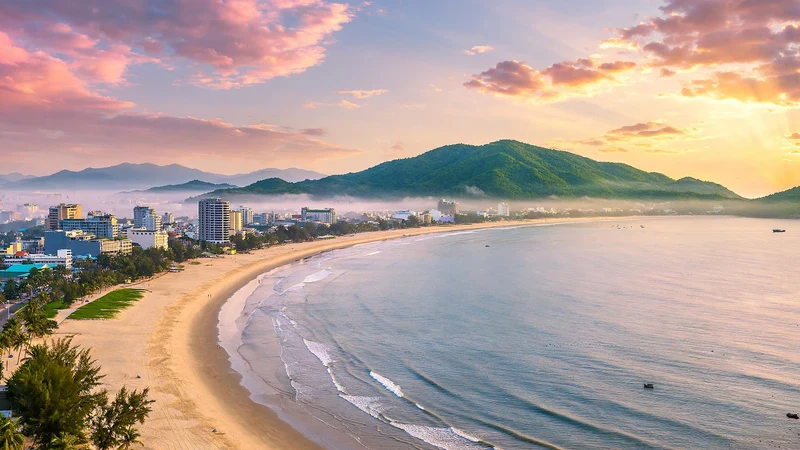
Back Beach (Bai Thuy Van) runs nearly 8 km along Vung Tau, about 2 hours from Ho Chi Minh City. Free entry, gentle surf,
 Keep exploring
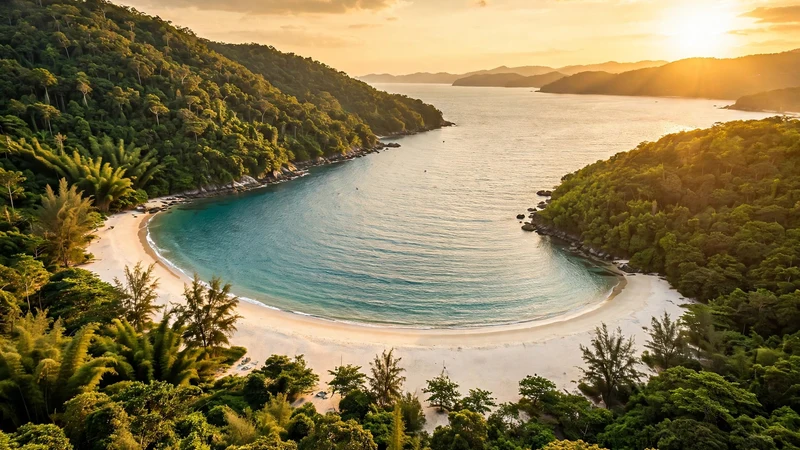
Dam Trau Beach sits 12 km from Con Dao town, backed by old forest and fronted by coral just meters from shore. Free entr
 Keep exploring
Founded in 1975, the War Remnants Museum documents the Vietnam War through aircraft, tanks, and thousands of photographs
