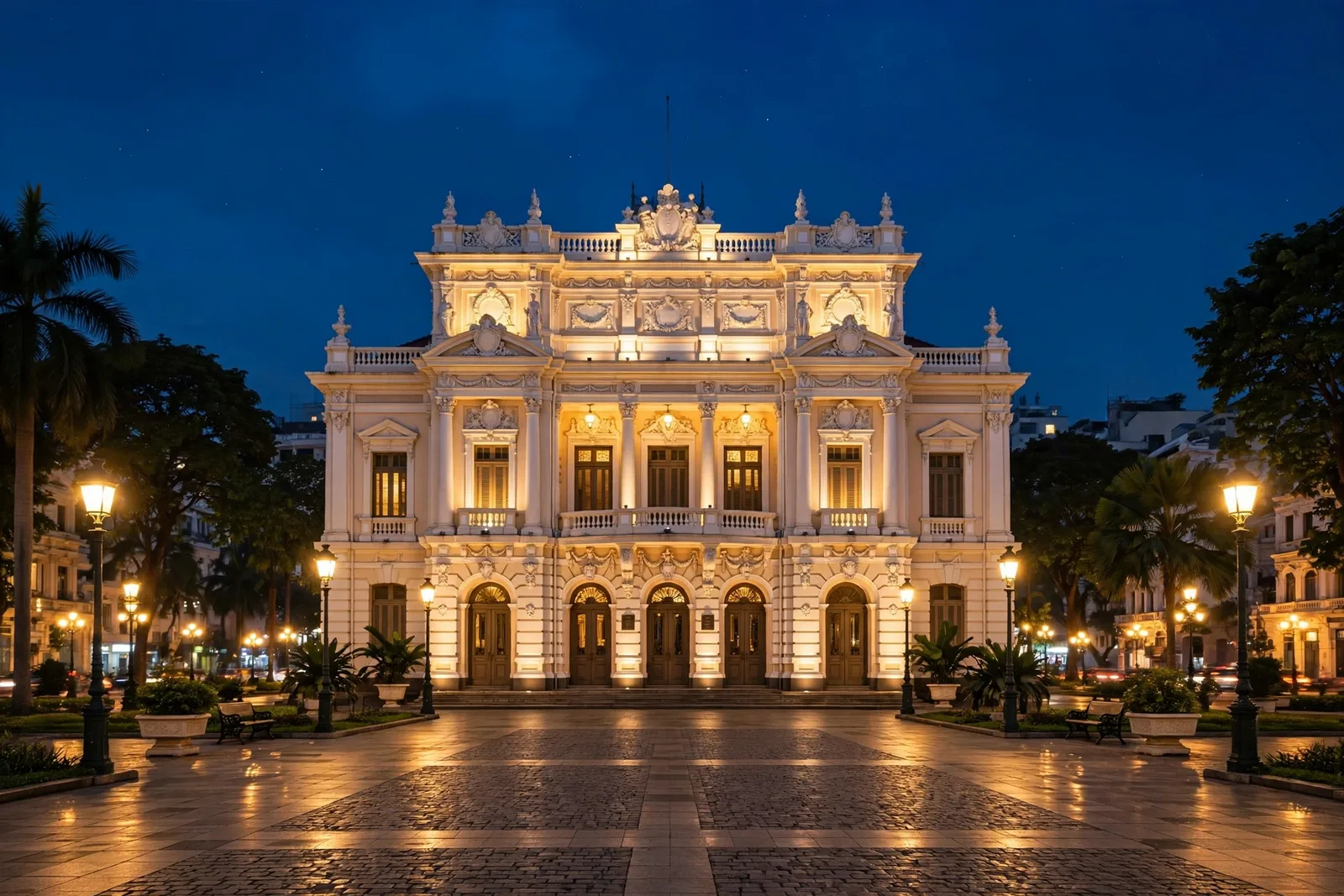
Every great city has one street that tells its story, and in Saigon that street is Dong Khoi. Running from the river up to the cathedral quarter, this boulevard has been the city’s fashionable spine for 150 years, and the white wedding cake of the Opera House still anchors its lower end like a full stop.
AI illustration
Dong Khoi began as Rue Catinat, the showcase street of French Saigon, lined with cafes, tailors, and the offices of shipping firms. After 1954 it became Tu Do, Freedom Street, the glamorous heart of South Vietnamese Saigon, famous for its bars, bookshops, and the artists who haunted them. Renamed Dong Khoi, meaning general uprising, after 1975, it kept its role as the city’s most prestigious address through every change of regime. Each name left its mark, and attentive walkers can still read all three eras in the facades.
Walking it today, you read those layers in the architecture: French era shophouses with their shuttered windows, 1960s modernist blocks, and the glass towers of the current boom, all sharing the same few hundred meters. Few streets in Asia compress this much history into such a short walk. The shophouse at number 87, the modernist office blocks mid street, the luxury mall at the lower end: each is a chapter, and the street is the book.
The street’s character shifts as you climb. The lower end near the Opera House is grand and formal, the middle is pure luxury retail, and the upper end dissolves into the cathedral quarter’s cafes and bookshops. Walk the whole length slowly; it takes about twenty minutes without stops, but you will want many. Every doorway seems to hide something: a tailor’s atelier, a gallery, a cafe up a narrow stair.
The Municipal Theatre, universally called the Opera House, was completed in 1897 and is the finest French colonial building in the city. Its facade mixes classical European ornament with local touches, and the recent restoration returned the stonework and interiors to their original splendor. By day it presides over Lam Son Square; by night, floodlit, it is the most romantic sight in District 1. The sculpted figures on the facade, the arched windows, the grand stair: every detail repays close looking.
The interior hosts the AO Show and other performances several evenings a week, and attending is the best way to see inside. Daytime guided visits are sometimes available; check the current schedule, because access varies with the performance calendar. The AO Show itself, a blend of acrobatics, dance, and Vietnamese rural imagery, is worth the ticket even before you factor in the venue.
Even without going in, the square in front is worth lingering in. It is the city’s favorite backdrop for wedding photography, and on weekend evenings the whole area fills with strollers enjoying the lights. The square connects directly to Nguyen Hue Walking Street, making the two a natural evening pairing. Come at blue hour, when the floodlights switch on and the sky behind the facade goes indigo, for the definitive photograph.
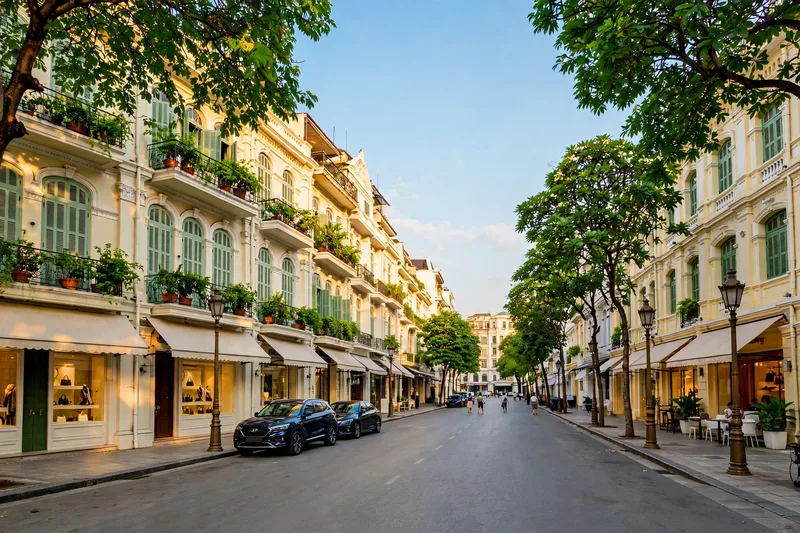
Dong Khoi’s retail is unapologetically upmarket: international luxury brands occupy the grand old buildings, and the window shopping is world class. But the street’s real shopping pleasure is in its exceptions, the old bookshops, the art galleries tucked into side alleys, and the tailors who have worked here for generations. The bookshops in particular are treasures, with English language sections heavy on Vietnamese history and photography.
Coffee is the street’s second religion. The old apartment blocks at numbers 42 and 47 hide famous cafe staircases, where tiny independent cafes stack floor upon floor above the shops. Climb to a high floor, order a slow drip coffee, and watch the boulevard from above: this is one of Saigon’s great cheap pleasures. Each floor has its own character, from minimalist tea rooms to cluttered artist haunts, and exploring them is half the fun.
For a deeper dive into the center, our District 1 walking tour uses Dong Khoi as its spine, and the Independence Palace sits a short walk from the street’s upper end. The side alleys between the grand addresses hide the city’s best kept retail secrets, so budget time for detours.
The boulevard transforms at night. The luxury stores glow, the Opera House is floodlit, and the rooftop bars above the shophouses fill with the city’s beautiful people. A slow evening stroll from the river to the cathedral, with a drink stop halfway, is one of the finest free experiences in Saigon. The air cools, the traffic thins, and the street’s grand architecture shows its best face under the lights.
The side streets off Dong Khoi hide the nightlife that the main boulevard keeps polite: live music bars, late night pho shops, and the backpacker energy spilling over from nearby Bui Vien. You can be as tame or as adventurous as you like within a five minute radius. The late night pho shops, steaming until 2 am, are the connoisseur’s choice for ending the evening.
End at the cathedral square or loop back down to the riverfront for the night views across the water. Dong Khoi rewards the unhurried: the slower you walk it, the more it shows you. Three visits at three different hours, morning, afternoon, and night, will show you three different streets.
It has been Saigon’s most prestigious boulevard for 150 years, through its French era as Rue Catinat and its South Vietnamese era as Tu Do Street. Today it mixes luxury retail, colonial architecture, and the Opera House.
The interior is open to performance ticket holders in the evenings, and daytime guided visits are sometimes offered. Check the current schedule, as access depends on the performance calendar.
About 20 minutes end to end without stops, but plan an hour or more with the cafes, shops, and photo stops that will inevitably slow you down.
The main street is luxury brands, but the side alleys and old apartment blocks hide independent boutiques, tailors, galleries, and bookshops with far more character.
 Keep exploring
Back Beach (Bai Thuy Van) runs nearly 8 km along Vung Tau, about 2 hours from Ho Chi Minh City. Free entry, gentle surf,
 Keep exploring
Dam Trau Beach sits 12 km from Con Dao town, backed by old forest and fronted by coral just meters from shore. Free entr
 Keep exploring
Founded in 1975, the War Remnants Museum documents the Vietnam War through aircraft, tanks, and thousands of photographs
