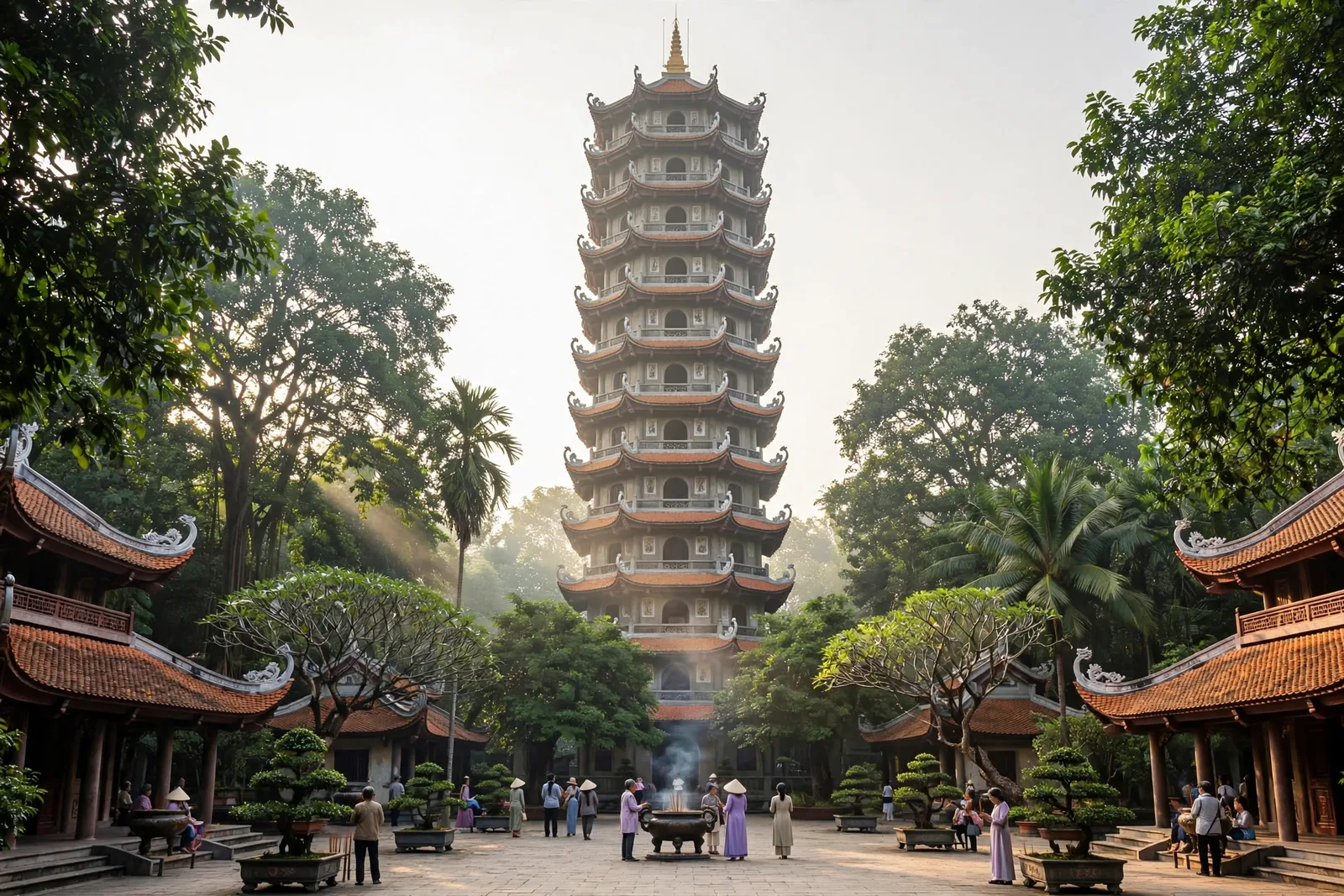
Not all of Saigon’s temples are ancient. Vinh Nghiem Pagoda, built between 1964 and 1971, is the city’s great modern Buddhist complex: a soaring seven story tower, vast calm courtyards, and an active monastic community. On festival days it draws thousands; on ordinary days it offers something rarer, silence in the middle of the city.
AI illustration
Vinh Nghiem was founded by monks from the north who wanted a major Mahayana Buddhist center in the south, and its architecture reflects that ambition: traditional Vietnamese temple forms scaled up with modern concrete engineering. The result feels both ancient and new, familiar in its rooflines and startling in its height. The founding monks brought northern architectural traditions south and fused them with local styles, creating something distinctly Saigonese. The foundation stone was laid in 1964, and the complex took seven years to complete, rising even as the war intensified around the city.
The central tower, the bao thap, rises seven stories and dominates the complex. Climb its levels for progressively wider views over the courtyards and, on clear days, the city beyond. Each floor holds shrines and quiet corners for sitting. The climb is a small pilgrimage in itself, with each landing offering a moment of stillness above the courtyard bustle.
The main sanctuary houses a serene Buddha beneath a high coffered ceiling, and the complex includes a library, lecture halls, and living quarters for the resident monks. This is a functioning monastery, not a museum, and its daily rhythms of chanting and study give it a living calm. The library holds an important collection of Buddhist texts, and the lecture halls host dharma talks that draw hundreds.
Vinh Nghiem comes fully alive during the great Buddhist festivals. Vesak, the Buddha’s birthday in April or May, fills the courtyards with lanterns, flower offerings, and nighttime chanting that draws crowds from across the city. The atmosphere is joyful and welcoming to visitors. The lantern displays, shaped like lotuses and stupas, transform the courtyards into a glowing garden after dark.
The Vu Lan festival in the seventh lunar month, roughly August, honors parents and ancestors, and the pagoda’s ceremonies are among the most attended in the south. The Ullambana rituals, with their chanting and offerings, offer a deep look at Vietnamese Buddhist practice. The rose giving ceremony, where children pin roses on their parents’ chests, moves even casual observers.
Tet, the lunar new year, brings the year’s biggest crowds, as thousands come to pray for fortune in the first days of the year. Visit on the second or third day of Tet for the festive atmosphere with slightly thinner crowds than day one. The pagoda’s Tet decorations, all yellow apricot blossoms and red banners, are among the city’s finest.
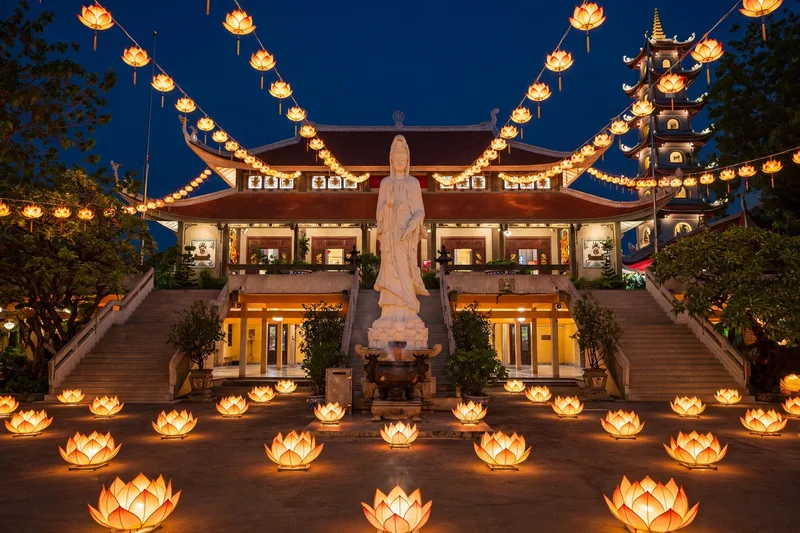
Outside festivals, Vinh Nghiem is wonderfully peaceful. Mornings bring chanting from the main hall, audible across the courtyards, and the gardens are at their best before the heat builds. An hour here, sitting in the courtyards between the halls, is a genuine reset from the city’s noise. The frangipani trees drop their blossoms on the courtyard stones, and the only sounds are chanting, birdsong, and the distant city.
The usual temple etiquette applies: modest dress, quiet voices, shoes off where indicated, and no touching the statues. The monks are friendly but busy; observe rather than interrupt, and you will be welcomed. If a monk engages you in conversation, consider it a gift; their English is often surprisingly good and their perspectives memorable.
For contrast with the city’s older temples, see our guides to the Jade Emperor Pagoda and Giac Lam Pagoda, the latter being the oldest temple in Saigon. The three together span Taoist, modern Mahayana, and ancient southern traditions, a complete education in the city’s faith.
Vinh Nghiem sits in District 3, which makes it a natural part of a local life day. Walk to Turtle Lake afterward for the evening street food scene, or explore the district’s old cafes for a slow afternoon. The walk from the pagoda’s gates to the lake takes you through some of the district’s most pleasant streets.
The streets around the pagoda hold excellent vegetarian restaurants, as you would expect near a major monastery. The Buddhist vegetarian, or chay, cooking here is some of the best in the city: delicate, varied, and very cheap. Even committed carnivores should try one meal. The mock meats, made from tofu, mushrooms, and wheat gluten, are so convincing they have fooled lifelong meat eaters. The lunch crowds at the chay restaurants are a sight in themselves, with office workers and monks sharing tables.
Combine the pagoda with the nearby Tan Dinh Pink Church for a two faiths afternoon that shows Saigon’s religious diversity within a single taxi ride. Buddhist calm in the morning, Catholic pink in the afternoon, and Turtle Lake’s street food at dusk: that is a very good Saigon day.
Between 1964 and 1971, founded by northern monks as a major Mahayana Buddhist center in the south. It is modern by temple standards but architecturally traditional.
Vesak in April or May, Vu Lan in the seventh lunar month around August, and Tet lunar new year bring the biggest crowds and most spectacular ceremonies.
No, entry is free. Donations are welcome and support the monastic community and upkeep.
An hour is plenty on an ordinary day; allow two or more during major festivals when the courtyards fill with ceremonies.
 Keep exploring
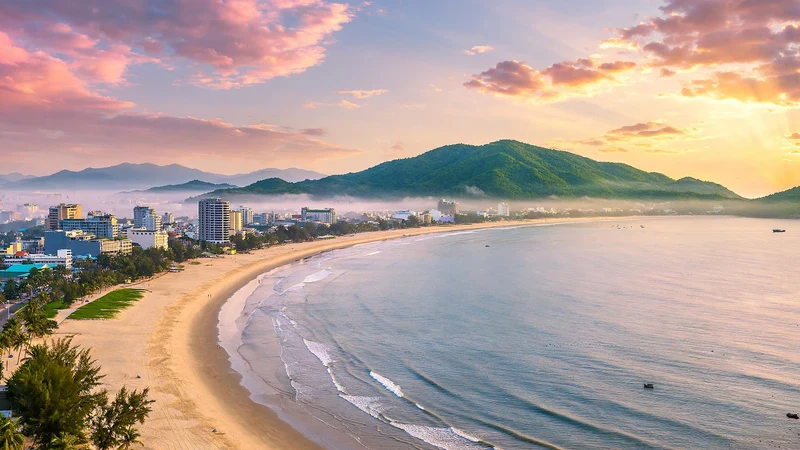
Back Beach (Bai Thuy Van) runs nearly 8 km along Vung Tau, about 2 hours from Ho Chi Minh City. Free entry, gentle surf,
 Keep exploring
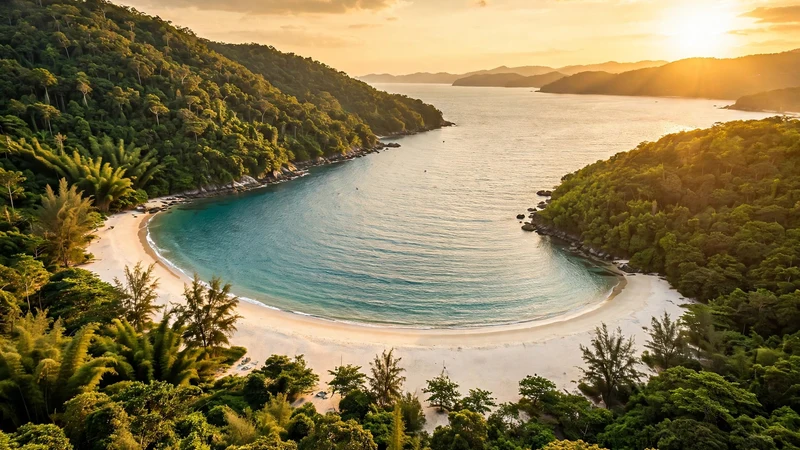
Dam Trau Beach sits 12 km from Con Dao town, backed by old forest and fronted by coral just meters from shore. Free entr
 Keep exploring
Founded in 1975, the War Remnants Museum documents the Vietnam War through aircraft, tanks, and thousands of photographs
