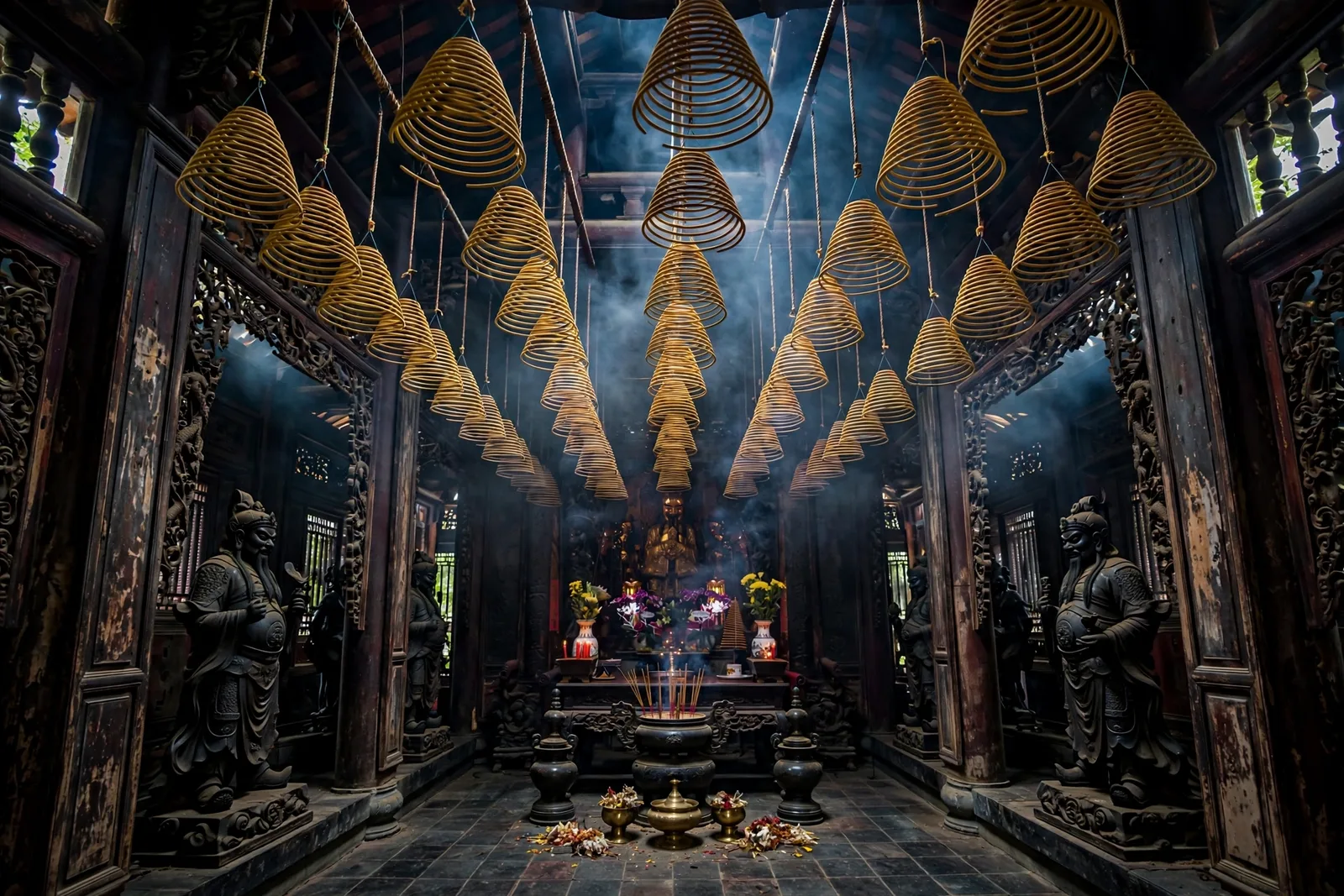
When Barack Obama visited Saigon in 2016, he made time for one temple: the Jade Emperor Pagoda. Step inside and you understand why. This is the most atmospheric house of worship in the city, a dim Taoist hall thick with incense smoke, carved wood, and the slow movement of turtles in the courtyard pond.
AI illustration
The pagoda was built in 1909 by the city’s Cantonese community and is dedicated to Ngoc Hoang, the Jade Emperor, the supreme Taoist deity. Its official name is Phuoc Hai Tu, but everyone uses the Jade Emperor name, and the temple’s fame went global when Obama’s 2016 visit put it on every itinerary. The story goes that he was drawn by the temple’s reputation for atmospheric beauty, and the photographs of him amid the incense smoke circled the world.
What he saw is what you will see: a compact complex of halls where the air is permanently perfumed, the light filters through smoke, and every surface carries carving. The temple is small enough to absorb in thirty minutes and rich enough to reward an hour. Take it slowly, because the details, the woodwork, the ceramics, the calligraphy, reveal themselves gradually in the dim light.
Unlike the grander Buddhist pagodas, this is a working Taoist temple first and a sight second. Worshippers come daily to pray for children, health, and fortune, and visitors are welcome observers as long as they are respectful and quiet. The morning prayer sessions, with their chanting and bell ringing, are worth timing your visit around.
The main hall centers on the Jade Emperor himself, flanked by his guardians, with the famous Hall of Ten Hells to one side: vivid carved panels showing the punishments awaiting the wicked, a moral comic strip in wood that fascinates every visitor. The craftsmanship is extraordinary up close. Study the panels in sequence and they read like a graphic novel of cosmic justice, each torment rendered with unsettling imagination.
The chamber of Kim Hoa Thanh Mau, the goddess who grants children, draws a steady stream of hopeful couples tying red strings and leaving offerings. Even non believers find the sincerity moving. Photography is allowed but keep flash off and voices down. The piles of offerings, fruit, flowers, and folded paper, testify to answered prayers, or at least to enduring hope.
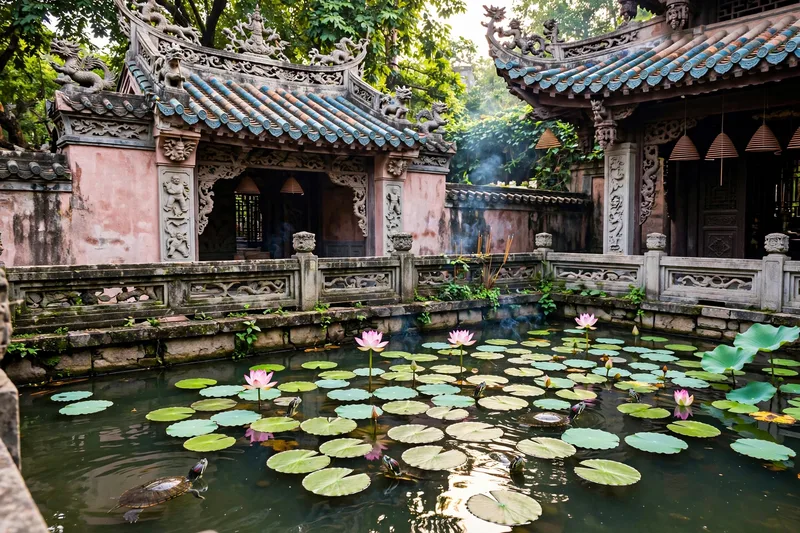
Outside, the turtle pond holds dozens of turtles, some very large and very old, swimming slowly among the lotus. Visitors buy greens to feed them for luck. The turtles, the smoke, and the carved dragons on the roofline together make the pagoda’s signature image. The largest turtles are decades old, placid giants that surface slowly among the lily pads while devotees toss them leafy offerings.
Come in the morning, when worshippers are active and the incense is freshest. The temple opens early and the light through the doorways is at its best before 10 am. Midday tour groups can crowd the small halls, so an early start pays off. The 8 am hour, with the first incense of the day curling through the sunbeams, is the most magical time to be here.
Dress modestly: cover shoulders and knees, remove hats inside the halls, and step over thresholds rather than on them. Speak quietly, do not touch the statues or offerings, and ask before photographing worshippers at prayer. The thresholds are raised for spiritual reasons, keeping out evil spirits, so stepping over them is a small act of respect worth remembering.
Donations go in the boxes by the altars; even a small note is appreciated and helps maintain the buildings. If you want to understand the wider temple landscape, our guides to Vinh Nghiem Pagoda and Giac Lam Pagoda cover the city’s great Buddhist temples. Each represents a different tradition, and together they map the city’s spiritual diversity.
The pagoda sits just north of the center, an easy add to a District 1 morning. Visit after the District 1 walking tour or before lunch in nearby District 3, both a short ride away. Thirty to forty five minutes here is plenty. The temple’s compact size makes it the perfect palate cleanser between bigger sights.
The surrounding streets are local and untouristy, with good bun bo Hue and com tam stalls for lunch after your visit. It is a nice glimpse of the city between the sights. Wander a block or two in any direction and you are in a neighborhood where tourists rarely go, with sidewalk cafes and family run shops.
Serious temple fans can make a day of it: Jade Emperor in the morning, Vinh Nghiem at midday, and Giac Lam, the city’s oldest, in the afternoon. Three temples, three centuries of faith, one memorable day. End with a quiet dinner in District 3 and you have covered the sacred and the everyday in a single arc.
Its extraordinary Taoist carvings and incense filled halls made it a landmark for decades, and Barack Obama’s 2016 visit made it internationally famous.
No, entry is free. Small donations at the altar boxes are welcome and help maintain the temple.
Thirty to forty five minutes is enough to see the halls, the Hall of Ten Hells, and the turtle pond without rushing.
Yes, but without flash, and be discreet around worshippers. Ask permission before photographing people at prayer.
 Keep exploring
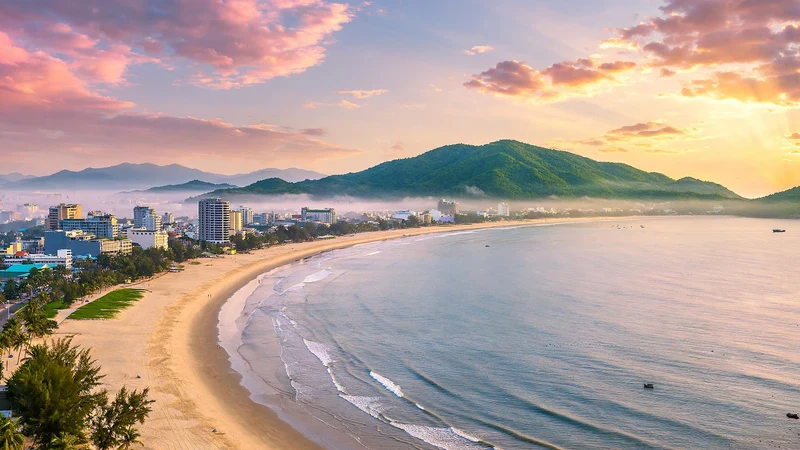
Back Beach (Bai Thuy Van) runs nearly 8 km along Vung Tau, about 2 hours from Ho Chi Minh City. Free entry, gentle surf,
 Keep exploring
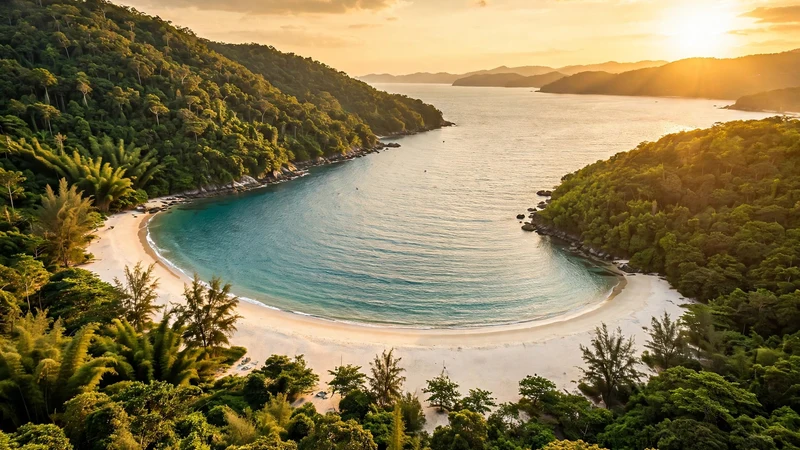
Dam Trau Beach sits 12 km from Con Dao town, backed by old forest and fronted by coral just meters from shore. Free entr
 Keep exploring
Founded in 1975, the War Remnants Museum documents the Vietnam War through aircraft, tanks, and thousands of photographs
