Mi vit tiem is Saigon's Chinese soul in a bowl: a quarter duck leg braised until it surrenders, laid over springy egg noodles in a dark, herbal, faintly medicinal broth. It comes from Cholon, the city's Chinatown, where Teochew cooks perfected it generations ago. Here is what is in the bowl and where to find it.
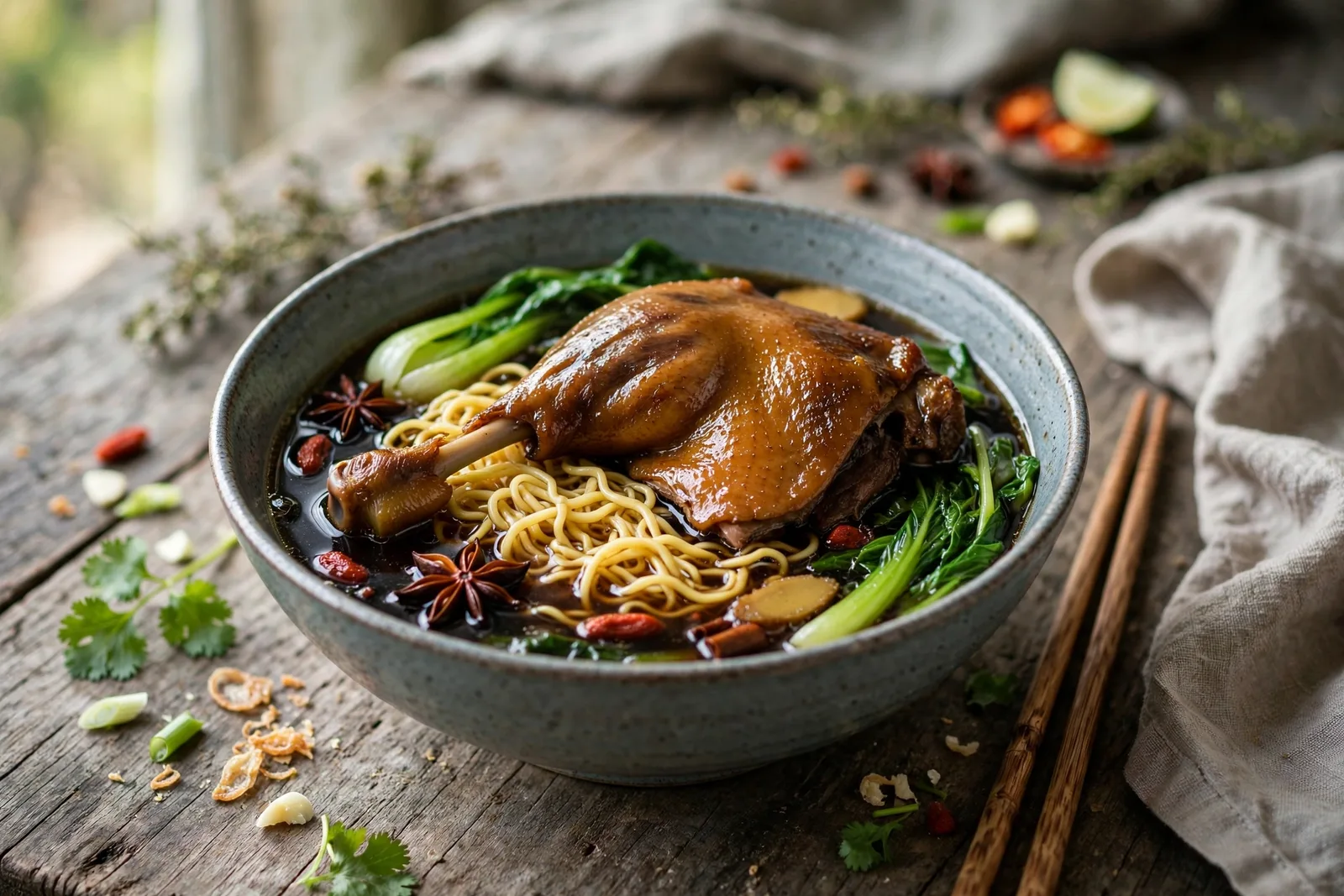
AI illustration
Vit tiem means braised duck, and the dish carries its Chinese roots openly. Teochew migrants brought the technique to Cholon, where duck is braised low and slow with a pharmacy of herbs: goji berries, dried jujube, star anise, and other aromatics that give the broth its dark color and restorative reputation.
The duck is the argument for the dish. A full leg quarter, skin lacquered from the braise, meat falling from the bone, sitting over a tangle of yellow egg noodles that catch the broth. Chinese mustard greens or bok choy cut the richness with a clean bitterness.
Cholon regulars treat it as comfort food and mild medicine in one. The herbal broth is the kind grandmothers prescribe for run down weeks, and it tastes like it is doing you good.
The braise takes hours, and the duck goes in seasoned and comes out transformed. The skin turns a deep mahogany, the meat pulls from the bone, and the cooking liquid becomes the base of the broth. Nothing is wasted. The braise is the broth, and the broth is the dish.
The Teochew influence shows in the restraint. Where other duck soups go bold with spice, vit tiem stays balanced and herbal, letting the duck speak. It is a quieter kind of delicious, the sort that grows on you across multiple visits rather than announcing itself in one bite.
The broth leads: dark, savory, layered with herbs and the deep flavor of long braised duck. It is richer than pho and less spicy than bun bo Hue, occupying its own warming middle ground. The egg noodles are springy and wheat based, a different chew from rice noodles.
The duck leg is served bone in, which keeps it juicy through the braise. Pick the meat with chopsticks or lift the bone and work around it; nobody minds. A spoonful of the broth over the noodles between bites keeps everything glossy.
On the side: pickled green chili in vinegar, the classic accompaniment, and sometimes a small dish of ginger fish sauce for the duck meat itself.
The herbal profile is gentle by design. Goji berries add sweetness, jujube adds body, star anise adds warmth, and none of them shout. The result tastes restorative rather than medicinal, the kind of soup that feels like it is fixing something.
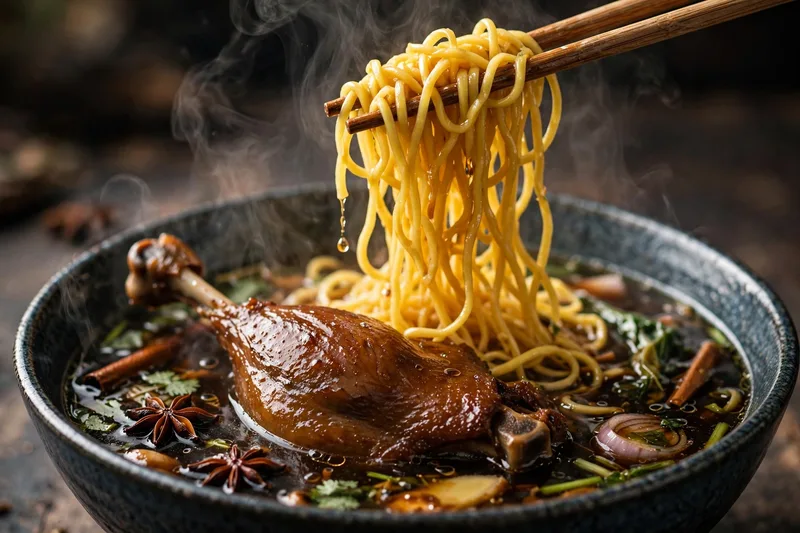
Cholon in District 5 is the home ground. The old shops along the busy streets near the markets have braised duck down to a science, with pots that have been going for decades. Look for places where the duck glistens under heat lamps and the broth smells of herbs from the doorway.
A bowl costs 50,000 to 80,000 VND (about $2 to $3). The duck leg version sits at the top of the range; shredded duck or a smaller portion costs less. Extra noodles are cheap, and the broth refills are sometimes free.
It makes a natural pairing with a Cholon walk. The temples, markets, and herbal shops of District 5 surround the noodle houses, so lunch becomes the centerpiece of a half day exploring.
Cholon mornings belong to the noodle shops. The shutters roll up around 9:00, the first braise comes out glistening, and the regulars take their usual tables. Eating at opening time means the duck at its absolute peak, before the lunch rush works through the pot.
The old shops often share their street with herbal medicine stores and Chinese bakeries, and the whole block smells of star anise and baked wheat. Come hungry and wander. The noodle shop is the anchor, but the supporting snacks are excellent.
Add a spoon of the pickled chili vinegar to the broth first; the acidity lifts the richness beautifully. Taste, then adjust with more vinegar or chili to your liking. The broth should taste deep and herbal, never greasy.
Work the duck with the noodles, not separately. A bite of duck, a tangle of noodles, a spoon of broth, that is the rhythm. Save some broth for the end; it is the best part, and the good shops know it.
For another Chinese influenced noodle in the city, hu tieu Nam Vang offers a lighter, pork based contrast from the same culinary family.
The pickled green chili is made in house at the good shops, sharp and clean, and it is the essential counterpoint to the rich broth. A spoonful stirred through changes the whole bowl. Ask for extra. It keeps in the jar on the table for a reason.
Braised duck, the Chinese Teochew technique at the heart of the dish.
Long braising with duck plus Chinese herbs like goji berries, jujube, and star anise.
Gently so. The herbs add depth and warmth without tasting like medicine.
No. The heat comes only from the pickled chili vinegar you add yourself.
 Keep exploring
From street carts to a UNESCO heritage nomination, Saigon banh mi is the street food you cannot skip. Crispy crust, rich
 Keep exploring
Tiny golden pancakes from a sizzling cast iron mold, topped with whole shrimp and wrapped in herbs. A plate of 10 to 15
 Keep exploring
Bitter robusta coffee brewed through a cloth filter, sweetened with condensed milk, poured over ice. The drink that defi
