For decades Saigon ran on motorbikes and hope. Then Metro Line 1 opened, Grab standardized the chaos, and suddenly the city got navigable. This is the practical guide to moving around: when to ride the metro, when to Grab, and when to simply walk.
AI illustration
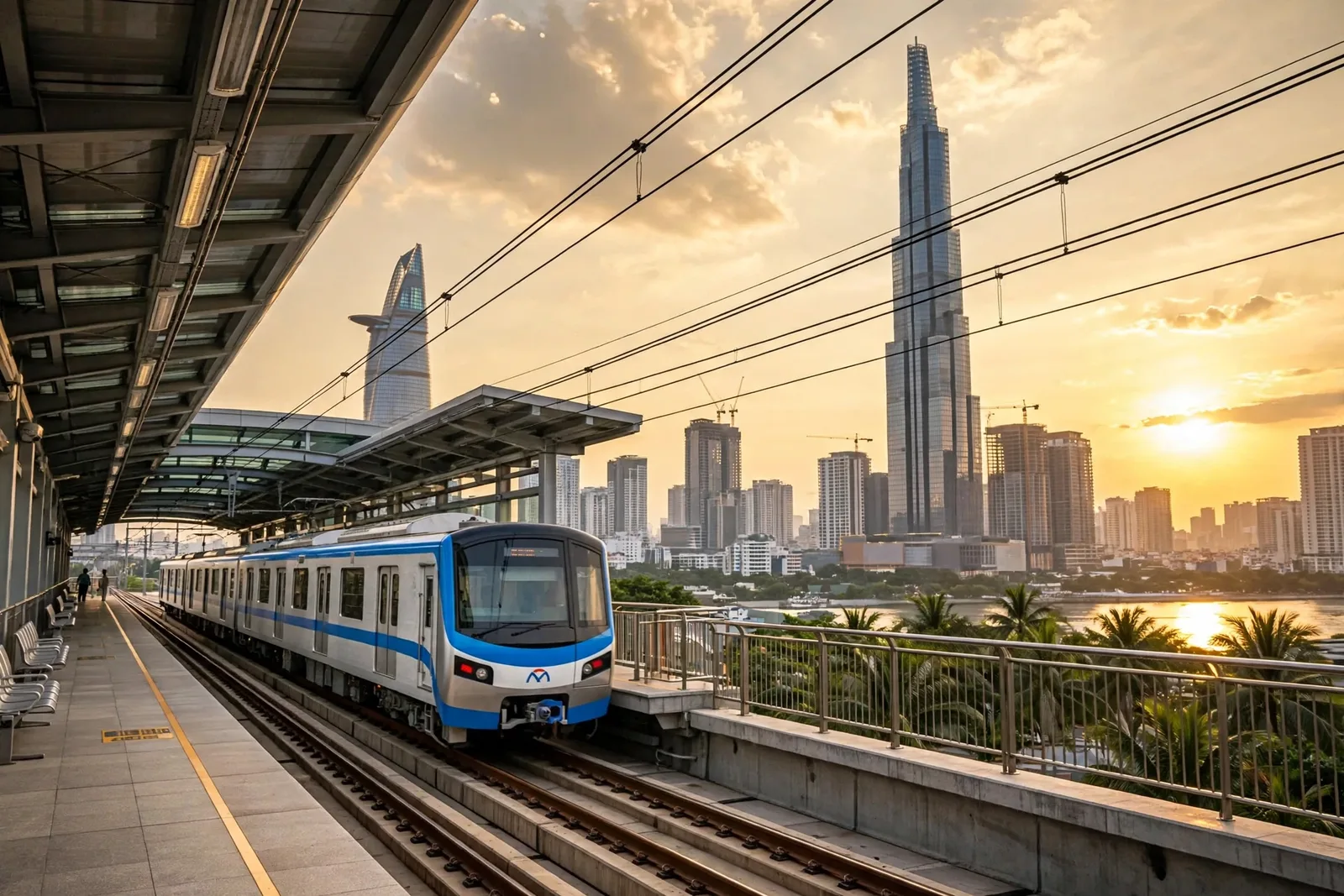
Metro Line 1 runs 19.7 kilometers from Ben Thanh in the center to Suoi Tien in the northeast, and it has genuinely changed the city. Trains are modern, air conditioned, and fast, gliding above the traffic that used to define every cross town journey. Fares run 7,000 to 20,000 VND (about $0.30 to $0.80) depending on distance.
The useful stations for visitors: Ben Thanh for the market and District 1, Opera House for Dong Khoi, Ba Son for the riverside, and Thu Thiem for the new urban area across the river. Suoi Tien at the far end serves the amusement park and the National University area. Trains run roughly 5 am to 10 pm.
The metro will not take you everywhere, the network is still one line, but it anchors the east west axis beautifully. Plan your accommodation near a station if you can: a hotel near Ben Thanh or Opera House station puts half the city within a cool, traffic free ride.
Buy a day pass if you plan multiple metro rides. The passes simplify the fare gates and pay off after three or four trips. Station staff speak enough English to sell you the right one, and the ticket machines take cash and cards.
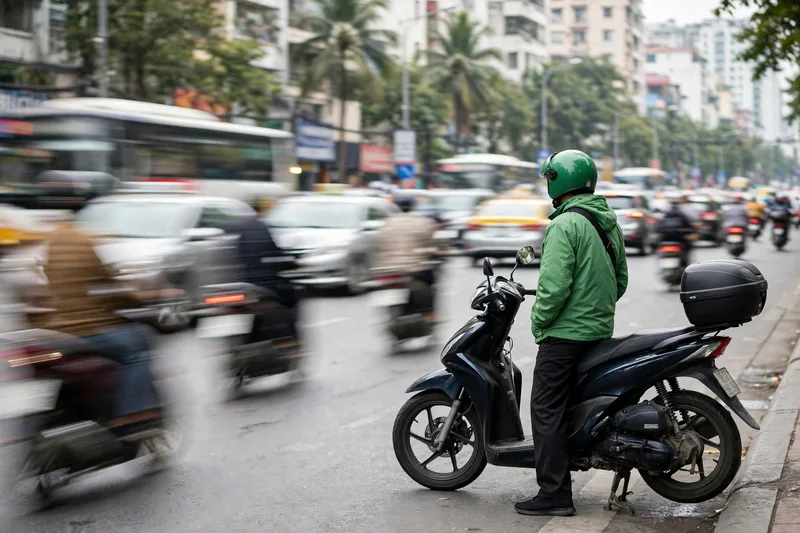
Grab is the verb for getting around Saigon. GrabBike puts you on the back of a motorbike, weaving through traffic at local speed for 20,000 to 60,000 VND (about $0.80 to $2.40) across the center. It is thrilling, efficient, and the single most Vietnamese transport experience available to visitors.
GrabCar is the enclosed, air conditioned alternative, costing roughly double to triple the bike price. Choose the car for rain, for luggage, for late nights, or when the heat defeats you. Choose the bike for everything else: it is faster in traffic and far more fun.
Setup is easy with a local SIM and takes five minutes. Prices are fixed upfront, which eliminates the negotiation and meter anxiety of traditional taxis. Drivers provide helmets for bike rides; wear them, always.
GrabFood and GrabExpress run on the same app and are worth knowing. Midnight hunger, forgotten chargers, documents to send across town: the Grab ecosystem solves small travel problems fast. Set up the app fully on day one and it becomes a travel Swiss army knife.
Traditional taxis still work, with Mai Linh and Vinasun the reputable companies. Insist on the meter, and be wary of lookalike brands with similar names and rigged meters. A legitimate taxi costs about the same as GrabCar, so most visitors default to the app.
City buses are the budget champion at 6,000 to 10,000 VND per ride, and the network covers the metro's gaps. They are slow and the signage is Vietnamese only, which makes them an adventure rather than a strategy for most visitors. Try one for the experience, not for your schedule.
Cyclos, the three wheeled bicycle rickshaws, are for sightseeing, not transport. Agree the price firmly before boarding, in writing if possible, because the classic tourist complaint is the price multiplying at journey's end. A 30 minute spin around District 1 should cost 100,000 to 150,000 VND (about $4 to $6).
For the Ben Thanh to Pham Ngu Lao backpacker strip, walking beats every vehicle. The distance is short, the streets are lively, and you will spot dinner while you walk. Save the rides for the longer hops to Chinatown, the pagodas, and the river.
District 1's core is genuinely walkable. Ben Thanh, the Opera House, the cathedral, the War Remnants Museum, and the riverside promenade connect in a pleasant two to three hour stroll, best done early morning or after 4 pm when the heat relents.
Crossing streets is the famous skill. Traffic does not stop, so you walk slowly and steadily while bikes flow around you. Never run, never freeze, never step backward. It feels suicidal for the first hour and completely natural by the second day.
Sidewalks double as motorbike parking and cafe seating, so walking means weaving. Wear comfortable shoes, carry water, and duck into air conditioned malls or cafes when the heat spikes. For longer hops, the Vung Tau day trip shows how the city connects to the coast.
The golden rule of Saigon movement: match the vehicle to the distance. Under a kilometer, walk. One to five kilometers, GrabBike. Over five, metro plus a short Grab at each end. Rain or luggage upgrades everything one level toward the car.
Yes. Metro Line 1 runs from Ben Thanh to Suoi Tien, 19.7 km, with fares from 7,000 to 20,000 VND (about $0.30 to $0.80).
Yes, and it is the default transport. GrabBike costs 20,000 to 60,000 VND across the center; GrabCar roughly double to triple.
Mai Linh and Vinasun are reputable. Insist on the meter and beware of lookalike brands with rigged meters.
Yes. The central sights connect in a pleasant two to three hour walk, best done early morning or late afternoon.
 Keep exploring
Vung Tau sits about 100 km from Ho Chi Minh City. Compare the expressway, the coastal road, and the ferry, and pick the
 Keep exploring
From walkable District 1 to buses, ride hailing apps, and coaches to the coast, here is how to move through the new Ho C
 Keep exploring
Vietnam visa rules for 2026: who gets visa free entry, how the 90 day e-visa works, official costs, and mistakes that ge
