West of the tourist center, in Districts 5 and 6, lies Cho Lon, the largest Chinatown in Vietnam and one of the oldest. Chinese merchants settled here in the 1700s, and the neighborhood still runs on their rhythms: wholesale markets at dawn, temples thick with incense by midmorning, and herbal shops that have measured out remedies for five generations.
AI illustration
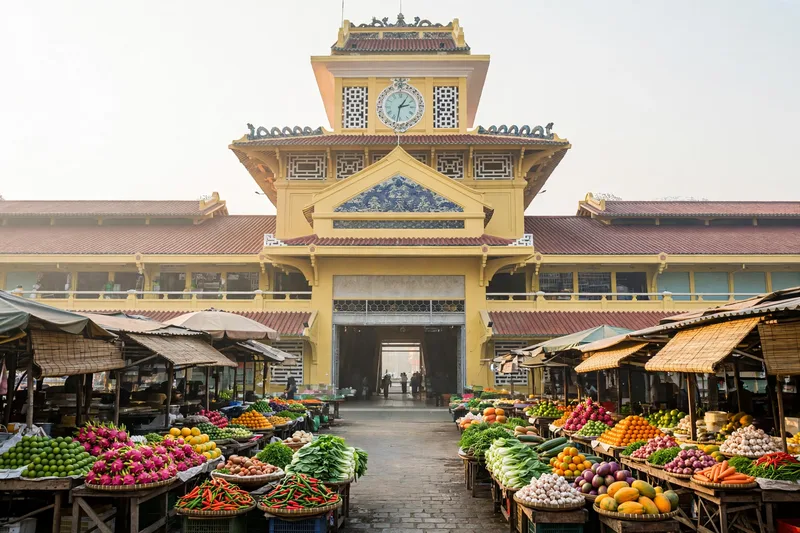
Start at Binh Tay Market, the great yellow market hall built between 1928 and 1930 by the merchant Quach Dam. Unlike Ben Thanh, this market serves wholesalers and local families, so prices are honest and the souvenir sellers are few. Come before 9 am to see it at full volume, when the produce halls are stacked with fruit and the dried goods aisles smell of star anise and mushrooms. The sheer scale is humbling, with hundreds of stalls under one roof and porters pushing carts through every aisle, so take your time and let the market set the pace.
The central courtyard holds a memorial to Quach Dam himself, a reminder that Cho Lon’s markets were built by the community that uses them. Walk the outer ring of food stalls for breakfast: vendors here have served the same dishes for decades, and a bowl of noodles costs a fraction of District 1 prices. Look for the small shrine tucked into the market’s heart, where vendors pause to light incense before the day’s trading begins, a quiet moment of devotion in the middle of the commercial roar.
From Binh Tay it is a short walk or quick ride east into the denser streets of District 5, where the neighborhood’s temples begin. The market makes a natural anchor for the morning because everything else in Cho Lon radiates outward from its commercial energy. From the main gate, the streets eastward grow denser and older, and temple roofs begin to appear above the shophouse rows, so simply follow them and they will lead you exactly where you want to go.
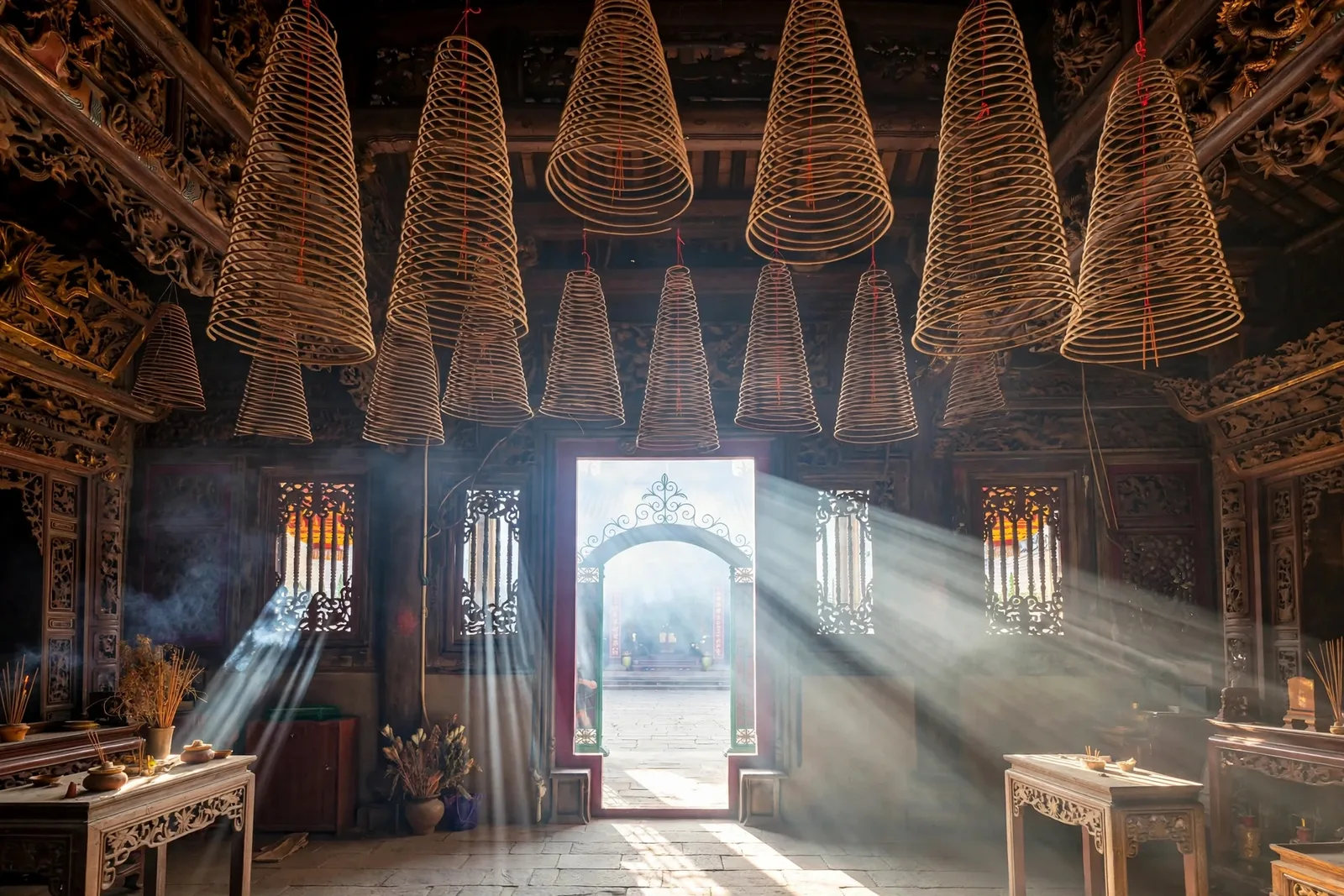
Thien Hau Temple on Nguyen Trai Street is the spiritual center of Cho Lon, dedicated to the Lady of the Sea who protects travelers. Built around 1760 by Cantonese immigrants, its roofline carries a forest of small porcelain figures telling folk tales, and inside, great coils of incense hang overhead, each one burning for weeks. Visit midmorning when the light shafts through the doorways and the smoke. Study the fierce painted guardians flanking the doors up close, since every scale and whisker was carved by hand, and watch the faithful shake fortune sticks to read their numbered prophecies with complete seriousness.
A short walk away, the Quan Am Pagoda offers a quieter courtyard and a pond where visitors feed the fish for luck. Together the two temples show the two faces of Chinese Vietnamese worship: Thien Hau grand and communal, Quan Am intimate and contemplative. The pond’s resident turtles are famously ancient, and feeding them is said to bring longevity, while the courtyard’s hush, broken only by chanting from the inner hall, makes this a natural pause in a busy morning.
Don’t miss Cha Tam Church, formally St. Francis Xavier, built between 1900 and 1902. It is a Catholic church with Chinese architectural touches, and it carries heavy history: it was here that President Ngo Dinh Diem and his brother took refuge in 1963 before their capture. The contrast of a Catholic altar under a Chinese style roof tells you everything about how cultures layer in this neighborhood. Services are still held in a mix of Vietnamese and Cantonese, and the congregation reflects the neighborhood’s layered identity to this day.
Walk Hai Thuong Lan Ong Street and its neighbors, where shop after shop sells dried herbs, roots, and remedies from wooden drawers labeled in Chinese characters. The street is named for Vietnam’s most famous traditional physician, and the shops here supply practitioners across the south. Even if you buy nothing, the smell alone, bitter, sweet, and earthy at once, is worth the detour. Shopkeepers will happily explain their wares if you show interest, from ginseng roots to bundles of bark tied with twine, and while serious remedies run expensive, questions and window shopping are free.
Look up as you walk. Cho Lon preserves some of the city’s finest old shophouses, with their narrow facades, tiled roofs, and interior courtyards. Many are still family homes above the shops, with laundry strung across balconies that have watched the street for a hundred years. Some of the finest examples cluster nearby, where the facades retain their original wooden shutters and tiled canopies, and the early morning light makes them glow, so bring a camera.
For a sit down break, the old Chinese coffee shops around Phung Hung Market serve ca phe sua da the traditional way, thick and slow, alongside steamed buns and oil sticks. These are working people’s cafes, unpolished and perfect, and they charge local prices. The oil sticks arrive blistered and hot from the wok, made for dunking in the thick coffee, a breakfast combination you will not find in the tourist cafes, and it costs almost nothing.
Cho Lon is one of the great food neighborhoods of Saigon, and it rewards the hungry. The dim sum houses along the main streets serve cart service breakfasts on weekends, with har gow and siu mai arriving steaming at your table. Arrive before 9 on Saturday or Sunday or prepare to queue. The weekend cart ritual has its own etiquette: flag the carts you want, stack the empty bamboo steamers as your bill, and pace yourself, because the shrimp dumplings always go first.
For lunch, try the hu tieu noodle shops that the Teochew community made famous, or the wonton noodle stalls where the broth has been simmering since dawn. Our food guides cover hu tieu Nam Vang and the city’s beloved com tam if you want to know what to order before you sit down. The wonton shops char their wontons over open flame for a smoky edge, and the best bowls come with pickled greens on the side, so ask for the broth extra hot and it will arrive steaming and fragrant.
End the afternoon at one of the Chinese dessert shops for che, the sweet soups served hot or over ice. Then, if your legs are done, a taxi back to District 1 takes fifteen minutes. See getting around Ho Chi Minh City for the cheapest ways to move between districts. The che shops glow at night, their glass displays lit like jewelry cases, and a bowl of hot black sesame soup is the perfect end to a long day of eating.
Half a day covers Binh Tay Market, Thien Hau Temple, Cha Tam Church, and the herbal streets with a food stop. A full day lets you eat properly and browse without rushing.
Yes. It is a busy working neighborhood, and the main streets are safe day and evening. As anywhere, watch your bag in crowded markets and use ride hailing after dark.
Weekend dim sum breakfasts, Teochew hu tieu noodles, wonton noodles, and che sweet desserts. The area also has excellent Chinese style roasted meats and steamed buns.
By taxi or ride hailing in 15 to 20 minutes for around 80,000 to 120,000 VND (about $3.20 to $4.80). Buses also run west from Ben Thanh if you want the cheapest option.
 Keep exploring
Back Beach (Bai Thuy Van) runs nearly 8 km along Vung Tau, about 2 hours from Ho Chi Minh City. Free entry, gentle surf,
 Keep exploring
Dam Trau Beach sits 12 km from Con Dao town, backed by old forest and fronted by coral just meters from shore. Free entr
 Keep exploring
Founded in 1975, the War Remnants Museum documents the Vietnam War through aircraft, tanks, and thousands of photographs
