Vietnam runs on cash, and cash attracts creativity, both the good kind and the kind that targets tourists. This guide keeps your money safe: how the dong works, where to get it cheaply, and the scams worth knowing by name so you can walk past them smiling.
AI illustration
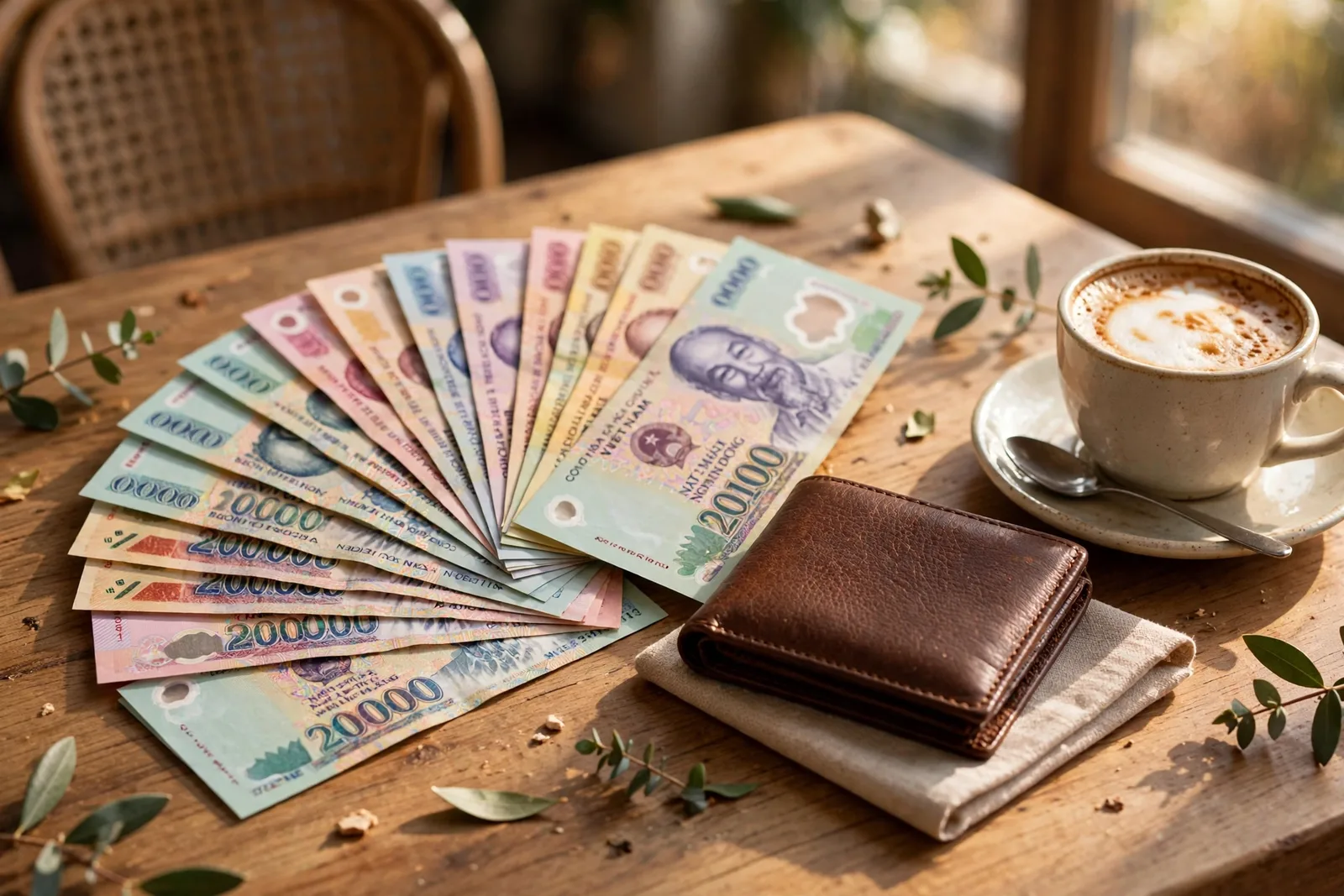
The Vietnamese dong comes in polymer notes from 10,000 to 500,000, and the zeros take a day to internalize. The mental shortcut: 25,000 VND is about $1, so 100,000 is $4 and 500,000 is $20. Do that conversion for a day and it becomes automatic.
Watch the blue notes. The 500,000 note and the 20,000 note share a blue green palette, and tired travelers have paid with the wrong one. Check the number, not the color, every time you pay. Vendors are honest about correcting you, but only if you notice. When in doubt, pay with smaller notes and let the vendor make change.
Coins exist but nobody uses them. Small change comes in 1,000, 2,000, and 5,000 notes, and you will accumulate them fast. Spend small notes at street stalls and save the big ones for restaurants and hotels.
The 1,000 and 2,000 notes wear out fast, and vendors sometimes refuse the most tattered ones. Spend small notes quickly at street stalls rather than hoarding them. Fresh notes from ATMs are always accepted; ancient soft ones from your pocket sometimes are not.
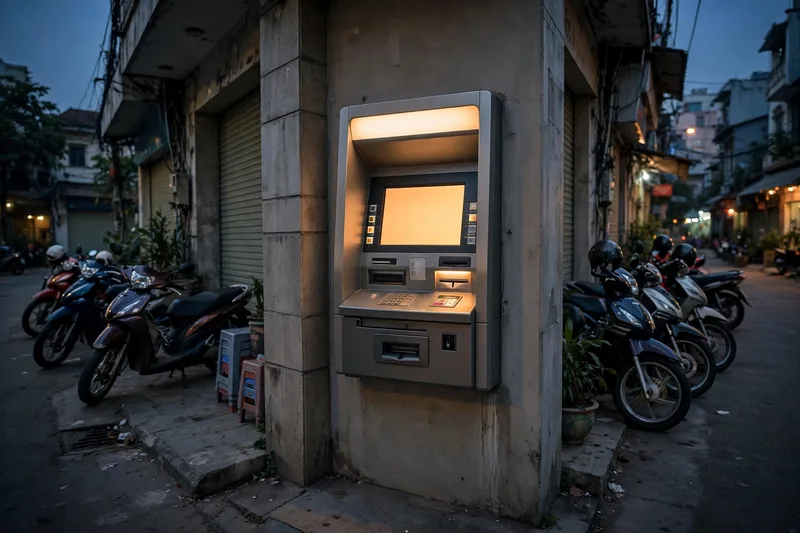
ATMs are everywhere in Saigon, and the strategy is simple: withdraw large amounts infrequently. Fees run 55,000 to 110,000 VND (about $2.20 to $4.40) per transaction regardless of amount, so pulling 5 million VND costs the same fee as pulling 1 million. Most machines cap withdrawals at 2 to 5 million per transaction. If a machine offers only a small amount, try a different bank's ATM rather than accepting multiple fee bearing withdrawals.
Vietcombank, BIDV, Agribank, and Techcombank ATMs are reliable and widespread. Always decline the ATM's currency conversion offer and let your home bank do the conversion; the machine's rate includes a markup of several percent. This single habit saves more money than any other on this page.
Tell your bank you are traveling before you fly. A blocked card at midnight in District 1 is a solvable problem with a working local SIM, but it is better avoided entirely. Carry a backup card kept separately from your wallet.
Airport ATMs charge the same fees as city ones, so there is no penalty for withdrawing on arrival. Do it in the arrivals hall while you are fresh and alert, not later at a dim street machine while juggling luggage.
The shoe shine ambush: a man drops a brush near your feet, shines your shoes uninvited, then demands 200,000 VND. Solution: never stop walking, never engage, keep moving. It only works if you stop.
The cyclo price multiply: you agree 50,000, the ride ends, and suddenly it is 500,000. Solution: agree the price in writing before boarding, photograph it if needed, and pay exactly what was agreed. Legitimate drivers honor it.
The motorbike rental damage claim: you return the bike and the shop discovers scratches you never made, demanding compensation. Solution: photograph every inch of the bike at pickup, in front of the owner, and rent from your hotel or a reputable shop with written contracts.
The taxi meter sprint: rigged meters in fake brand taxis that run triple speed. Solution: use Grab, or stick to Mai Linh and Vinasun with the meter visibly running. Our airport guide covers the taxi queue specifically because arrivals are prime hunting ground.
The friendly stranger scam deserves a mention. A charming local befriends you, suggests a bar or restaurant, and vanishes when the inflated bill arrives. Real friendliness exists everywhere in Vietnam, but instant best friends with a venue in mind deserve polite skepticism.
Cash is king and will remain so. Street food, markets, small restaurants, and taxis run on physical dong. Cards work at malls, international hotels, upscale restaurants, and most craft beer taprooms, but assume cash everywhere else.
Grab accepts both cash and cards, and linking a card removes the fumbling for change at every ride. Mobile payment apps exist but generally require Vietnamese bank accounts, so visitors should not count on them.
The golden rule: keep your daily cash in a front pocket or money belt, your backup card separate, and your situational awareness on in the busiest crowds. Vietnam is remarkably safe by global standards; the scams are annoyances, not dangers, and knowing their names is ninety percent of the defense.
Tipping is not customary but is increasingly appreciated in tourist facing businesses. Rounding up the bill or leaving 10 percent at nicer restaurants is generous without being strange. Street vendors do not expect tips; a smile and exact change is perfect.
55,000 to 110,000 VND (about $2.20 to $4.40) per withdrawal. Withdraw large amounts infrequently to minimize the flat fee.
No. ATMs in Vietnam give good rates. Just decline the machine's conversion offer and let your bank convert.
Shoe shine ambushes, cyclo price multiplying, motorbike damage claims, and rigged taxi meters. All are avoidable with the habits in this guide.
Upscale restaurants, malls, and hotels do. Street food, markets, and small shops are cash only.
 Keep exploring
Vung Tau sits about 100 km from Ho Chi Minh City. Compare the expressway, the coastal road, and the ferry, and pick the
 Keep exploring
From walkable District 1 to buses, ride hailing apps, and coaches to the coast, here is how to move through the new Ho C
 Keep exploring
Vietnam visa rules for 2026: who gets visa free entry, how the 90 day e-visa works, official costs, and mistakes that ge
